
Tattoo Styles: 8 Styles & How to Choose
Guides · June 23, 2026
Tattoo styles are the distinct visual languages artists work in, from bold American traditional to delicate fine line. Choosing the right tattoo style matters as much as the subject: it shapes how your design ages, what it costs, and which artist you should book. This guide explains the eight most popular tattoo styles, what each one looks like, how well it holds up over time, and who it suits, so you can walk into a studio (or our idea gallery) knowing exactly what to ask for.
TL;DR
- •Fine line uses single-needle thin lines. Elegant and minimal, but it fades faster and needs touch-ups.
- •Blackwork is solid black ink with high contrast. Bold, graphic, and it ages very well.
- •American traditional uses thick outlines and a limited color palette. It is the most age-resistant style.
- •Black and grey realism dilutes black ink into shades of grey for lifelike, photographic detail.
- •Pick a style based on placement, budget, and how it ages, not just the subject.
What is the fine line tattoo style?
Fine line is a minimalist style built from thin, delicate lines, usually drawn with a single needle or a three-round liner. It suits small, intricate designs: script, florals, constellations, and subtle symbols. The trade-off is longevity. Thin lines hold less ink, so fine line work tends to soften and blur faster than bold styles, and it does best on placements with less sun and friction. If you want something understated, fine line is the go-to. See it on delicate concepts like the dragonfly.
What is blackwork?
Blackwork uses solid black ink to create bold, graphic designs, with the skin left bare as negative space rather than shaded. It covers everything from geometric patterns and mandalas to heavy illustrative pieces. Because it packs dense, saturated ink, blackwork reads clearly from a distance and ages very well. It is a strong choice for cover-ups and for designs that need to stay crisp for decades.
What is the traditional (old school) style?
American traditional, also called old school, is defined by thick black outlines, a limited palette of bold colors, and classic motifs like roses, daggers, anchors, and swallows. Those heavy lines and simple shapes are exactly why it is the most age-resistant style in tattooing: it holds its shape long after finer work has blurred. If you want a piece that still looks sharp in twenty years, traditional is hard to beat.
What is realism (black and grey)?
Realism aims to reproduce a subject with photographic accuracy. Black and grey realism does this using only black ink diluted into a range of greys, building depth through careful light and shadow. It is the style behind lifelike portraits, animals, and nature scenes. Realism is demanding work, so it usually costs more and takes longer, and it rewards booking a specialist. See it on bold subjects like the wolf or samurai.
What about Japanese, dotwork, geometric, and watercolor?
AI tattoo generator
Turn your idea into a tattoo reference
Choose a subject, style and ink direction before carrying the same brief into the studio.
✨ Design your tattooFree to configure
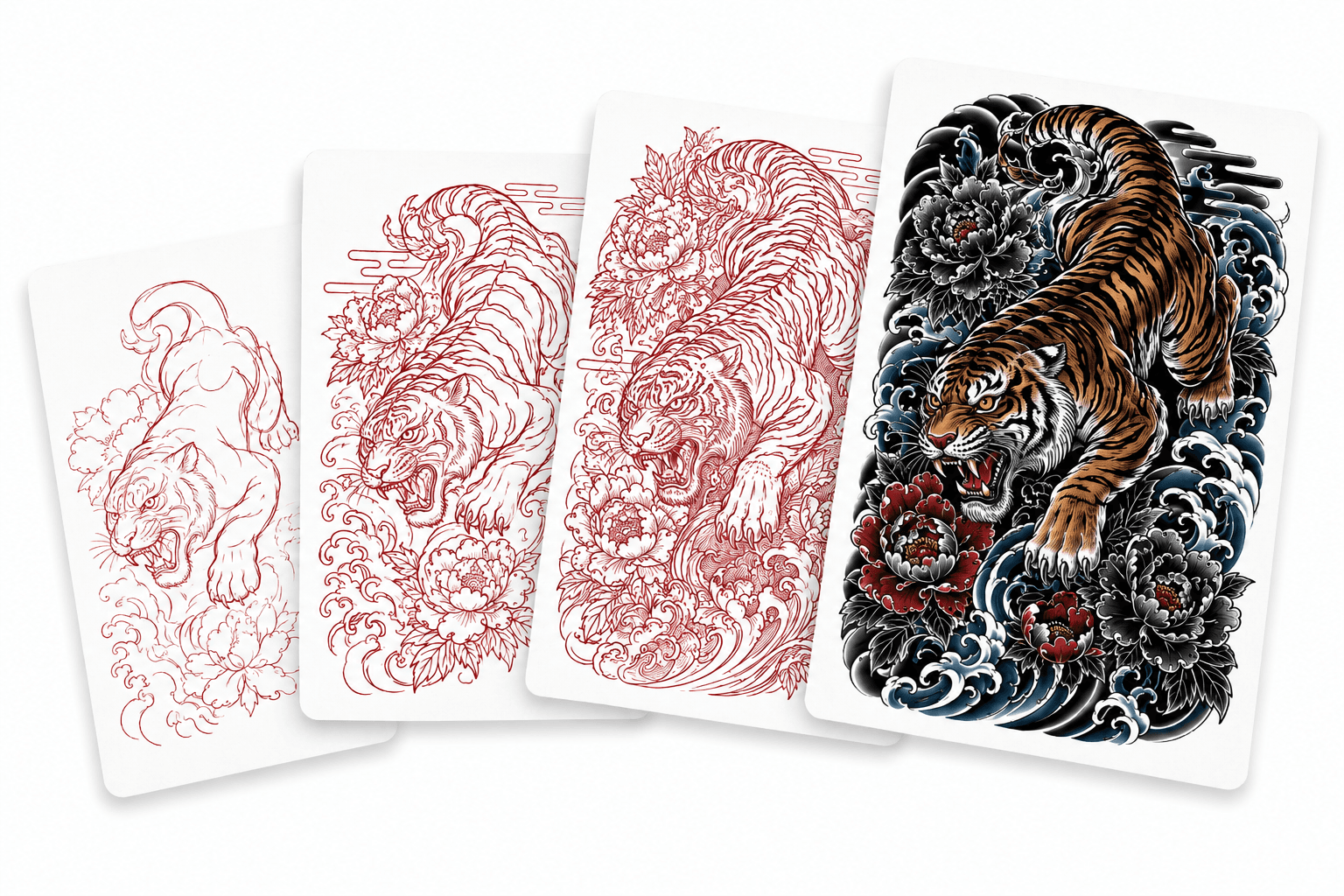
Beyond the big four, four more styles are worth knowing. Japanese (irezumi) uses flowing compositions with waves, dragons, and koi, built for large pieces like sleeves and backs. Dotwork builds shading and texture from thousands of tiny dots, often paired with geometric or ornamental designs. Geometric leans on precise lines, symmetry, and shapes. Watercolor mimics loose paint with soft color washes and few hard outlines, which looks striking but can fade faster without strong linework underneath.
| Style | Look | How it ages | Best for |
|---|---|---|---|
| Fine line | Thin, delicate lines | Fades faster | Small, minimal designs |
| Blackwork | Solid black, high contrast | Excellent | Bold graphic pieces, cover-ups |
| Traditional | Thick outlines, bold color | Best | Timeless classic motifs |
| Realism | Photographic, shaded | Good with upkeep | Portraits, animals |
| Japanese | Flowing, large scale | Excellent | Sleeves and back pieces |
| Watercolor | Soft color washes | Fades faster | Artistic, painterly looks |
Which tattoo style ages best?
Bold styles age best. American traditional, blackwork, and Japanese all rely on thick lines and saturated ink, so they keep their shape and contrast for decades. Fine line and watercolor, which depend on thin lines and soft color, tend to soften sooner and need touch-ups. Placement matters too: areas with heavy sun exposure and friction, like hands, feet, and inner wrists, fade faster in any style.
How do I choose a tattoo style?
Start from three questions: what does the subject need, where will it sit, and how much upkeep are you willing to do. A delicate name or date suits fine line; a fierce animal suits realism or blackwork; a large narrative piece suits Japanese. Then match the style to placement and budget, and pick an artist whose portfolio shows that exact style. You can also browse ideas by concept or generate your design in any style first to compare before you book.
What is the most popular tattoo style?+
Fine line and black and grey realism are among the most requested today, while American traditional remains a timeless favorite. Popularity shifts by region and trend, so choose the style that fits your design and how you want it to age.
Which tattoo style lasts the longest?+
American traditional and blackwork last longest because their thick outlines and solid ink resist blurring. Japanese also ages very well. Fine line and watercolor usually need touch-ups sooner.
Do fine line tattoos fade?+
Yes. Fine line tattoos use thin, lightly packed lines that soften faster than bold work, especially in high-friction or sun-exposed areas. Plan for occasional touch-ups to keep them crisp.
What tattoo style is best for a first tattoo?+
Fine line and small traditional pieces are popular first tattoos because they are quicker, more affordable, and easy to place discreetly. Pick something meaningful and modest in size to start.
Can I combine tattoo styles?+
Yes. Many modern tattoos blend styles, such as fine line detail inside a blackwork frame, or realism with geometric elements. A skilled artist can mix them so the piece still reads as one design.
Useful next guides
Fine Line Tattoos
See fine-line examples, prompts and placement ideas.
Blackwork Tattoos
Explore bold shapes, negative space and black ink.
Traditional Tattoos
Compare classic motifs and strong outlines.
Realism Tattoos
Review size, detail and placement for realism.
Sources
- Tattoodo: A Beginner's Guide to Popular Tattoo Styles · checked June 2026
- Tattooing 101: A Complete List of Tattoo Styles · checked June 2026
- Tattoo Build: Every Tattoo Style Explained · checked June 2026
Keep reading
How Much Does a Tattoo Cost? Prices by Size & Style
How much does a tattoo cost? See realistic price ranges by size, placement, artist rate and style, plus what to budget before you book.
Tattoo Pain Chart: Least and Most Painful Spots
Tattoo pain chart by placement: learn which spots hurt most, which are easier, why pain varies and how to plan your first session.
Best Tattoo Placement Guide: Pain, Size & Visibility
Best tattoo placement guide by body area: compare pain, visibility, sizing, aging and aftercare before choosing where your tattoo should go.