
Blackwork Tattoos
A blackwork tattoo uses solid black ink and bare skin, with no color and little or no grey (Tattoodo). It is an umbrella for several looks: ornamental, illustrative etching, geometric, dotwork, neo-tribal and heavy blackout. The ink itself is ordinary tattoo black, whose main substance is carbon black (Jacobsen and Clausen, 2015).
What are the types of blackwork tattoos?
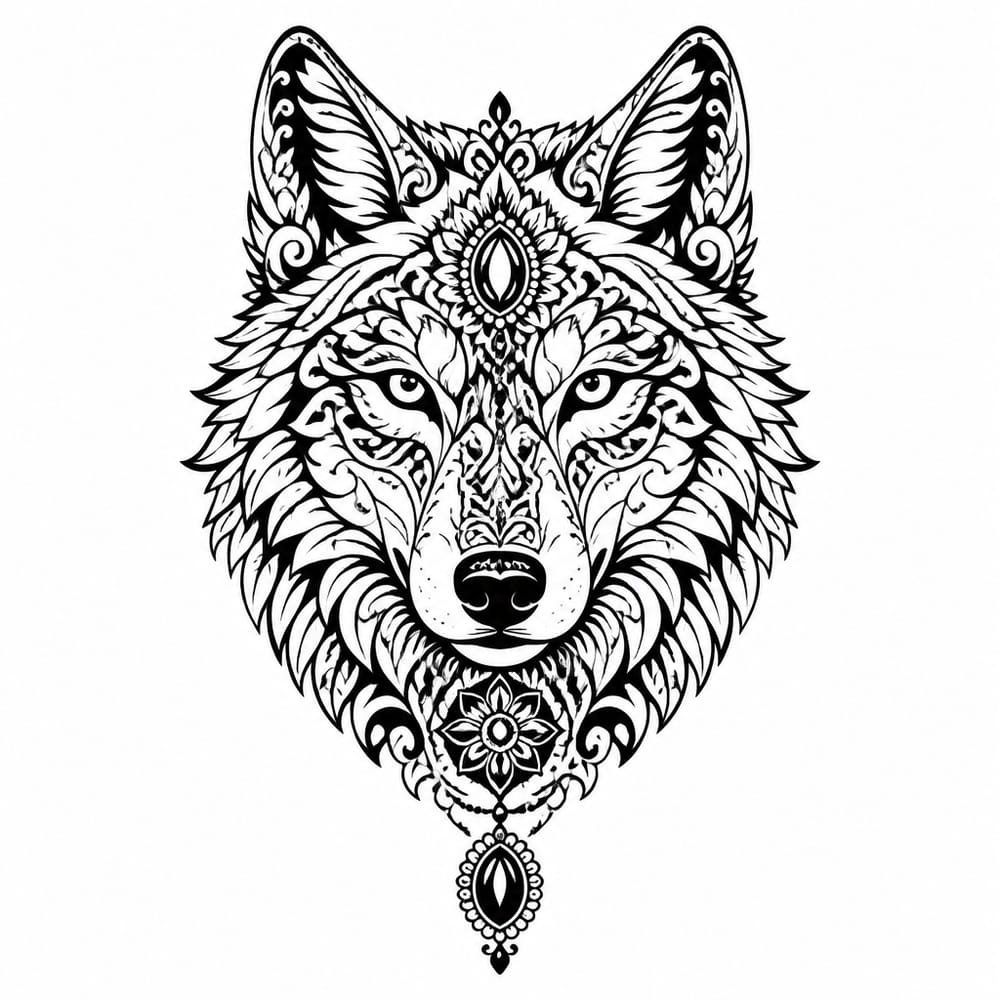
The quickest way to see the difference is to keep the subject fixed. We generated the same wolf head in six kinds of blackwork with an AI image model, so the only thing that changes is how the black is used: lines, dots, facets or large solid fields.
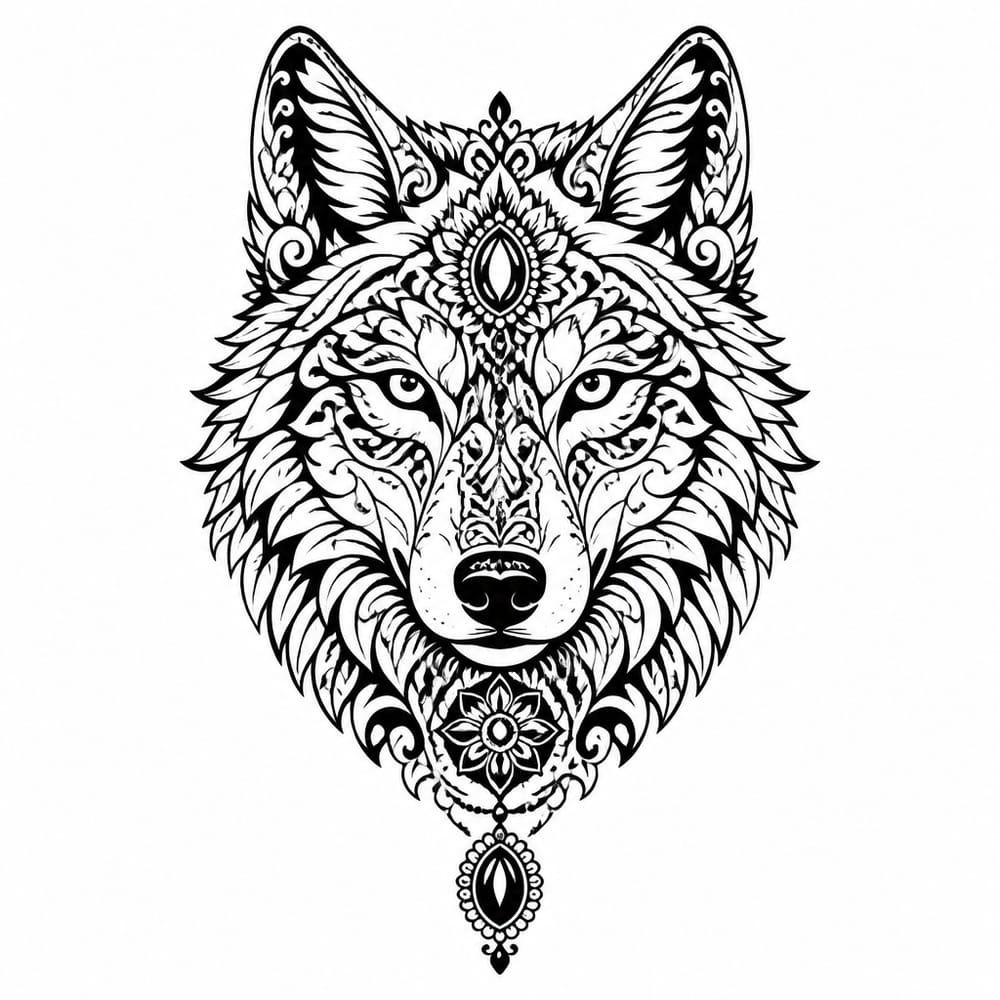 Ornamental
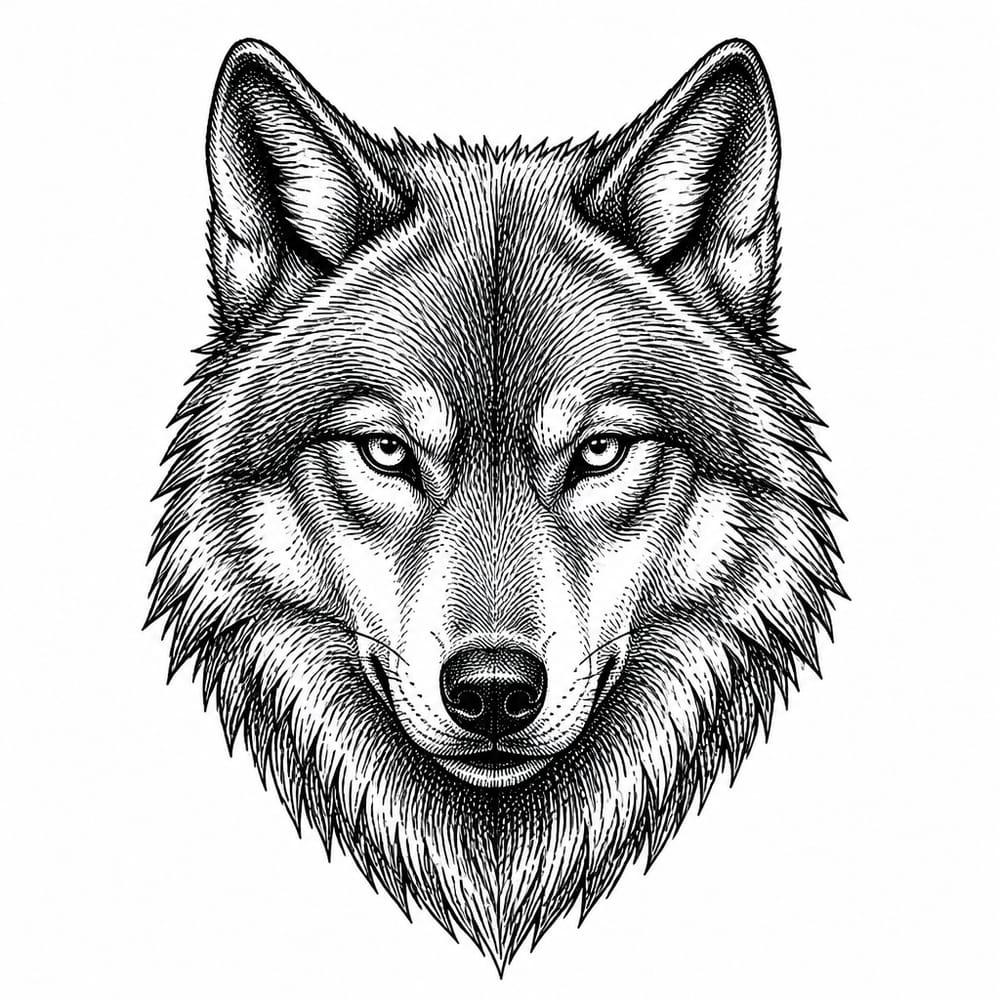 Illustrative / etching
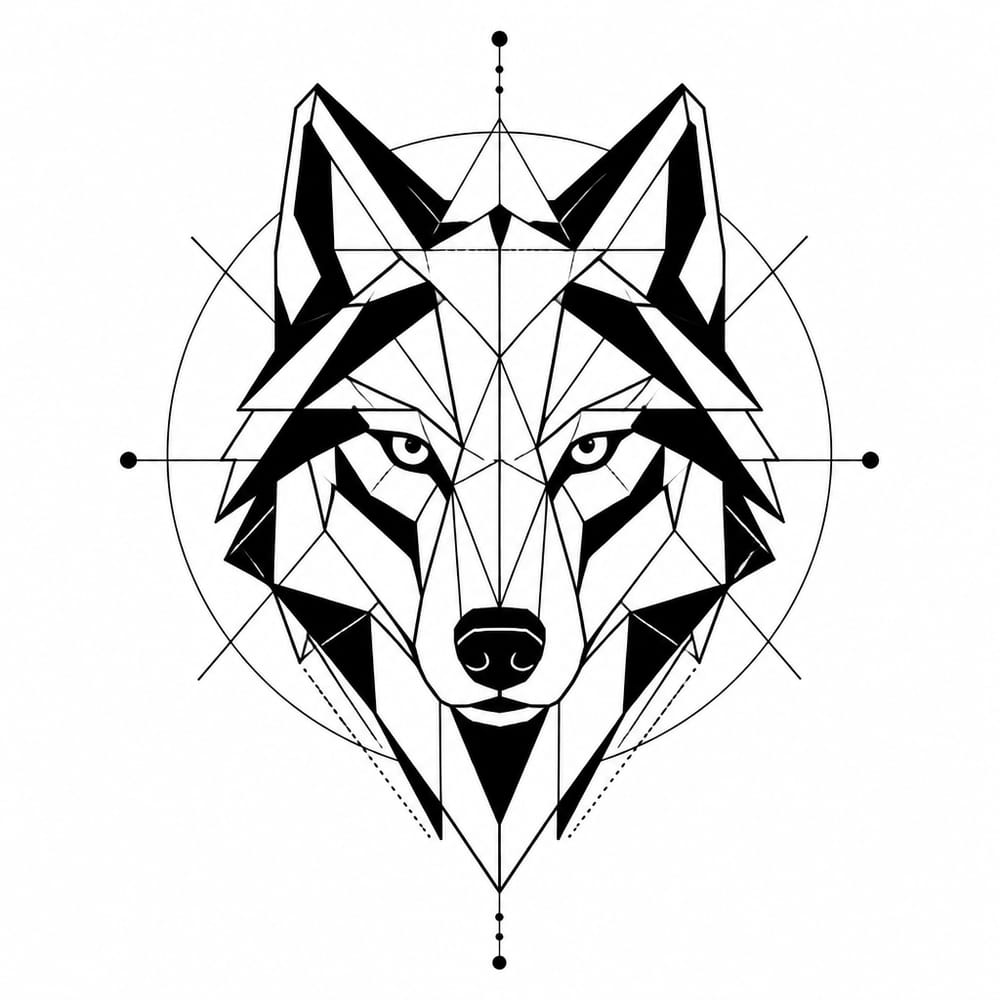 Geometric
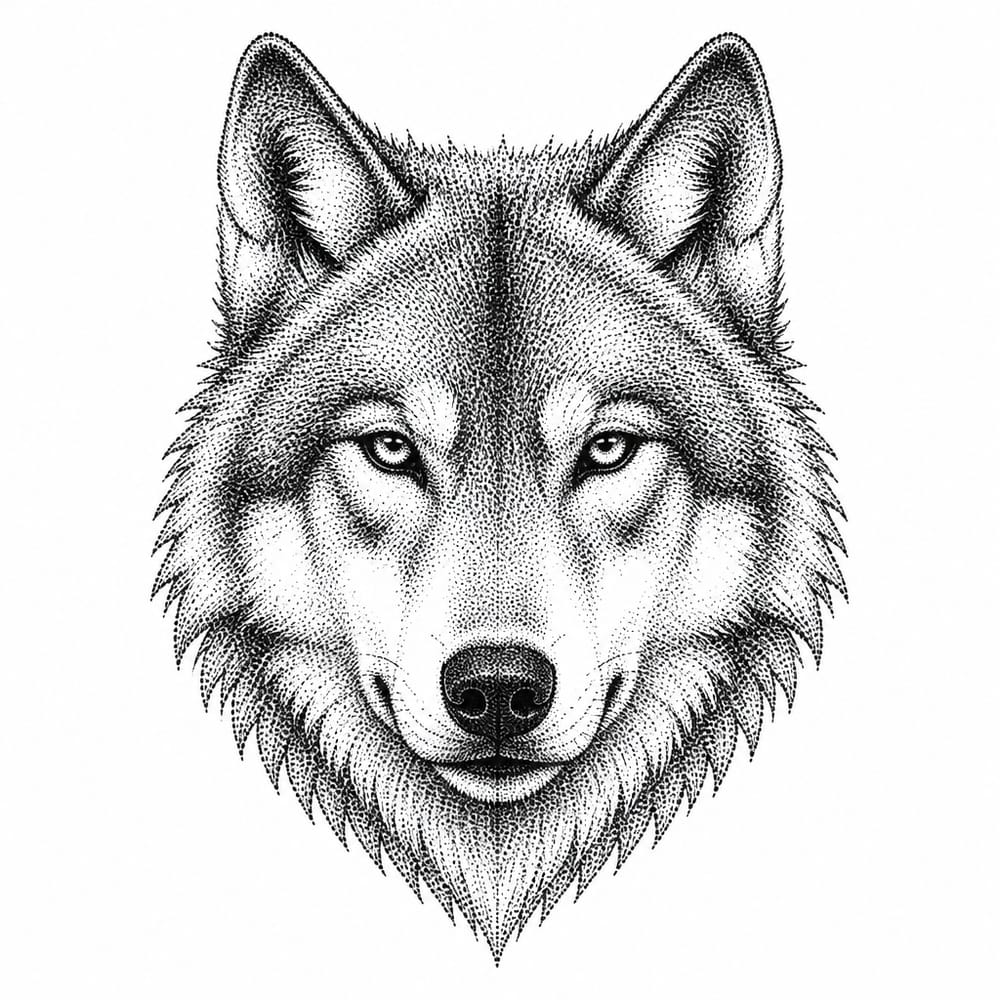 Dotwork
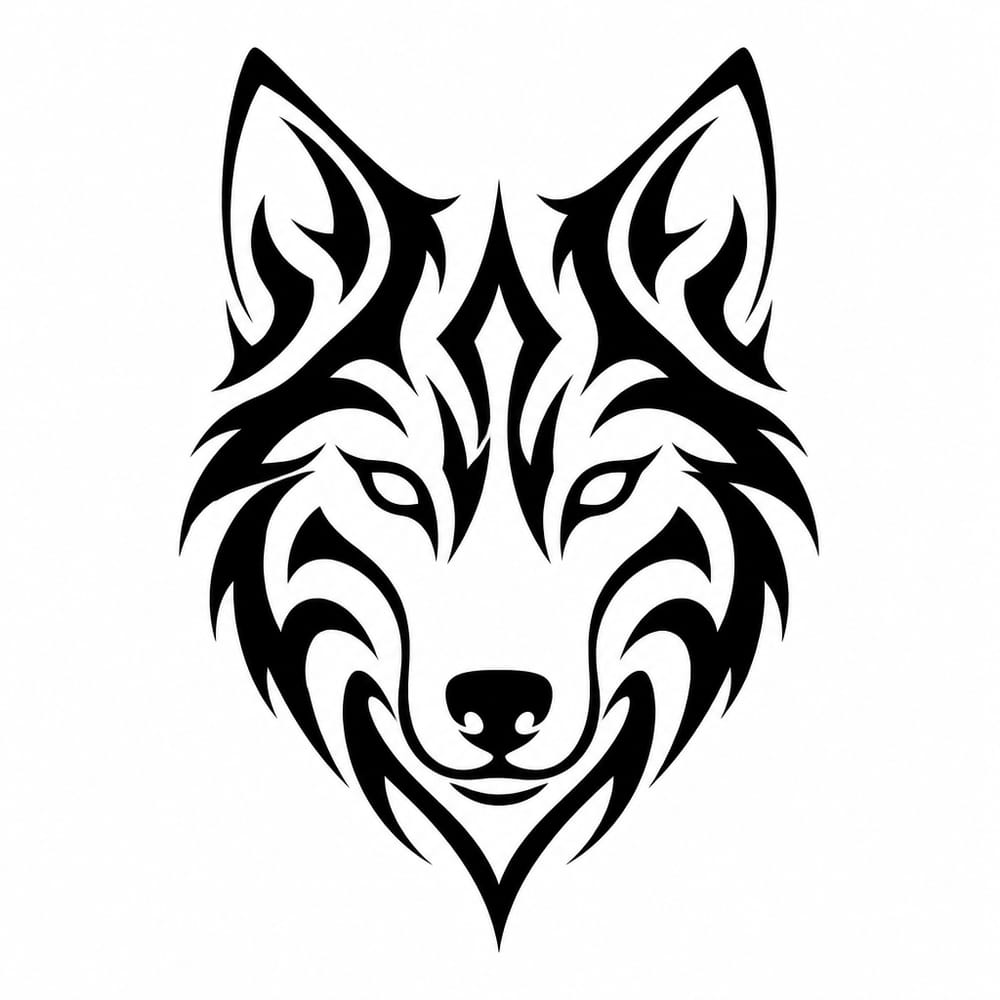 Neo-tribal
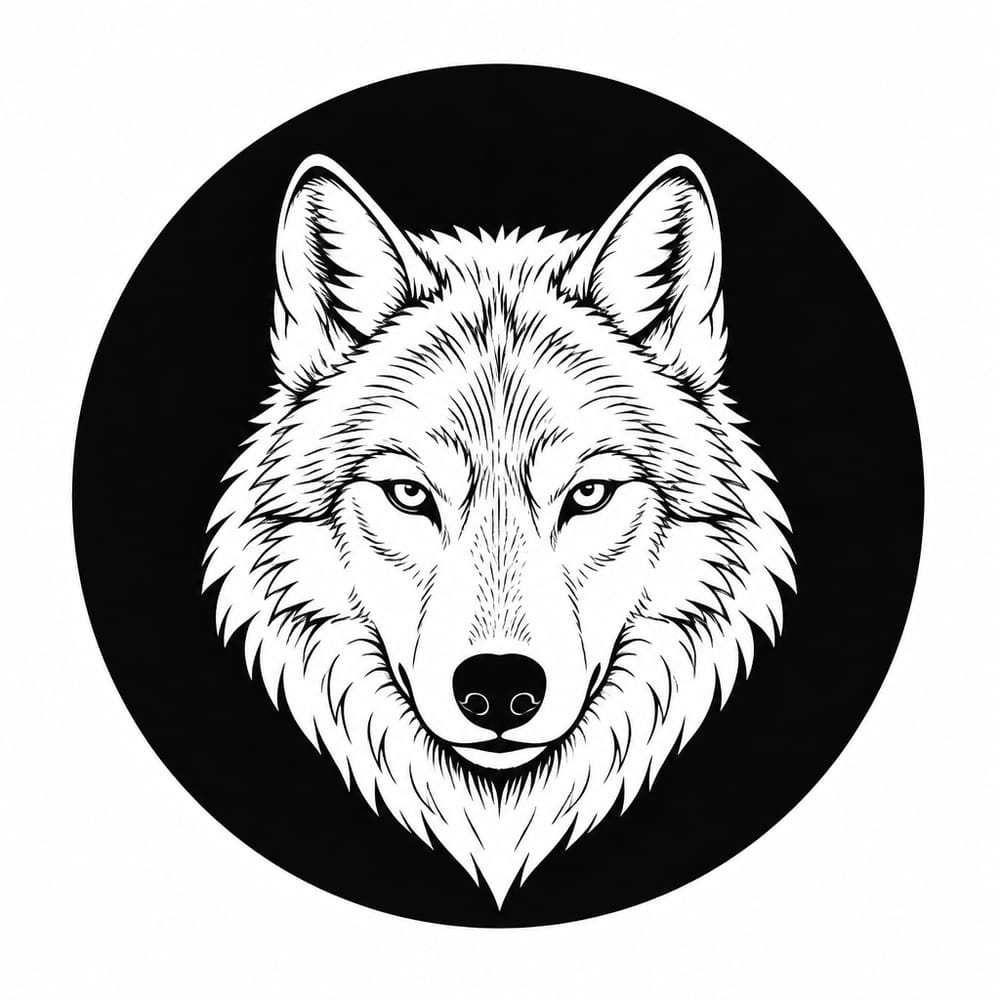 Blackout (negative space)
- Ornamental: lace, filigree, mandala and jewelry-like patterns built from fine black lines and small solid fills.
- Illustrative or etching: looks like an old engraving or woodcut; tone comes from parallel lines and cross-hatching instead of grey.
- Geometric: ruler-straight lines, circles and facets, often symmetrical. Our geometric tattoo page covers it on its own.
- Dotwork: shading made only from dots, packed closer for dark areas and spaced out for light ones.
- Neo-tribal: bold, flowing solid shapes with tapered points, drawn as an original design rather than a copy of a cultural pattern.
- Blackout: large areas of solid black, sometimes with the design left as bare skin inside the black (negative space).
Tattoodo's style guide groups dotwork, geometric, blackout, etching and neo-tribal under blackwork, with ornamental and illustrative as the broader families. Many real pieces mix two or three of these. To see your own subject in blackwork, the blackwork tattoo generator behind the button at the top of this page drafts a reference you can bring to an artist.
Blackwork vs black and grey vs fine line: what's the difference?
All three can be done with only black ink, so the difference is how the black is applied. Black and grey adds diluted black, called grey wash, for smooth gradients; blackwork skips the wash and builds tone from solid fills, dots and hatching; fine line is defined by the very thin needle, not by the ink (Tattoodo). Here is the same rose in each, from our tattoo styles guide.
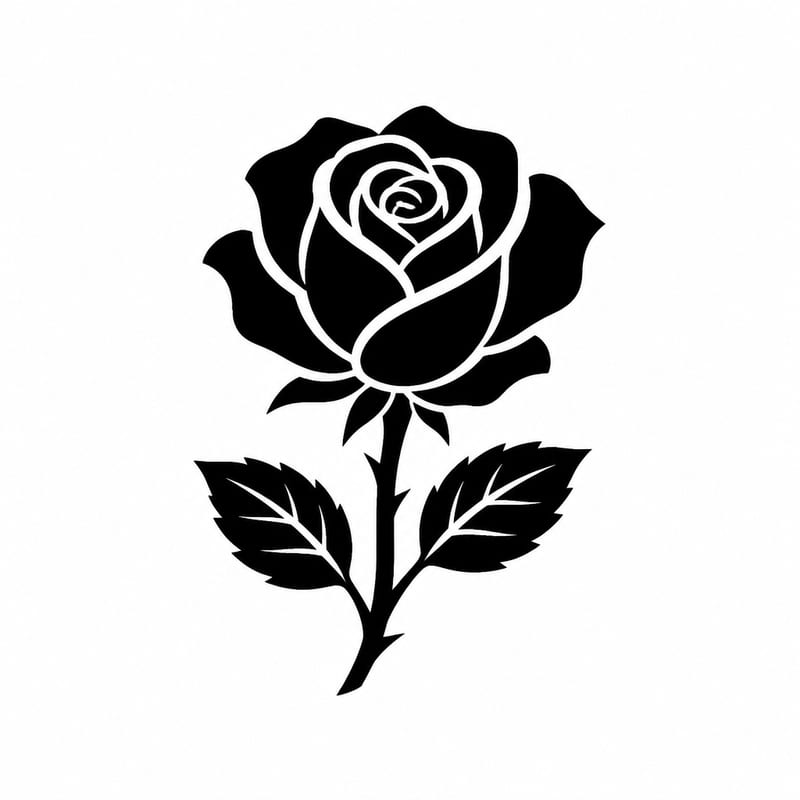 Blackwork
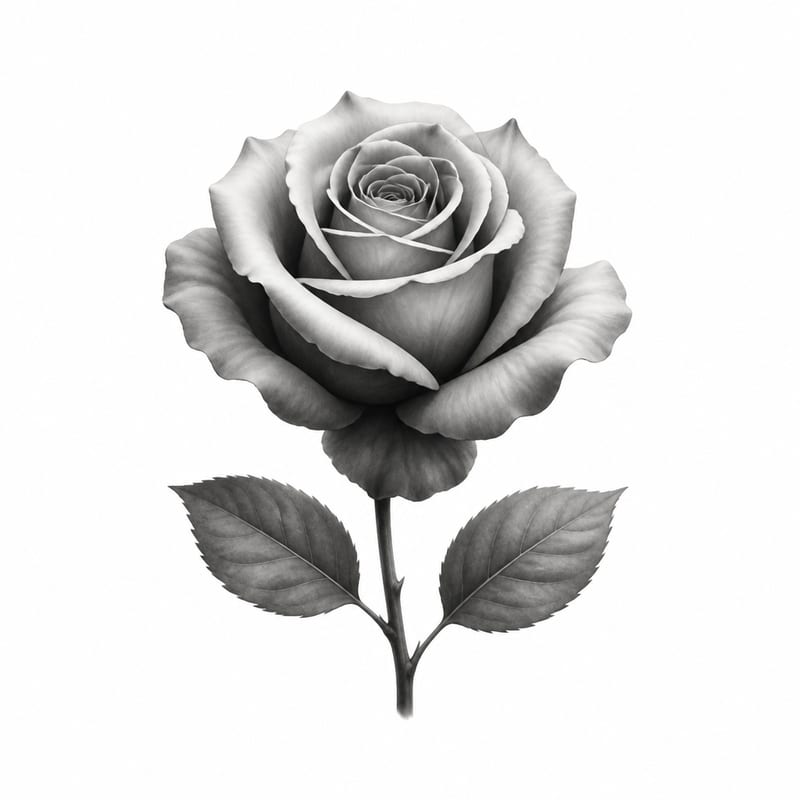 Black and grey
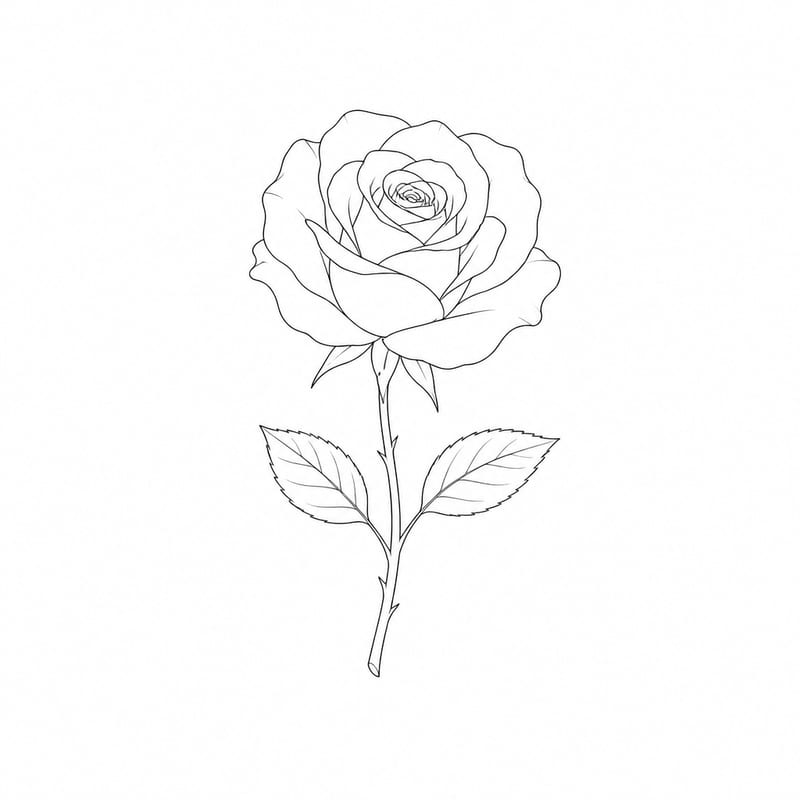 Fine line
| Blackwork | Black and grey | Fine line | |
|---|---|---|---|
| Lines | Bold or fine, often graphic | Soft, few outlines | Very thin, single needle or small liner |
| Shading | Solid fills, dots, hatching | Smooth gradients | Little or none |
| Grey wash | None or very little | Yes, diluted black | Rarely |
| Typical subjects | Ornament, animals, patterns, cover-ups | Portraits, animals, religious pieces | Script, florals, small symbols |
| Our style page | This page | Realism | Fine line |
Blackwork vs American traditional: both use bold black, but traditional adds flat color (red, green, yellow) inside heavy outlines and sticks to classic flash motifs. A blackwork piece has no color at all.
Blackwork vs blackout: are they the same?
Blackout is one kind of blackwork, not a synonym. Healthline describes blackout tattoos as predominantly black designs that take up a large area of the body: a whole forearm, a full sleeve, sometimes a back filled solid. According to Tattoodo, blackout started as a way to cover unwanted tattoos and became its own look in the 2010s. Ordinary blackwork, by contrast, keeps a lot of bare skin between the black areas. A blackout piece can still carry a design: either fine lines drawn back on top once it has healed, or a motif left as bare skin inside the black, like the last wolf above.
Where does blackwork come from?
Black ink is as old as tattooing itself, but blackwork as a named style is recent. Rather than claim it is the oldest style, here is what the sources we checked actually support.
| When | What happened | Source |
|---|---|---|
| About 5,300 years ago | Ötzi, the Tyrolean Iceman, carries 61 tattoo marks, mostly short parallel lines 0.7 to 4 cm long plus two crosses, made with carbon. | Samadelli et al., J Cultural Heritage, 2015 |
| Before the 1970s | Bold black tattoo traditions of Samoa, Micronesia, Borneo, Fiji and the Marquesas, later studied by Leo Zulueta. | Grand Rapids Art Museum |
| Late 1970s | Tribal tattooing takes root in the United States as a contemporary trend. | Grand Rapids Art Museum |
| 1976 | Zulueta meets Don Ed Hardy, who encourages him to become a tattooist. | Wikipedia: Leo Zulueta |
| 1981 | Zulueta starts tattooing professionally. | Wikipedia: Leo Zulueta |
| 1980s | A tribal revival adapts traditional designs into large black pieces. | Tattoodo (industry guide) |
| 1989 | Zulueta is featured in the RE/Search book Modern Primitives. | Wikipedia: Leo Zulueta |
| 2010s | Blackout, first a cover-up method, becomes its own look. | Tattoodo (industry guide) |
| 2017 | The Grand Rapids Art Museum holds Black Waves: The Tattoo Art of Leo Zulueta (Feb 5 to Aug 27). | Grand Rapids Art Museum |
The museum presents Zulueta as largely responsible for popularizing tribal tattooing, and he is often called the father of modern tribal tattooing. Today's ornamental, etching and dotwork blackwork grew alongside that tribal lineage rather than from one single source.
Not to be confused with: blackwork is also an embroidery technique worked in black thread, most strongly associated with Tudor England (Wikipedia). It has nothing to do with tattooing.
What does a blackwork tattoo mean?
Blackwork has no fixed meaning of its own. The black ink is a technique; the meaning comes from the subject you choose. A blackwork wolf carries whatever a wolf means to you, a blackwork rose whatever a rose does, and a purely ornamental or geometric piece can be chosen just for how it looks. Our tattoo ideas pages cover the common meanings of each subject.
The one place where meaning matters a lot is tribal-inspired work. According to the Grand Rapids Art Museum, Zulueta considers it disrespectful to copy traditional designs exactly without a personal relationship to those cultures, so he draws original designs for each client. That is his view, and a common piece of guidance: if you want Polynesian- or Bornean-inspired blackwork, ask your artist for an original design, or look for an artist from or trained in that tradition, rather than copying a pattern that may carry a specific cultural meaning.
Is blackwork good for cover-ups?
Often, yes, because dense black can hide older ink that lighter styles cannot. The catch is size: according to Tattoodo's guide, the new piece is usually larger and darker than the old one. The same guide suggests asking about a few laser sessions to fade the old tattoo first, which gives the artist more design freedom, and treats a full blackout as the last resort, when nothing else will hide the old work. It also warns that a full blackout holds so much ink that removing it later takes many sessions. Treat this as industry guidance, not research.
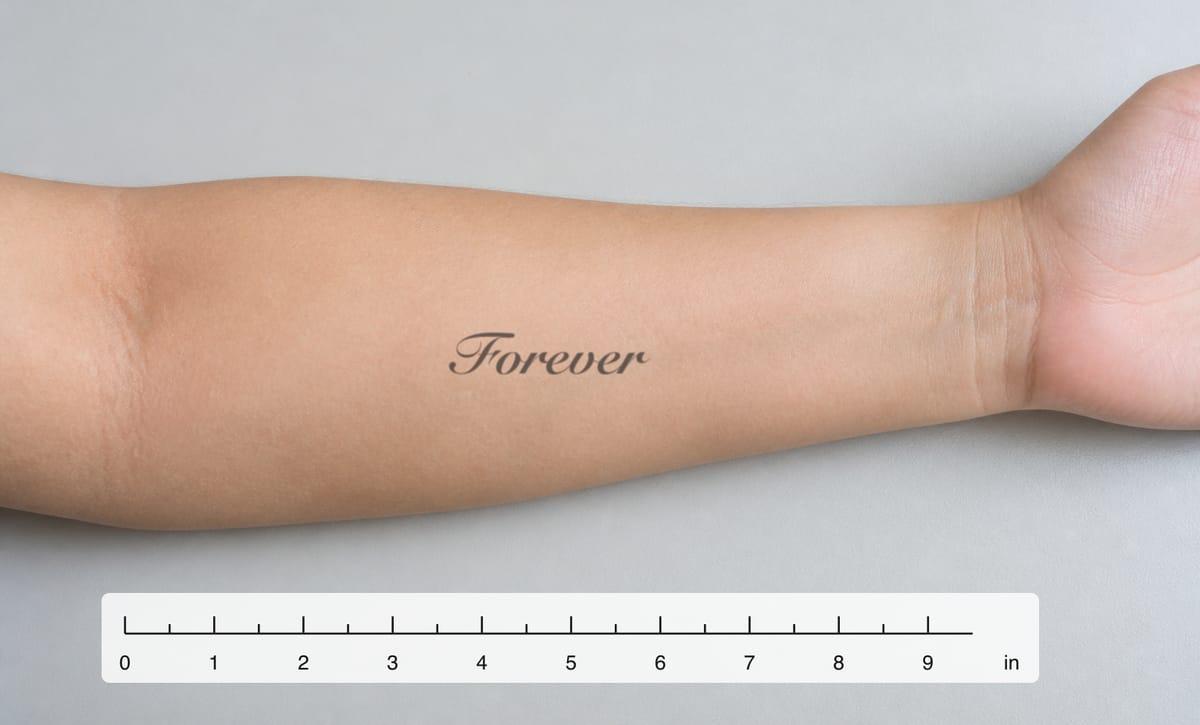 BeforeAn old script about 2 in wide.
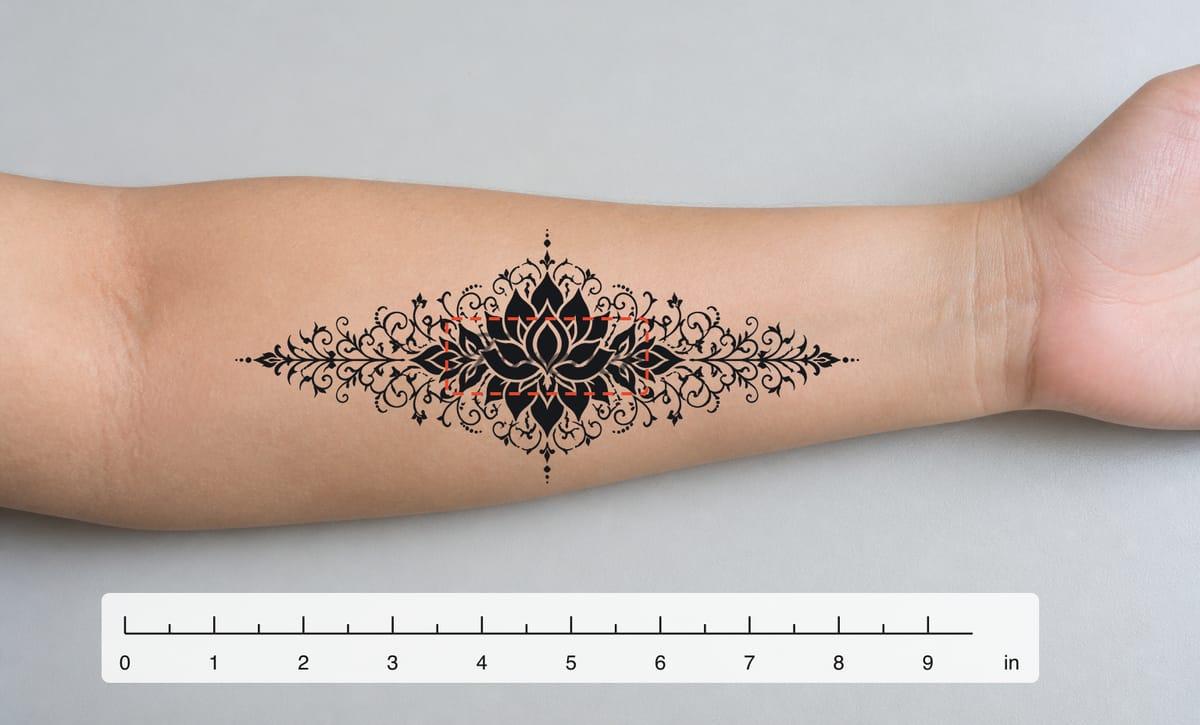 AfterA 7 in ornamental piece; the dashed box is the old footprint.
Notice the ratio: the old tattoo is about 2 inches wide, the design that covers it is about 7. The dense, solid part of the new piece sits over the old ink, and the lighter filigree spreads beyond it. Bring a clear photo of the old tattoo with a ruler next to it, so the artist can tell you how big and how dark the cover has to be.
How big should a blackwork tattoo or sleeve be?
Blackwork works at any size, but large solid areas and cover-ups push it toward medium and large pieces. To know what fits, look at the room each body part offers. These are medians from ANSUR II, the US Army body measurement survey of 1,986 women and 4,082 men, as computed in our tattoo size guide.
Room on one side of each body part, drawn to scale
- Women (median)
- Men (median)
- 1 square = 1 inch
9.5 × 5.2 in · 10.5 × 6.1 in
12.2 × 6 in · 13.2 × 7 in
15.2 × 7.3 in · 16.3 × 7.7 in
13.1 × 12.1 in · 14.1 × 12.3 in
14.4 × 16.7 in · 16.3 × 18.8 in
4 in · 8 in · 12 in
- Blackwork sleeve: a full sleeve runs about 21.7 inches from shoulder to wrist on a median woman and about 23.7 inches on a median man, and wraps all the way around. See the sleeve placement guide.
- Forearm: 9.5 to 10.5 inches long but only 5 to 6 inches across one side, which suits vertical animals, bands and ornamental pieces. See the forearm guide.
- Thigh: about 12 inches across one side, room for wide ornamental or blackout compositions. See the thigh guide.
- Chest: follows the rib cage, so ask how a flat design will bend. See the chest guide.
For a planning estimate on your own measurements, use the tattoo size calculator.
Does blackwork hurt more than other styles?
There is no study of pain by tattoo style. What exists is one artist's view and broader survey data. An LA blackwork artist interviewed by Healthline says blackout is typically more painful, during and after the session, because the skin is gone over several times to get full saturation. That is one artist's experience.
The survey evidence points to time rather than style. In a study of 1,092 tattooed people (Witkoś and Hartman-Petrycka, 2020), longer tattooing time and higher stress predicted more pain during tattooing, and bleeding mattered too; body area was not a significant predictor, and tattoo size was not measured. Large solid fills take long sessions, so plan breaks and split big pieces into several sittings.
As for placement, the artists and customers interviewed in a 2021 pilot study rated the chest among the more painful spots and the forearms, biceps and triceps and outer thighs among the easier ones; the back was not rated. That is reported experience, not measurement. Our tattoo pain chart covers every spot.
How do blackwork and blackout tattoos heal?
The stages are the same as any tattoo, but size stretches them. Cleveland Clinic says the top layer of skin is typically healed by about two months and the deeper layers take several more months; larger tattoos can take a few months to heal and redness and swelling may last longer, and pieces on the chest or back heal more slowly than small ones on the hands, wrists or arms.
For big black fills specifically, Tattoodo's guide notes that they swell and weep more in the first days, that patchy spots after healing are common, and that a touch-up a few weeks later is normal. The artist interviewed by Healthline expects a lot of swelling for up to a week after a blackout session. Both are industry experience, not clinical data. Keep the healing tattoo out of direct sun, as Cleveland Clinic advises.
Can a blackout tattoo be removed or lightened?
Black responds to laser, but a lot of black takes a lot of sessions. In one retrospective study of 52 patients (Cannarozzo et al., 2021), professional dark tattoos needed 6.3 ± 0.9 laser sessions on average, against 7.8 ± 1.1 for mixed-color professional tattoos and 2.3 ± 0.5 for amateur ones. The authors cite earlier research showing that greater pigment density and larger tattoos respond poorly, which describes a blackout piece. Those are one study's averages, not a prediction for your tattoo.
The FDA warns that some removal procedures may leave permanent scarring and may not remove the tattoo completely, and the American Academy of Dermatology notes that a single laser cannot remove all ink colors and that no laser can safely break down all the layers in one session. If you might want to change the piece later, choose a design with bare skin in it over a full blackout. For a rough budget, see the tattoo removal cost calculator.
How much does a blackwork tattoo cost?
We found no price survey specific to blackwork. Most studios charge by time, so what drives the price is the size of the piece and how much of it is solid fill. Healthline notes that larger, more detailed designs cost more, and the blackwork artist it interviewed explains that solid black needs several passes to saturate, which adds time. For real numbers, our tattoo cost guide compares the shop minimums and hourly rates published by 25 US studios, and the tattoo price calculator turns a size and placement into a planning range.
Blackwork tattoo ideas for sleeves, cover-ups and small pieces
Animals, mythology, botanical silhouettes, mandalas and abstract symbols all translate well into black. Each idea below has its own page with designs you can open in the generator.
Wolf Tattoo Ideas
The subject of our six-style gallery, from ornamental to blackout.
Kraken Tattoo Ideas
Tentacles that wrap well around a sleeve or a calf.
Spider Tattoo Ideas
Small, graphic and easy to render in solid black.
Samurai Tattoo Ideas
Armor plates and a mask that read well in solid black.
Yggdrasil Tattoo Ideas
The Norse world tree, a natural fit for a vertical forearm or back piece.
Fenrir Tattoo Ideas
The bound wolf of Norse myth, a natural match for bold black.
Anubis Tattoo Ideas
A jackal-headed profile that suits solid black silhouettes.
Blackwork has no gender: the same wolf, ornament or sleeve is worn by men and women alike. Choose the subject and size you want, then find an artist whose blackwork you like.
How do I choose a blackwork artist?
- Ask for healed photos, not only fresh ones: solid fills and fine linework that are at least a year old.
- Check that large fills look even, without patchy spots or blurred edges where black meets bare skin.
- Make sure the artist works in the sub-style you want; ornamental, dotwork and blackout are different skills.
- Ask how touch-ups work and whether one is included after a large fill.
- For a cover-up, send a photo of the old tattoo with a ruler and ask whether laser fading first would help.
These checks are common advice from artists rather than research. If you are searching for a blackwork artist near you, the same list applies to every portfolio you look at.
Plan the rest of your blackwork tattoo
Tattoo Styles Explained
One rose drawn in eight styles, to compare blackwork with the rest.
Geometric Tattoos
Precise lines and shapes, the most structured kind of blackwork.
Fine Line Tattoos
Thin-needle work, the opposite end of black-ink tattooing.
Tattoo Size Chart
How much room each body part has, in inches and cm.
Tattoo Pain Chart
Which spots hurt most, and why session length matters more.
Tattoo Healing Stages
What normal healing looks like, week by week.
Tattoo Cost Guide
Prices and minimums from 25 US studios.
Sleeve Tattoos
How a half or full sleeve is planned around the arm.
Sources
- Tattoodo: Blackwork Tattoos, Styles, Origins and Aging (industry style guide, no author or date shown) · checked November 6, 2026
- Grand Rapids Art Museum: Black Waves, The Tattoo Art of Leo Zulueta (exhibition, Feb 5 to Aug 27, 2017) · checked November 6, 2026
- Wikipedia: Leo Zulueta (citing Vale and Juno, Modern Primitives, RE/Search, 1989) · checked November 6, 2026
- Samadelli M et al. Complete mapping of the tattoos of the 5300-year-old Tyrolean Iceman. J Cultural Heritage, 2015 (reported by phys.org) · checked November 6, 2026
- Jacobsen NR, Clausen PA. Carbon black nanoparticles and other problematic constituents of black ink. Curr Probl Dermatol vol 48, Karger, 2015 · checked November 6, 2026
- Cannarozzo G et al. Q-Switched 1064/532 nm laser with nanosecond pulse in tattoo treatment: a double-center retrospective study. Life (Basel), 2021 · checked November 6, 2026
- US FDA: Think Before You Ink, Tattoo Safety · checked November 6, 2026
- American Academy of Dermatology: Laser tattoo removal · checked November 6, 2026
- Cleveland Clinic: Tattoo aftercare tips from a dermatologist (Shilpi Khetarpal, MD) · checked November 6, 2026
- Healthline: Blackout tattoo, by Adrienne Santos-Longhurst, medically reviewed by Reema Patel, PA-C (March 22, 2022) · checked November 6, 2026
- Skin Cancer Foundation: Ask the Expert, Can a tattoo increase skin cancer risk? (Ariel Ostad, MD; updated July 22, 2025) · checked November 6, 2026
- Witkoś J, Hartman-Petrycka M. Gender differences in subjective pain perception during and after tattooing. IJERPH, 2020 · checked November 6, 2026
- Pimentel et al. The effects of VR use on pain experienced during a tattoo procedure: a pilot study. Frontiers in Virtual Reality, 2021 · checked November 6, 2026
- ANSUR II: Anthropometric Survey of US Army Personnel (public data, OPEN Design Lab, Penn State) · checked November 6, 2026
- Wikipedia: Blackwork (embroidery) · checked November 6, 2026
Blackwork tattoo FAQ
Is blackwork a tattoo style?+
Yes. Blackwork is a style built from solid black ink and bare skin, with no color and little or no grey. It is also an umbrella for sub-styles such as ornamental, etching, geometric, dotwork, neo-tribal and blackout.
What is the difference between blackwork and blackout?+
Blackout is one kind of blackwork: large areas, sometimes a whole limb, filled with solid black. Ordinary blackwork keeps much more bare skin between the black shapes. Blackout began as a cover-up method and became its own look in the 2010s, according to Tattoodo's style guide.
Is blackwork more painful than other tattoos?+
No study compares pain by style. One blackwork artist interviewed by Healthline says blackout is typically more painful because the skin is gone over several times. In a survey of 1,092 tattooed people, longer sessions and higher stress predicted more pain, so large solid fills are best split into several sittings.
Do blackwork tattoos fade to grey?+
Every tattoo softens over time, and no study compares how styles age. Tattoo black is mostly carbon black, and artists widely report that solid black keeps its contrast well, with edges spreading slightly over the years; that is artist consensus, not a measured result. Keep the tattoo out of direct sun while it heals and protect it from the sun afterwards.
Can blackwork cover an old tattoo?+
Often, yes. The new piece is usually larger and darker than the old one. Artists commonly suggest a few laser sessions to fade the old tattoo first, and treat a full blackout as the last resort. Never cover moles.
Can a blackout tattoo be removed?+
It can be lightened, but it takes many sessions. In one study of 52 patients, professional dark tattoos needed 6.3 laser sessions on average, and earlier research cited by the authors found that denser and larger tattoos respond poorly. The FDA warns removal may scar and may not be complete.
Tattoo planning tool
Generate a blackwork tattoo reference
Describe your idea, generate it in any style, and preview it on your own skin before the needle.
Generate for freeFree to start