
Memento Mori Tattoo: Meaning, Symbols and Ideas
Memento mori is a Latin phrase meaning "remember you must die" (Tate). A memento mori tattoo uses those words, or the symbols painters used to say the same thing (a skull, an hourglass, a candle that has just gone out, flowers past their best), as a reminder that time is limited. Below: AI-generated designs to start from, then a symbol decoder built on a real 1628 painting, the Latin phrases that go with it, fonts, and sizes to scale.
38+ Memento Mori tattoo designs
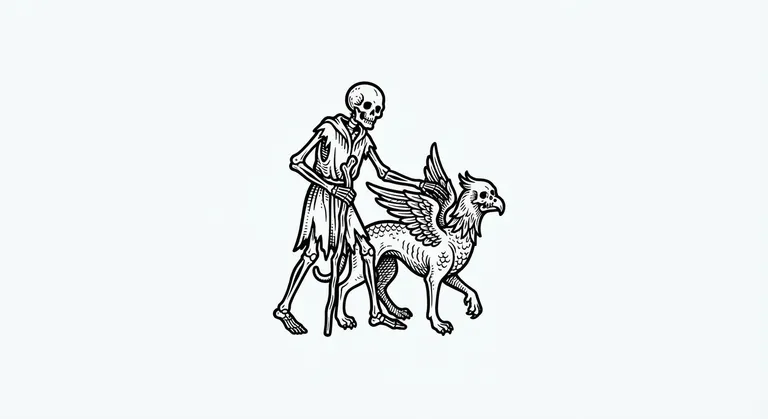
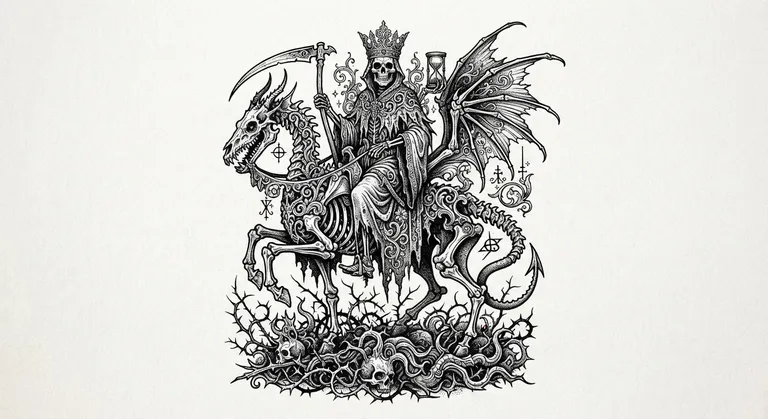
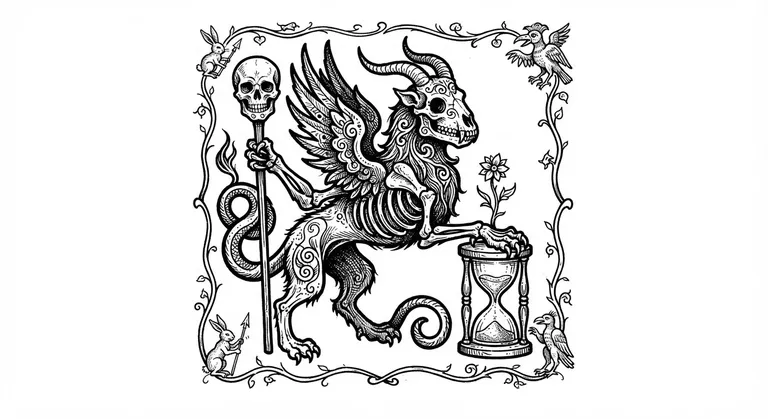
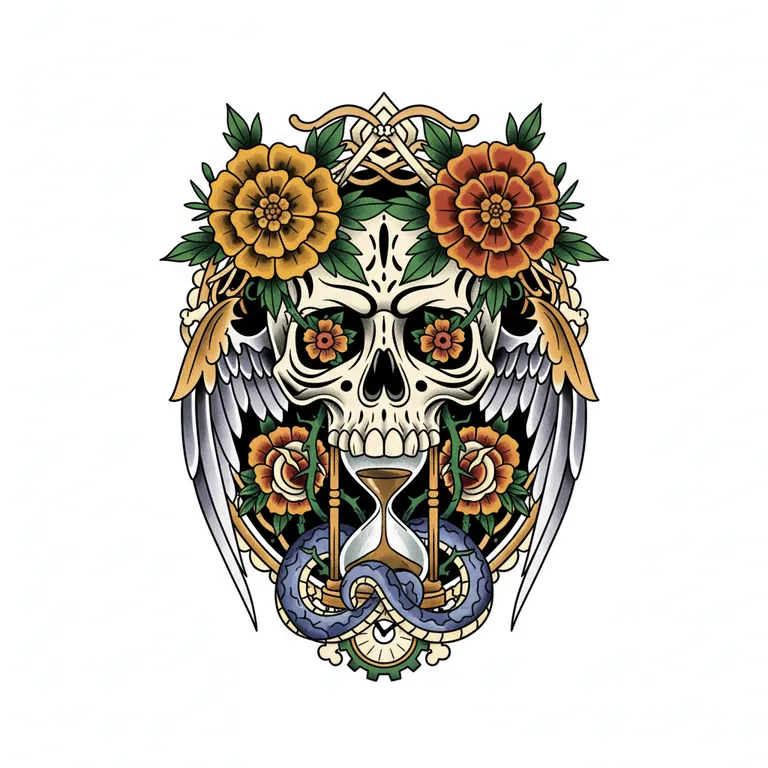
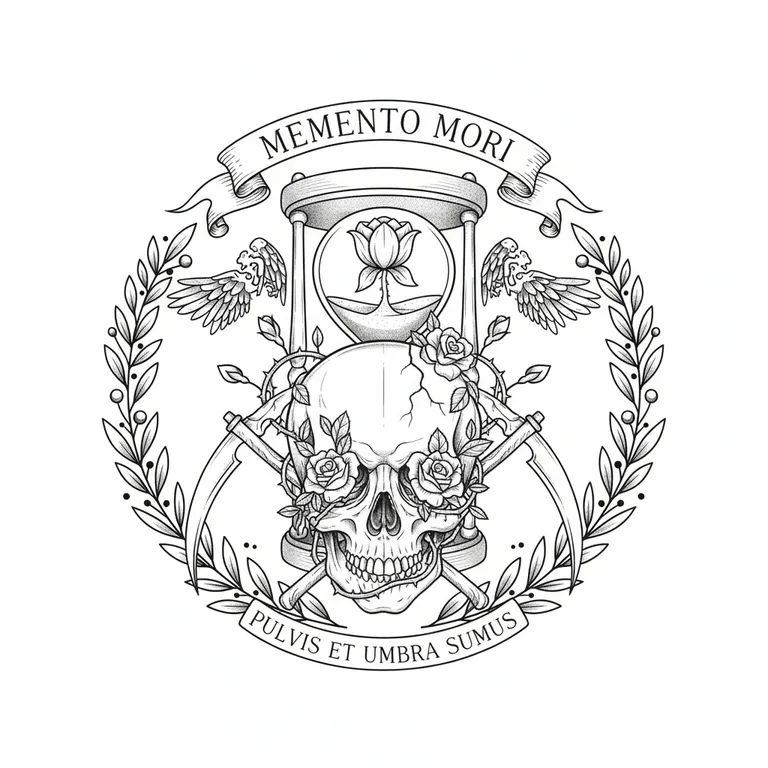
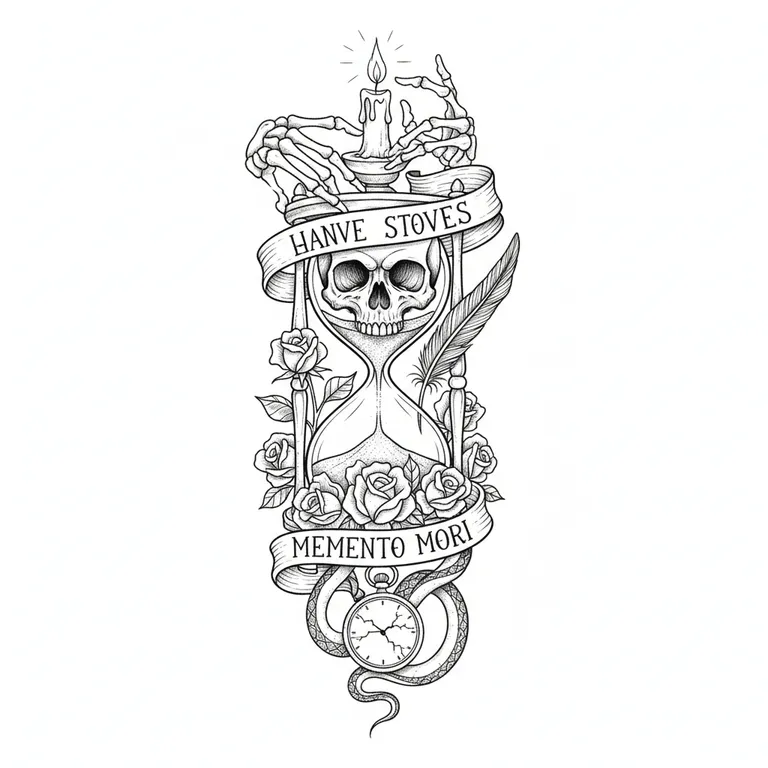
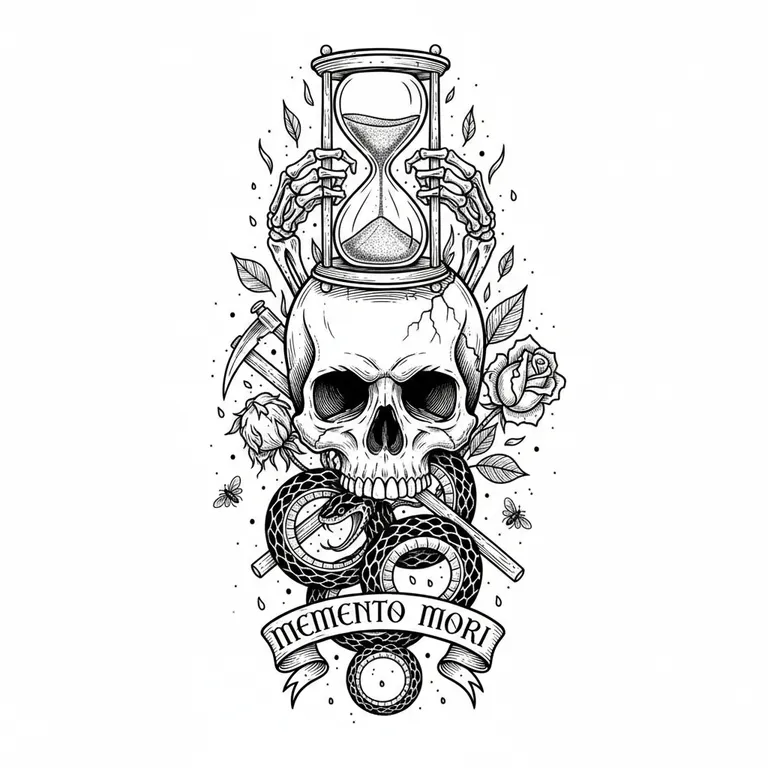
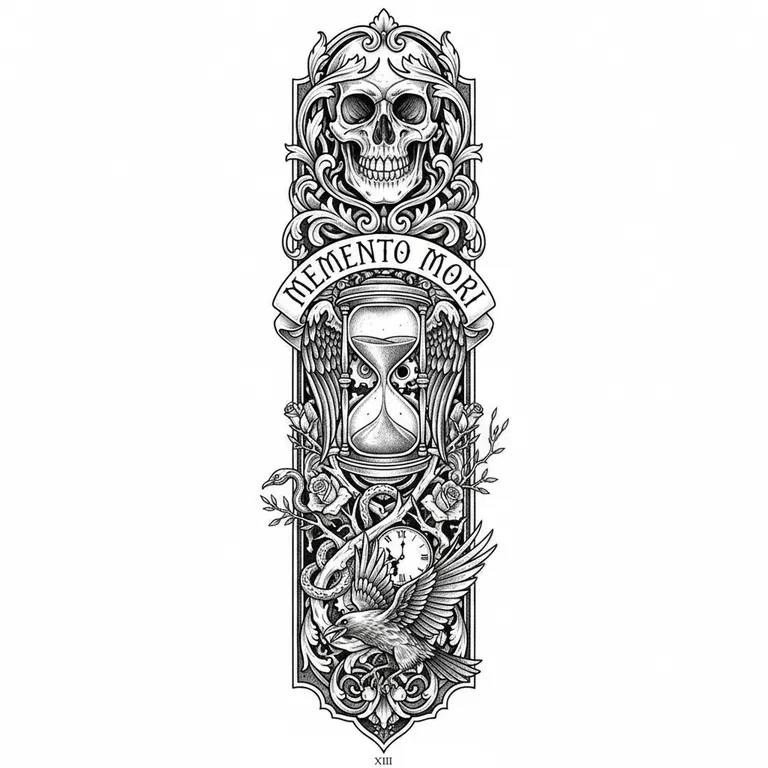
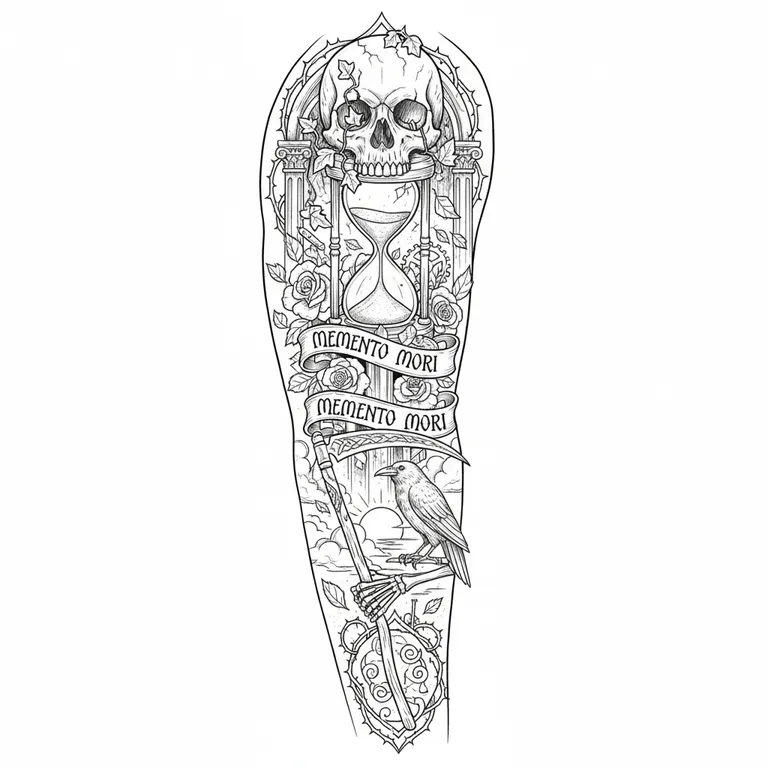
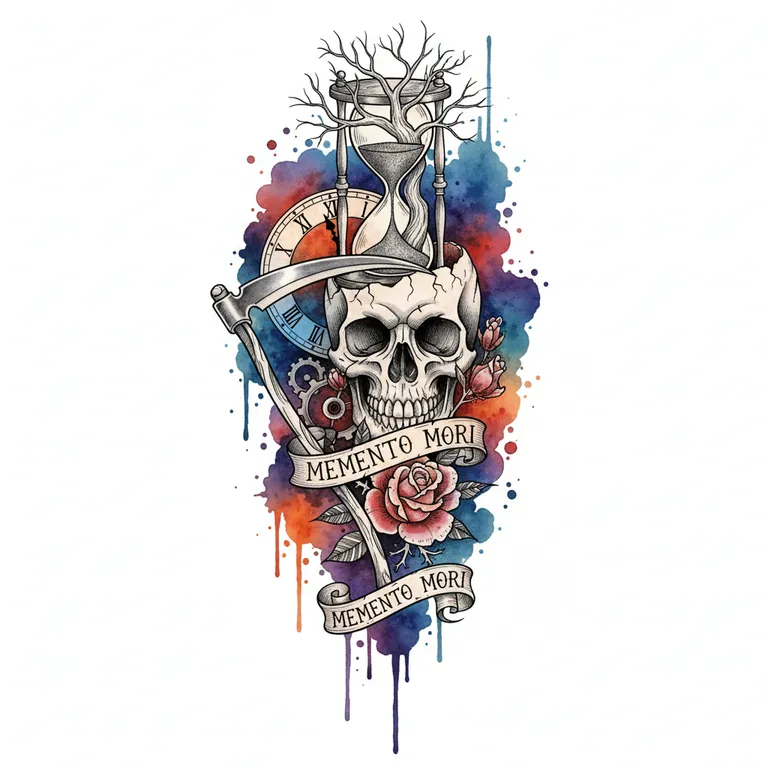
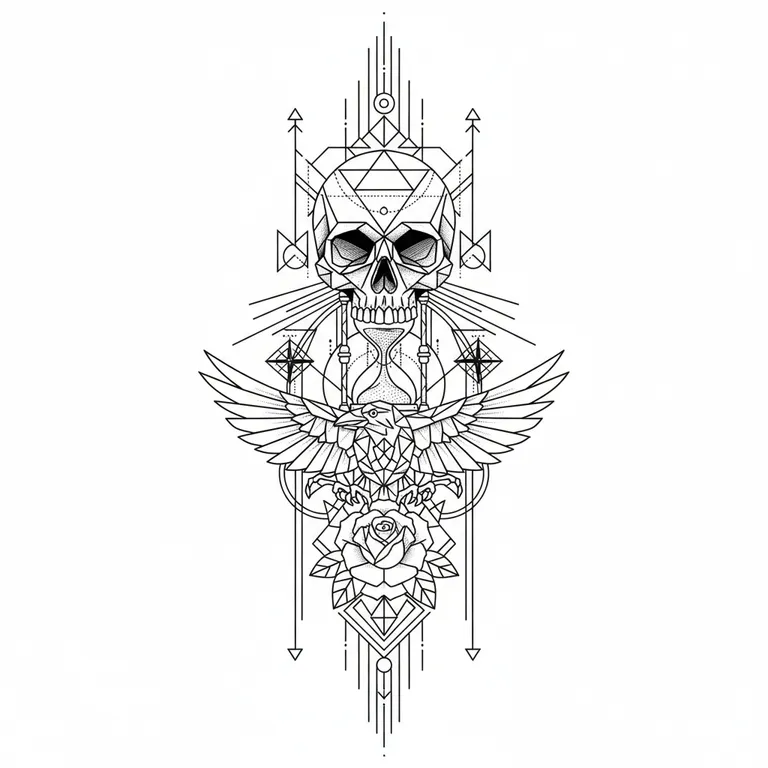
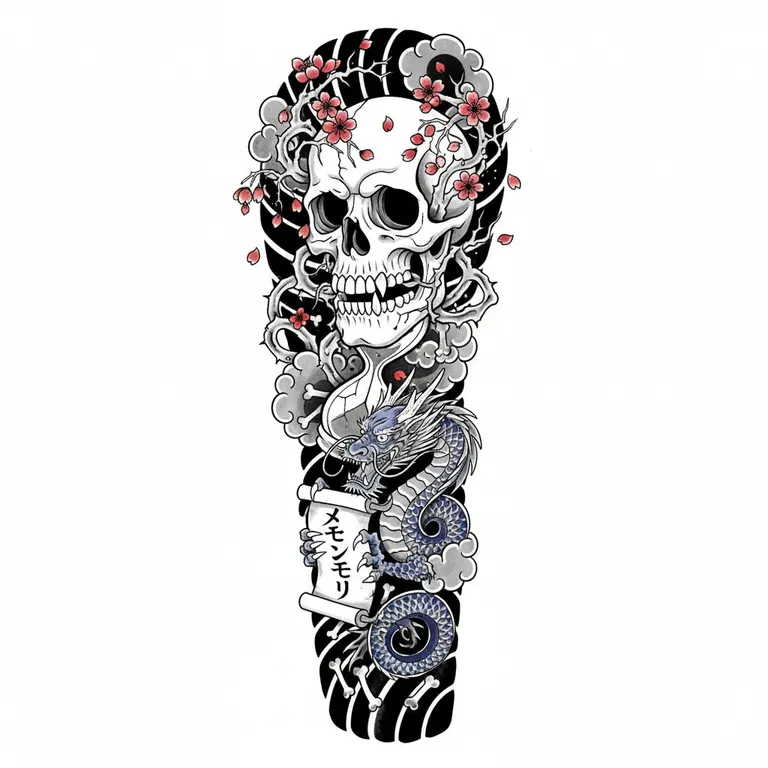
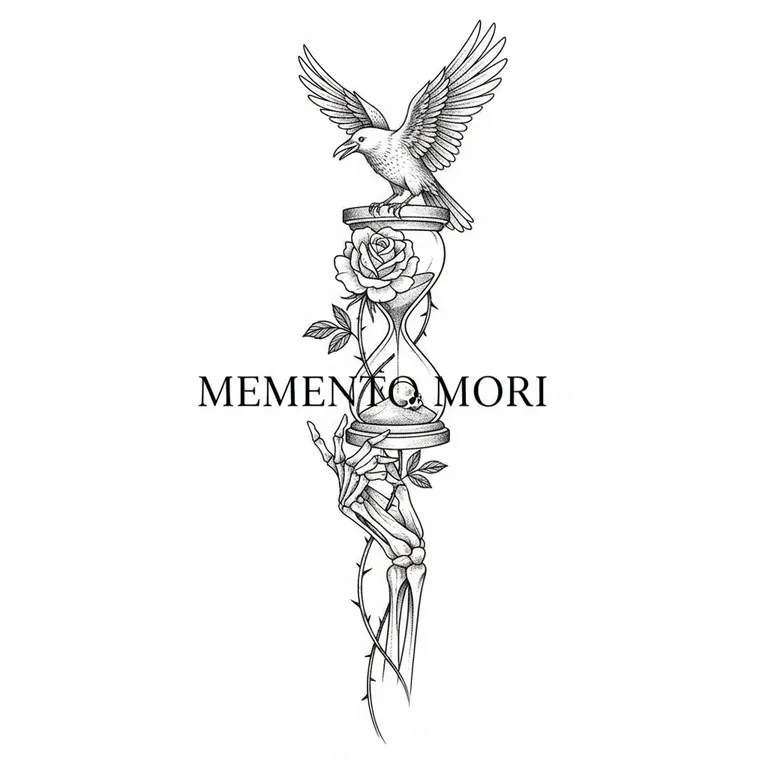
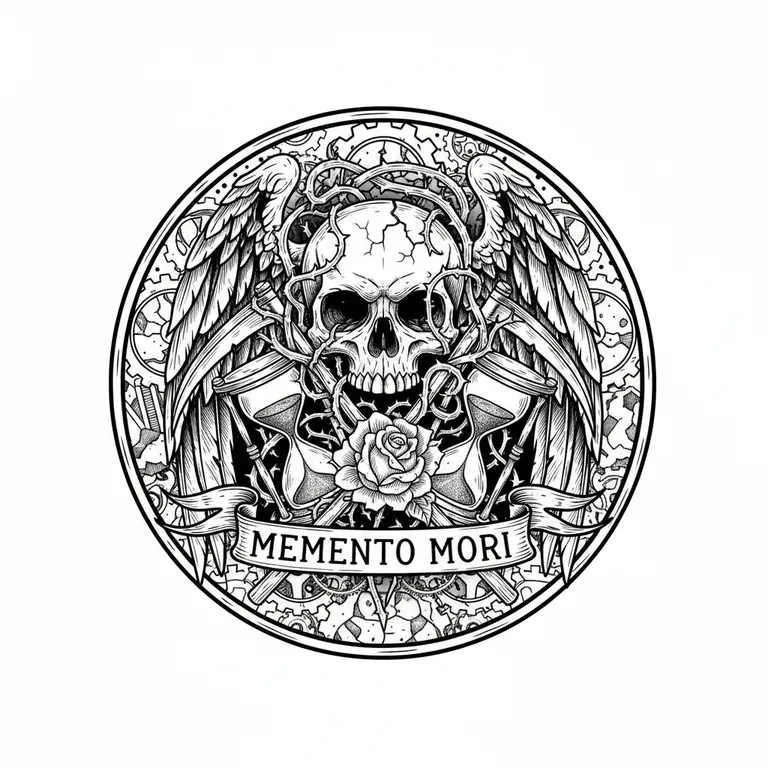
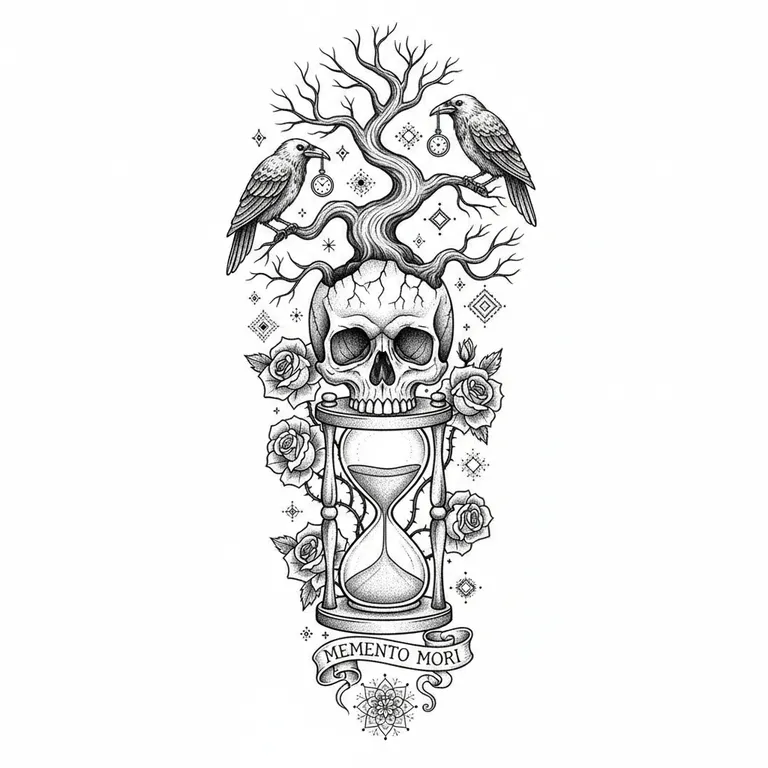
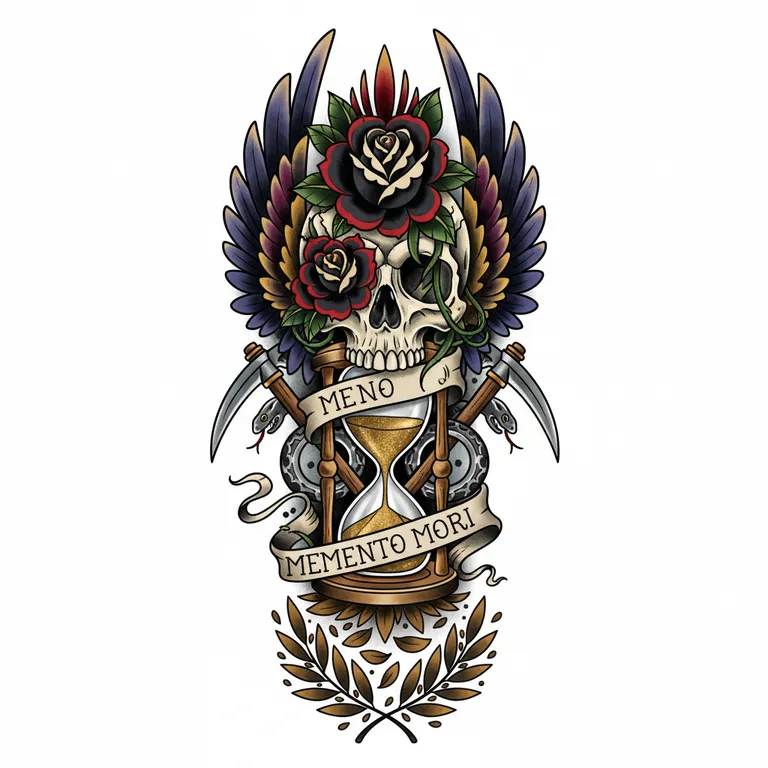
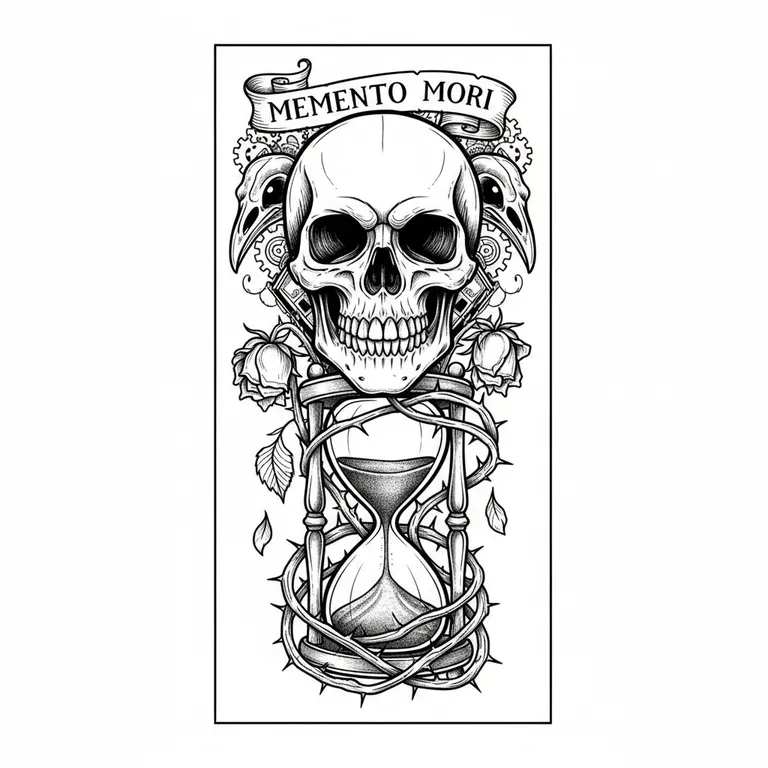
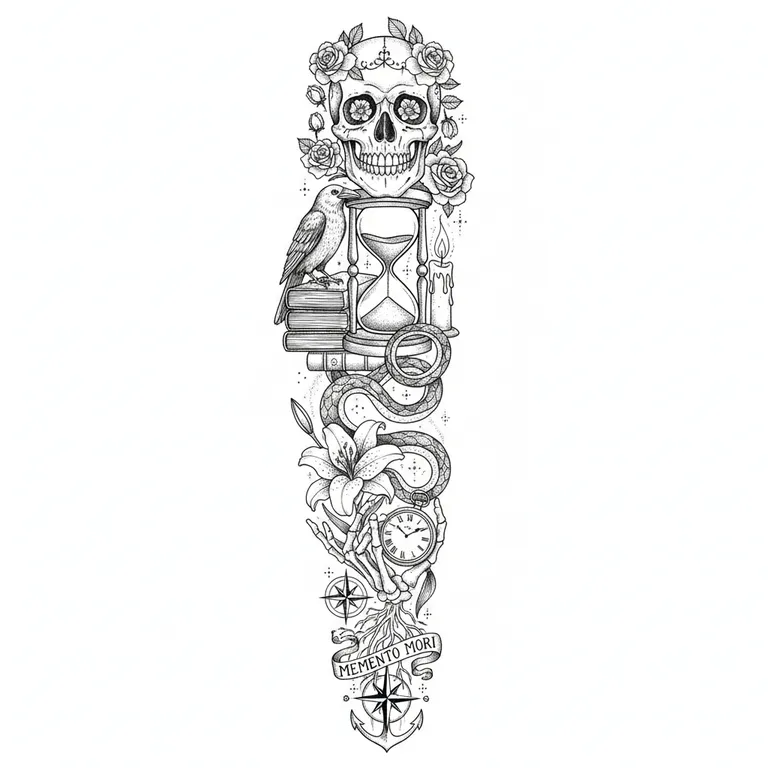
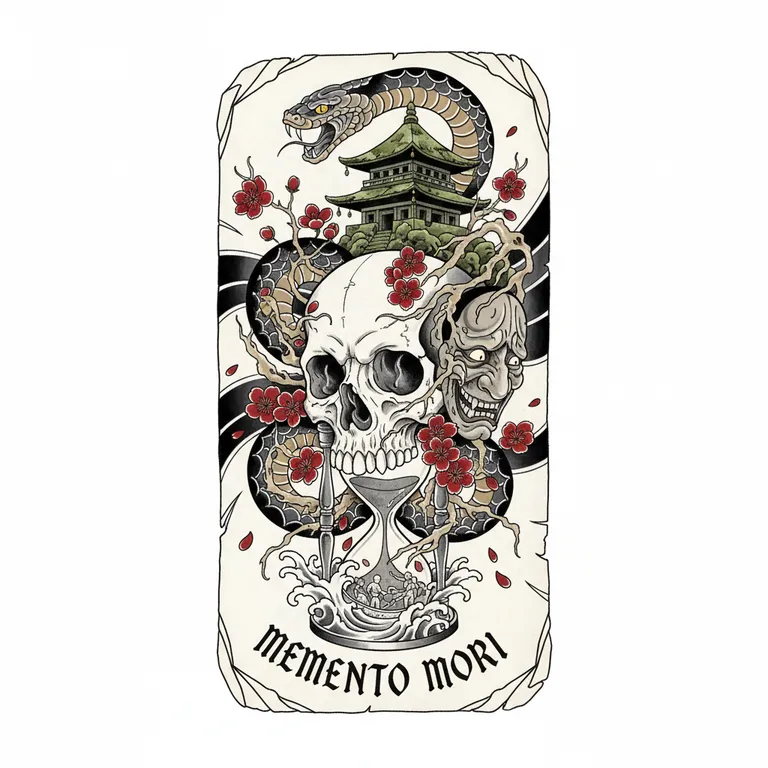
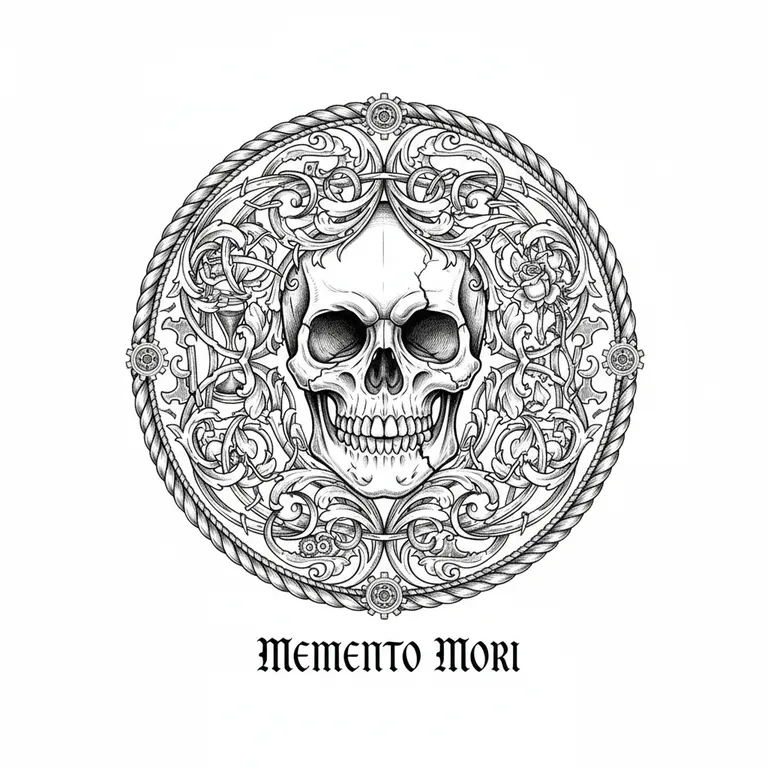
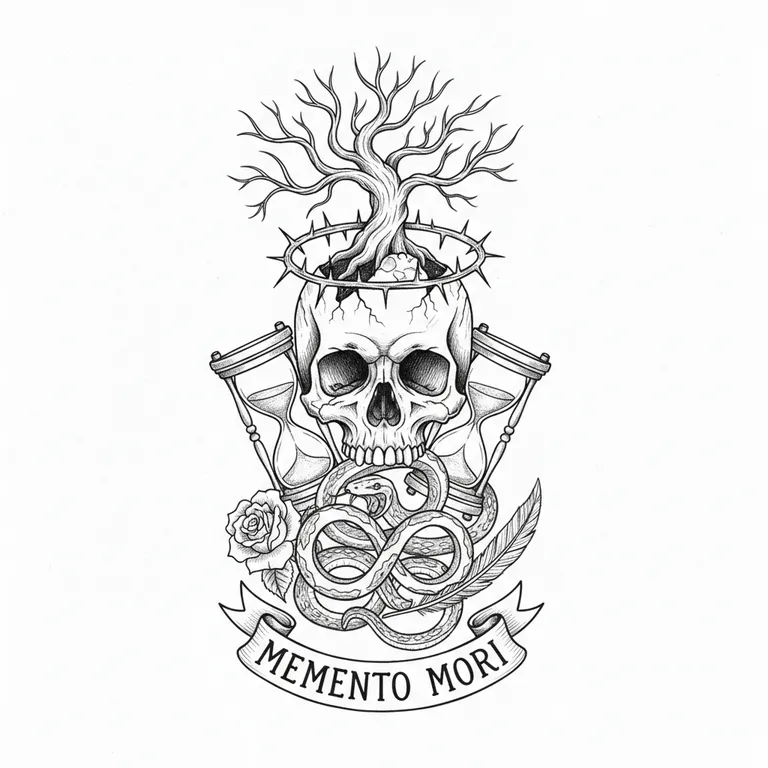
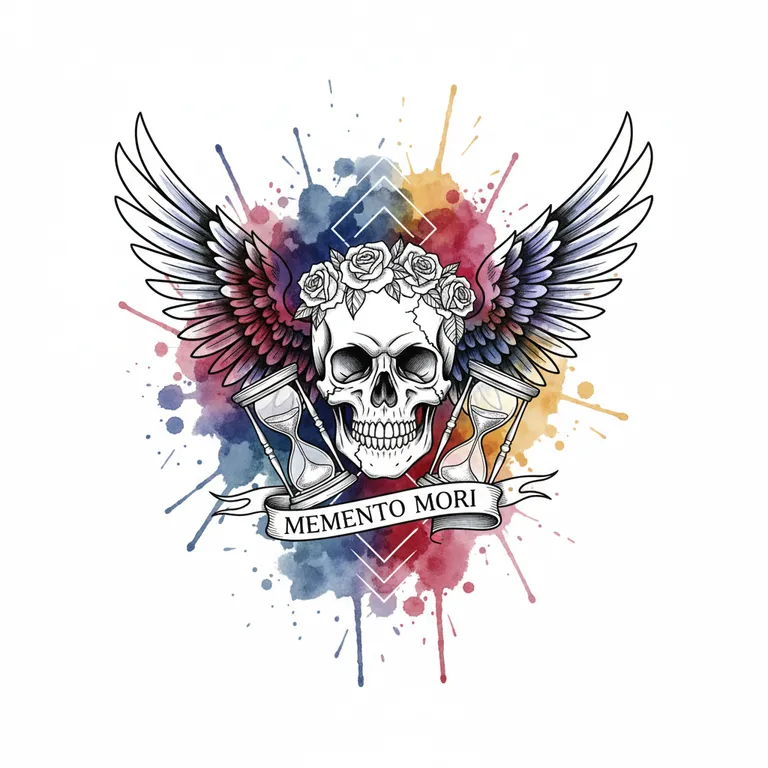
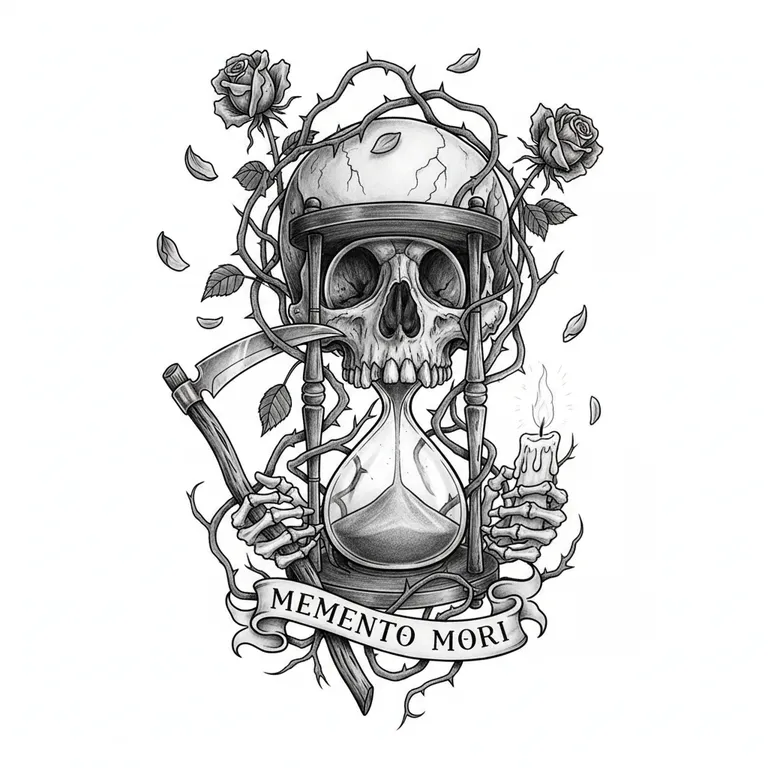
AI-generated memento mori tattoo designs across popular styles. Tap any one to generate your own version and preview it on your skin.
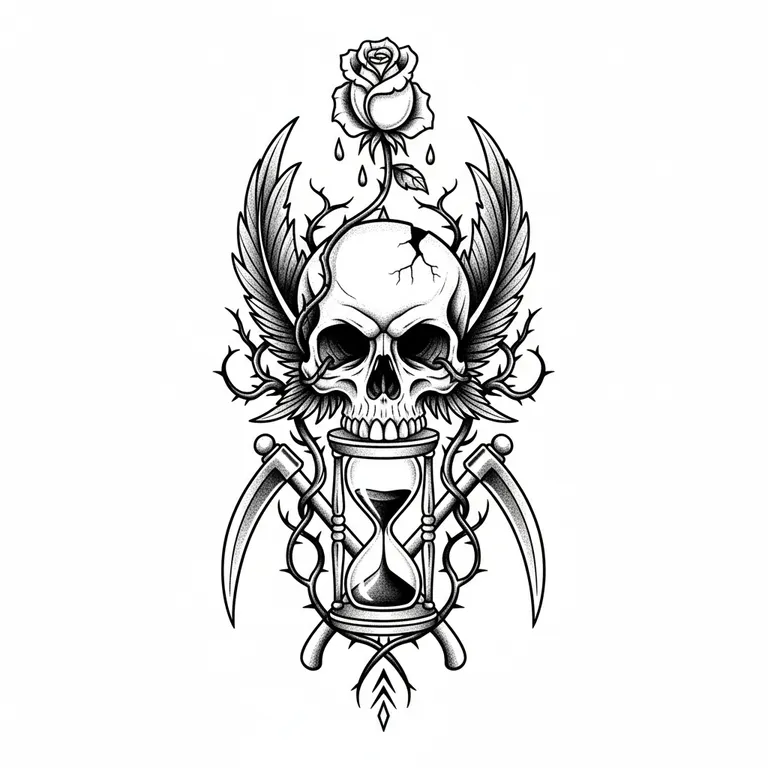
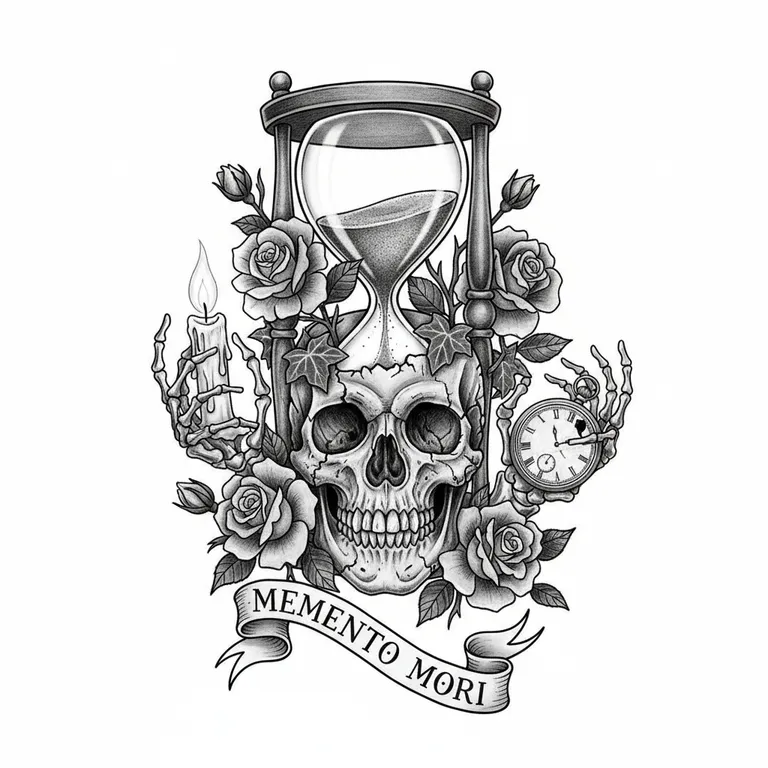
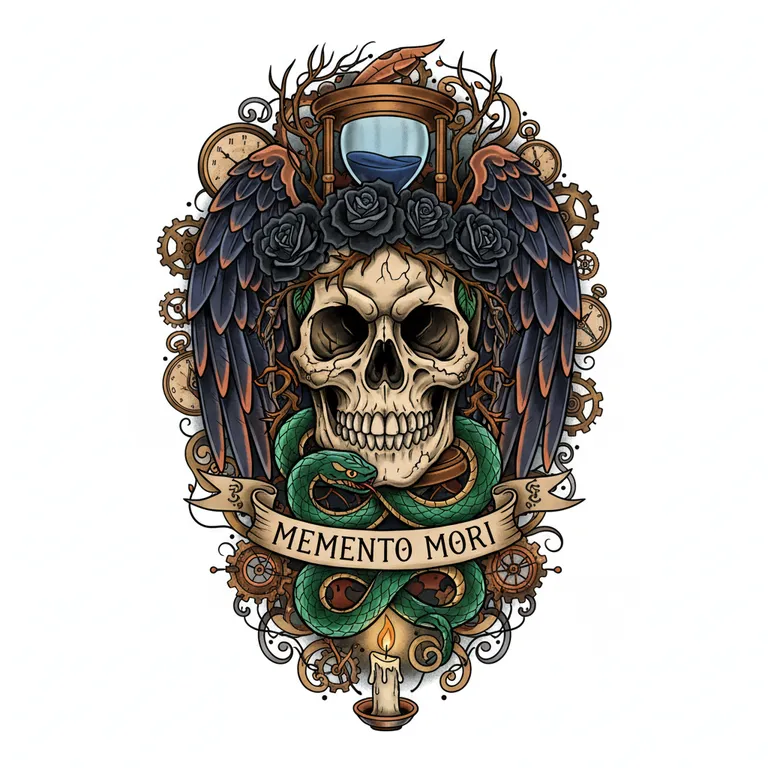
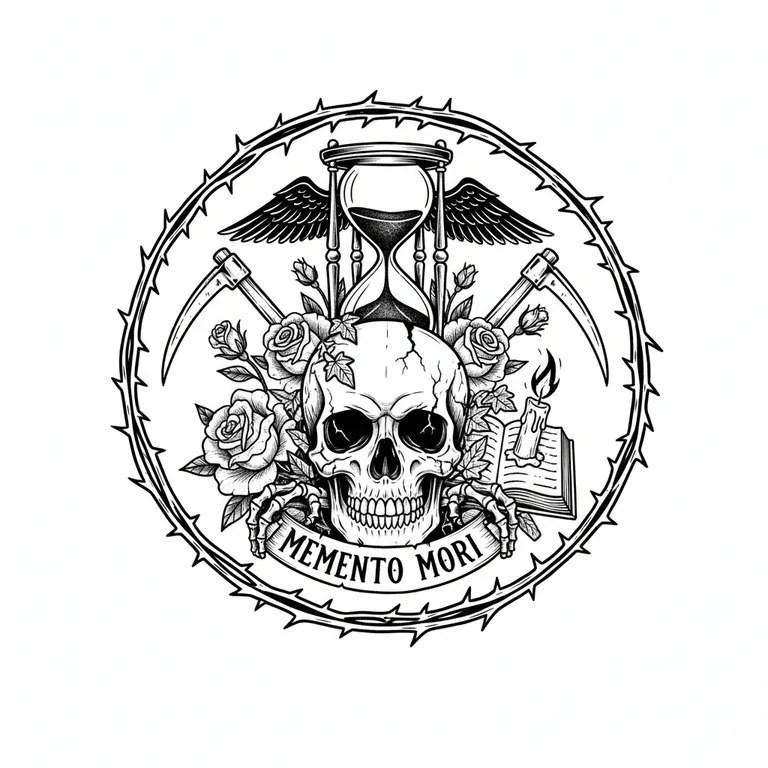


What does a memento mori tattoo mean?
Literally, it is an instruction. Mementō is the imperative of the Latin verb for "to remember", and Wiktionary glosses the whole phrase word for word as "be mindful of dying" (Wiktionary). In art, Tate defines a memento mori as a work "designed to remind the viewer of their mortality and of the shortness and fragility of human life" (Tate). The tattoo carries the same idea onto skin.
What people bring to a studio usually falls into one of two readings. These are common interpretations, not definitions:
- A reminder to use your time. The point is the life left, not the death at the end: fewer postponed plans, less time on what does not matter. This reading pairs naturally with an hourglass or with the words alone.
- A memorial. A piece made after a loss, where the skull or the extinguished candle stands for someone who died, often with a date, initials or a flower they liked.
Neither reading is more correct. Decide which one is yours before you choose symbols, because it changes the design: a reminder works as a short, legible phrase you will see daily; a memorial usually needs room for a name or a date.
Where does memento mori come from?
There is no single origin. The idea of keeping death in mind is ancient; the skull-and-hourglass imagery comes later, from 16th- and 17th-century European painting and early New England gravestones. Here is the trail, with the sources we checked:
| When | Who or what | What the source actually says |
|---|---|---|
| Ancient Rome | Seneca, Letter 26 | Seneca quotes Epicurus: "Think on death" (Latin meditare mortem), then adds: "He who has learned to die has unlearned slavery." (Gummere translation; Latin text) |
| Ancient Rome | Epictetus, Enchiridion 21 | "Let death and exile, and all other things which appear terrible be daily before your eyes, but chiefly death." (Elizabeth Carter translation) |
| Ancient Rome | Marcus Aurelius, Meditations II.8 | Act "as one who, for aught thou knowest, may at this very present depart out of this life." (Casaubon translation) |
| Ancient Rome | The triumph | Epictetus mentions "those who stand behind men in their triumphs and remind them that they are mortal" (Discourses 3.24, George Long translation). Tertullian gives the words: "Respice post te! Hominem te memento!", look behind you, remember you are a man (Apologeticum 33.4). |
| 1533 | Holbein, The Ambassadors | A stretched shape between the two men's feet becomes a skull when seen from the bottom right; a crucifix is half hidden at the top left (National Gallery). |
| 1603 and 1628 | Dutch and Flemish still lifes | Jacques de Gheyn II, Vanitas Still Life, 1603 (The Met); Pieter Claesz, Still Life with a Skull and a Writing Quill, 1628 (The Met). |
| 17th century | Vanitas and memento mori pictures | They "became popular in the seventeenth century, in a religious age when almost everyone believed that life on earth was merely a preparation for an afterlife" (Tate). |
| 1600s to about 1750 | New England gravestones | Most Cape Cod gravestones of the period carry a winged skull; from about 1750 the winged face (an angel or cherub) takes over (Heritage Museums & Gardens). |
What do memento mori symbols mean?
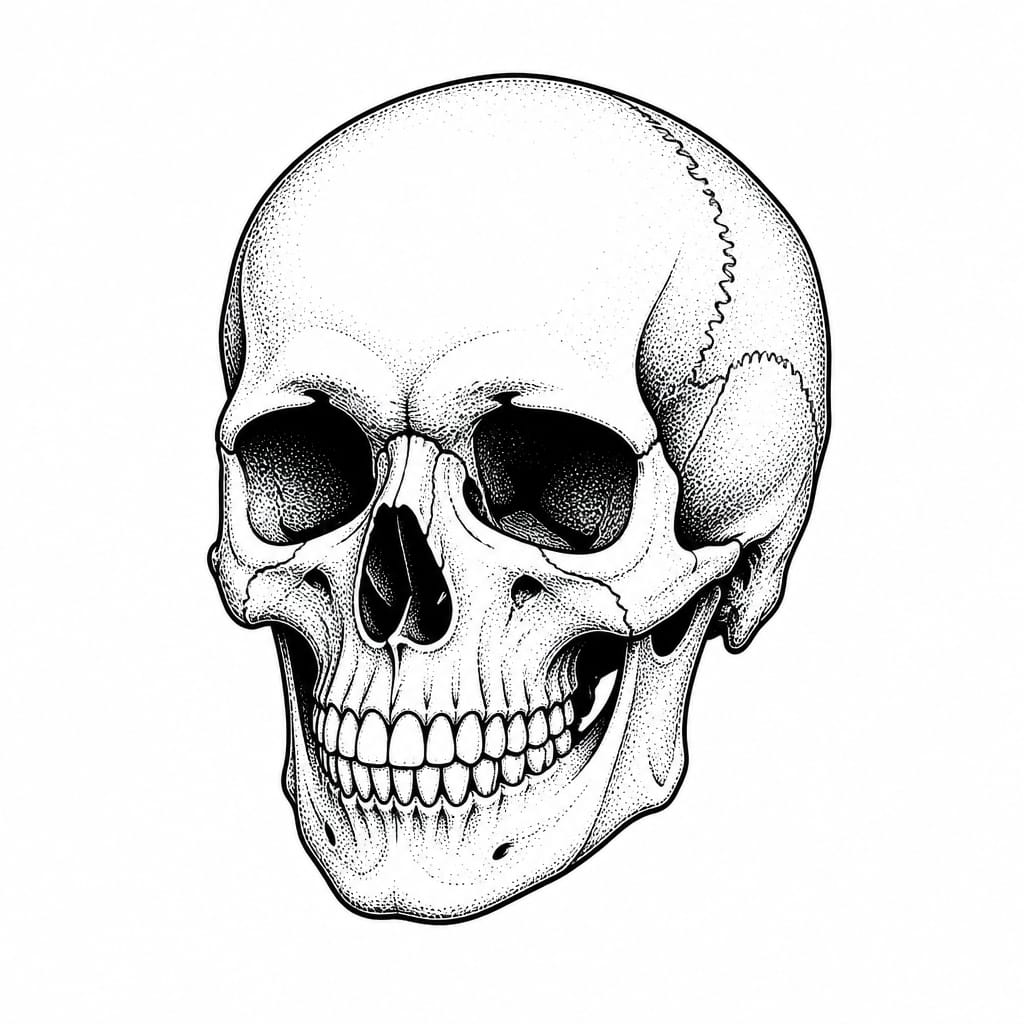
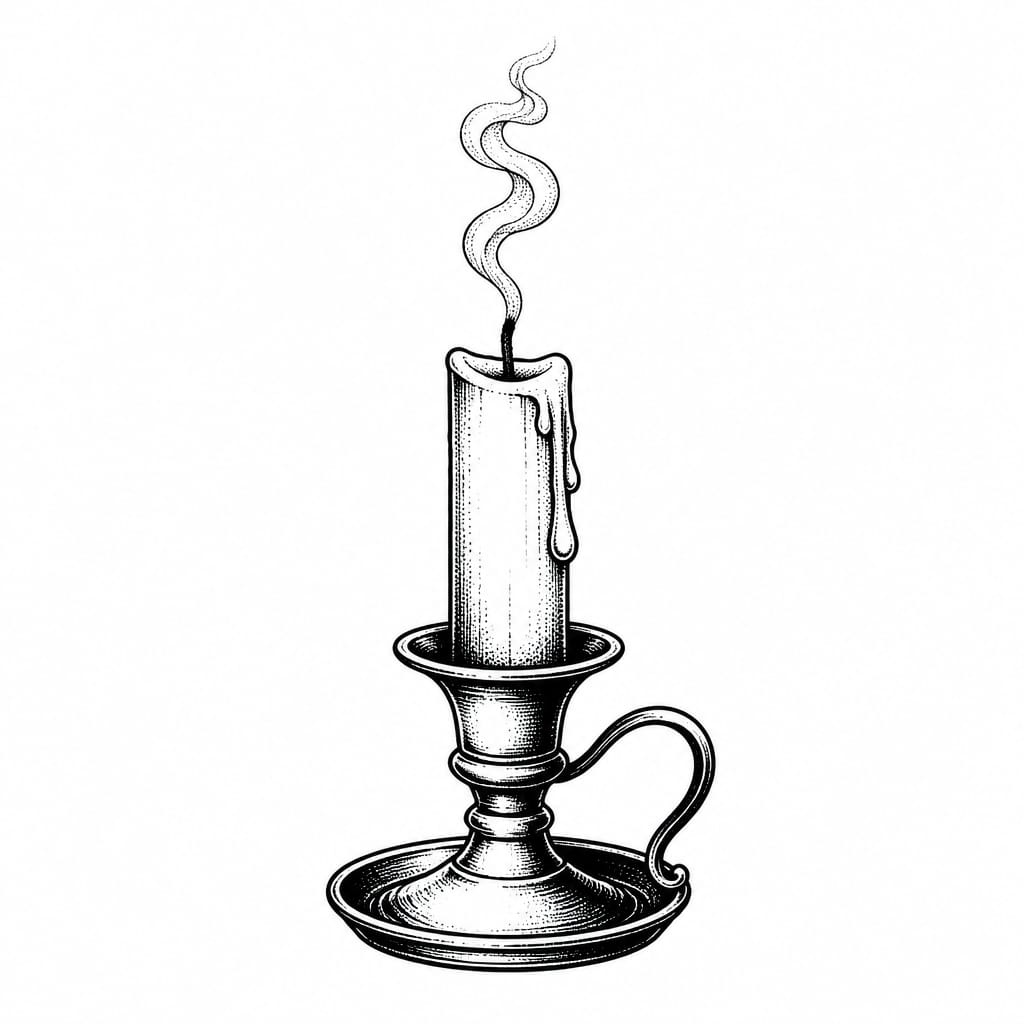
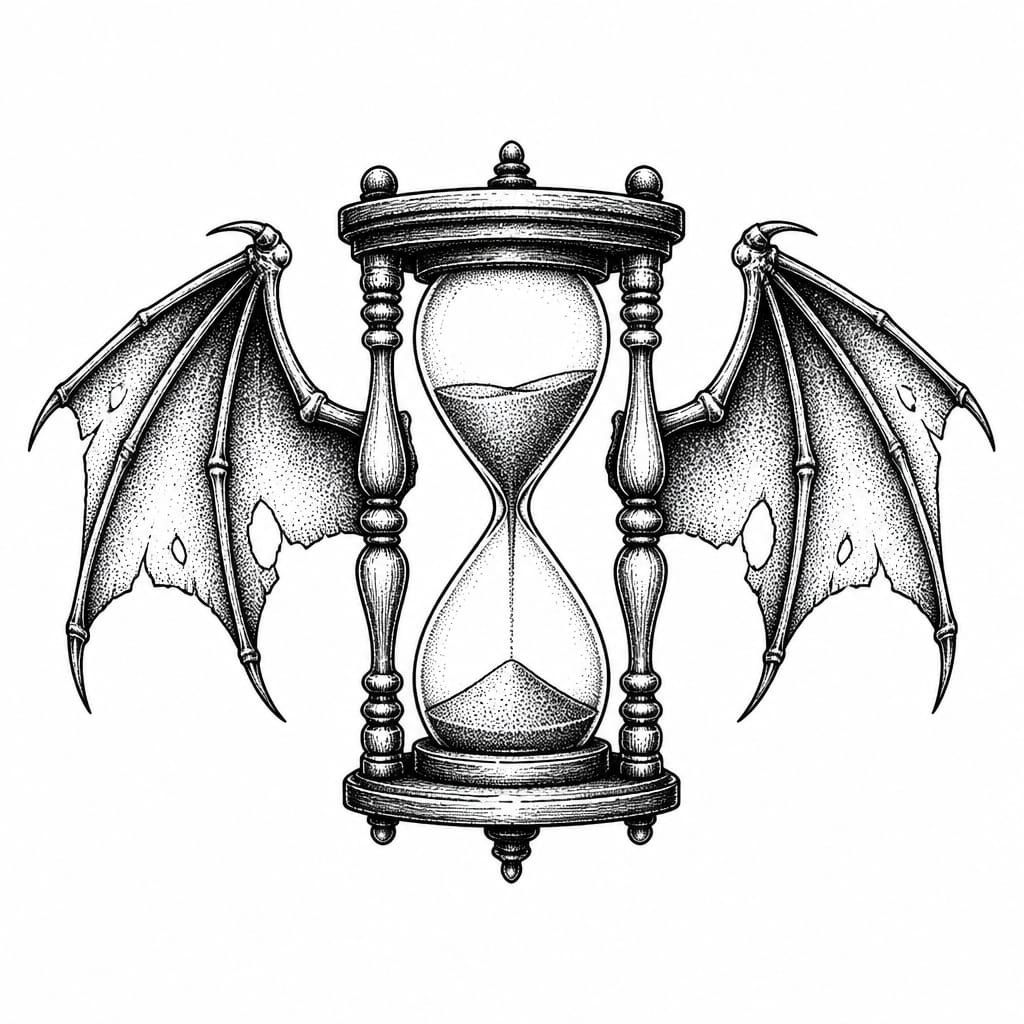
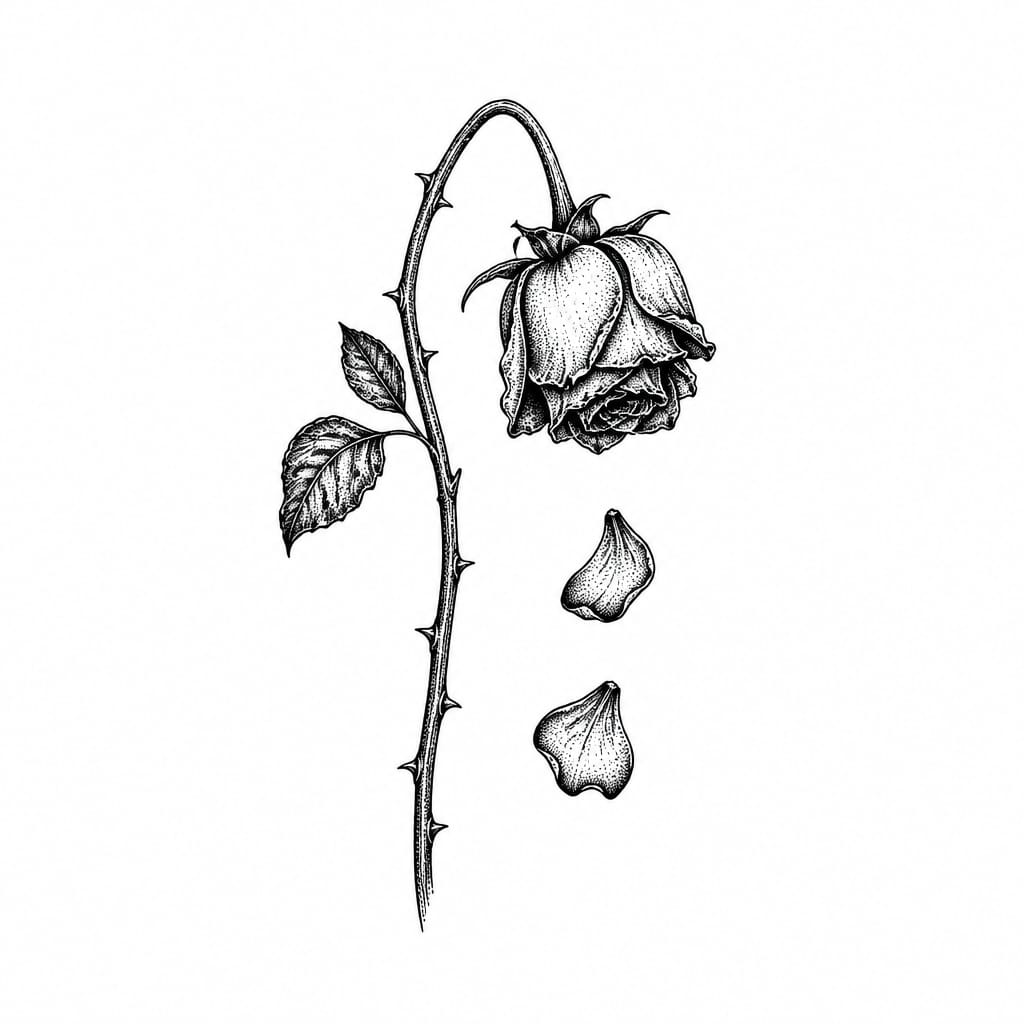
Almost every memento mori tattoo symbol comes from painting. The clearest way to read them is to look at a real one. The Dutch painter Pieter Claesz made this small panel in 1628; it is 24.1 × 35.9 cm, oil on wood, and in the public domain (The Met Collection API record). The pins mark the symbols; the designs underneath redraw them as tattoo flash.
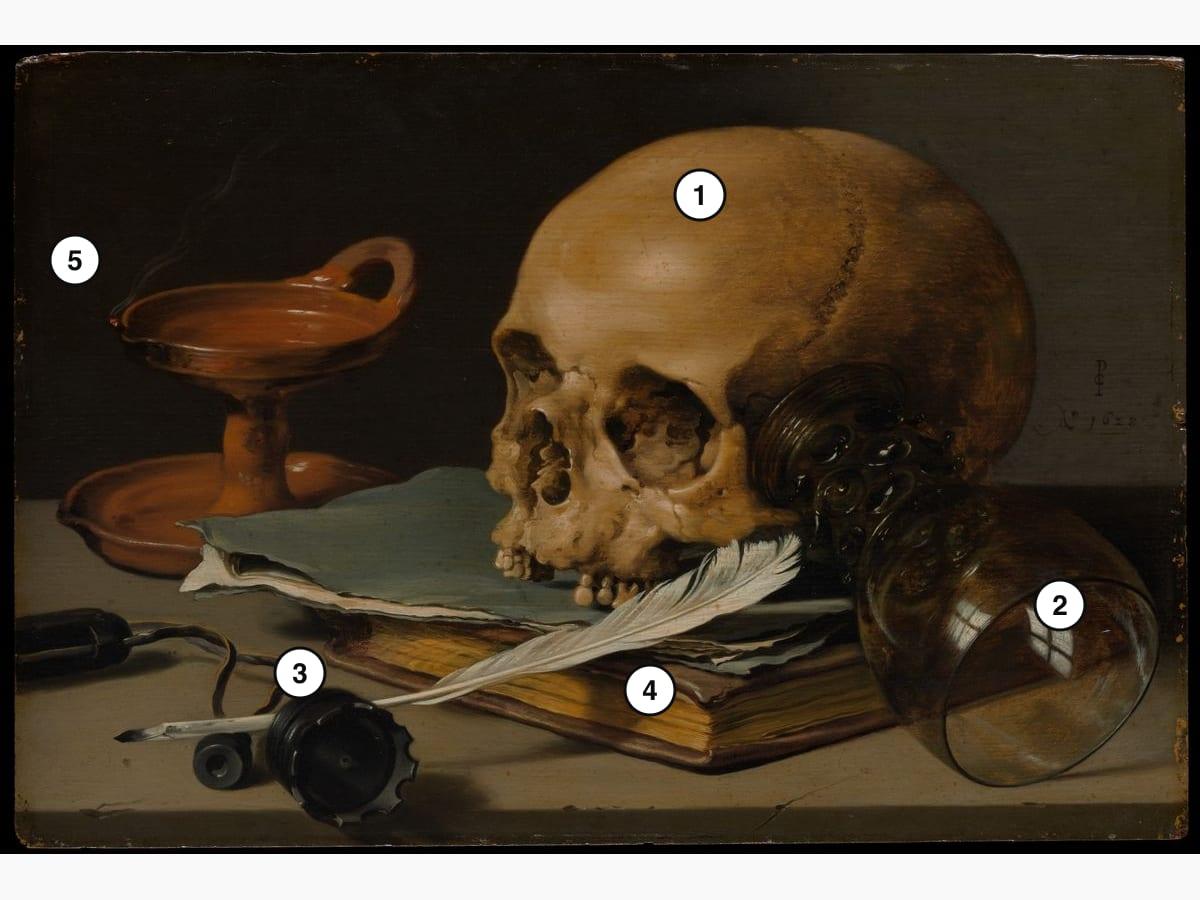



| Symbol | What it stands for | Source | Tattoo note |
|---|---|---|---|
| Skull | Death itself; the basic memento mori is "a portrait with a skull" | Tate | Reads at any size; the simplest choice for a small piece |
| Hourglass or clock | Time running out; on a gravestone rubbing, "the end of mortal life" | Tate, Heritage Museums | Sand level can be drawn high or low; a pocket watch can show a meaningful time |
| Extinguished or guttering candle, lamp | A life burning out | Tate | The smoke wisp needs space to read; give it height |
| Flowers and fruit | Beauty and freshness that do not last | Tate | Drooping head or falling petals make the point; a fresh rose alone does not |
| Wine, books, musical instruments | The vanity of worldly pleasures and goods (vanitas) | Tate | Good secondary objects in a larger still-life piece |
| Winged skull | Death emblem on New England gravestones, 1600s to about 1750 | Heritage Museums | Symmetrical, so it fits chest and upper-back layouts |
| Crossbones, gravedigger's tools | Burial; shown with an hourglass on a gravestone rubbing | Heritage Museums | Frames a skull or a date |
| Hidden or stretched skull | Anamorphosis: a skull that only appears from one angle | National Gallery | An idea for a subtle piece; discuss it with your artist |
| Death's-head hawkmoth | Named for the vaguely skull-shaped pattern on its thorax; wingspan 80 to 120 mm | Wikipedia (secondary), Butterfly Conservation (size) | A real insect, not an invented emblem; the skull is the point of the design |
Butterflies, snakes, swords, praying hands and angels often show up in memento mori tattoos too. They are modern pairings, chosen for how they look or what they mean to the wearer; none of the art-history sources above lists them as memento mori symbols, so we do not assign them a historical meaning.
Which Latin phrases go with memento mori?
| Phrase | Literal meaning | Where it comes from | Status |
|---|---|---|---|
| Memento mori | Remember you must die | Tate | Established |
| Memento vivere | Remember to live | No classical source found | Modern pairing |
| Carpe diem | Usually "seize the day"; Wiktionary calls that a common mistranslation of "enjoy the present" | Horace, Odes 1.11: "carpe diem, quam minimum credula postero" (Latin text; Wiktionary) | Classical |
| Tempus fugit | Time flies | From Virgil, Georgics 3.284: "Sed fugit interea, fugit inreparabile tempus" (Latin text; Wiktionary) | Derived from a classical line |
| Respice post te / Hominem te memento | Look behind you / remember you are a man | Tertullian, Apologeticum 33.4 | Classical |
| Vanitas | Vanity, as in "vanity of vanities, all is vanity" | Ecclesiastes, via Tate | Biblical |
| Amor fati | Love of fate | Amor fati tattoo ideas | See its own page |
Memento mori vs memento vivere: what is the difference?
Memento mori points at the end: remember you will die. Memento vivere points at the present: remember to live. People pair them because together they say the full thought, death as the reason to live well. Be aware that memento vivere has a thinner pedigree. We found no classical text that uses it, so treat it as a modern companion phrase, not an ancient motto. Carpe diem is the classical line closest to that spirit.
As a design, the pair suits mirrored compositions. One idea is a two-sided "coin": a skull and memento mori on one face, a flower or sun and memento vivere on the other, worn as two matching circles. Another is splitting the pair across a body: one phrase on each forearm or each side of the collarbone, so the two halves only read together. These are design ideas, not traditions; tell your artist which side should face out when your arms are by your sides.
Memento mori tattoo ideas by style
The same symbols change character with the style. How each one builds the image (see tattoo styles explained for the full comparison):
- Fine line: thin single lines. Suits a small hourglass, a candle with a smoke line, or the phrase alone. The quietest version.
- Blackwork: solid black and bare skin as negative space. Skulls and moths turn graphic and high-contrast.
- Traditional: thick outlines, a few flat colors. A winged hourglass or a skull with a rose banner fits the old flash look.
- Realism: shading built up for depth. The way to recreate a vanitas still life like the Claesz panel, and it needs room.
- Geometric: shapes and linework. An hourglass is already a pair of triangles, which makes it an easy fit.
- Script: lettering as the whole piece. The font section below compares three options.
Engraving or woodcut-style hatching, as in the gallery above, borrows directly from old prints and suits the period imagery. For a small, simple or minimalist piece, use one symbol and nothing else: a single hourglass, a small skull, or the two words in a clean line. Every idea on this page works regardless of gender; choose by size, placement and style, not by who it is "for".
What font works for a memento mori tattoo?
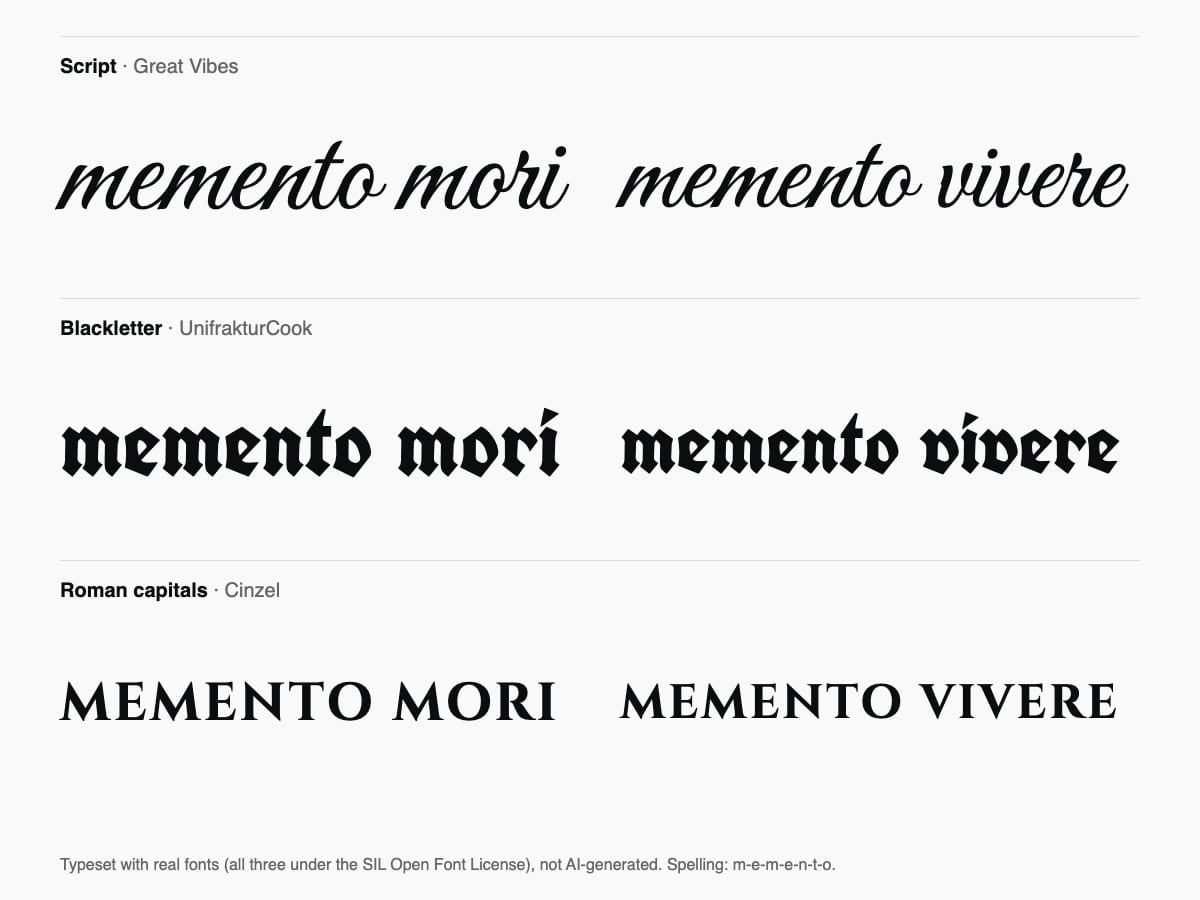
Three families cover most requests. Script is flowing and personal, but at the same width its lowercase letters are the smallest of the three, so it needs more length to stay readable. Blackletter is dense and dark and matches the gothic feel of skulls and moths; look closely at it before committing, because in the sample above the v of vivere is a closed shape that reads almost like a b. Roman capitals are the most formal and, in the sample above, the plainest to read. The fonts in the image are free and openly licensed (Google Fonts, OFL).
Do not rely on an AI image generator to spell Latin: image models can drop or swap letters. To get exact text, use the name tattoo generator, which sets your words in real tattoo fonts, then bring that file to your artist. The tattoo size guide explains how small lettering can go before it stops being readable.
Where should a memento mori tattoo go, and how big?
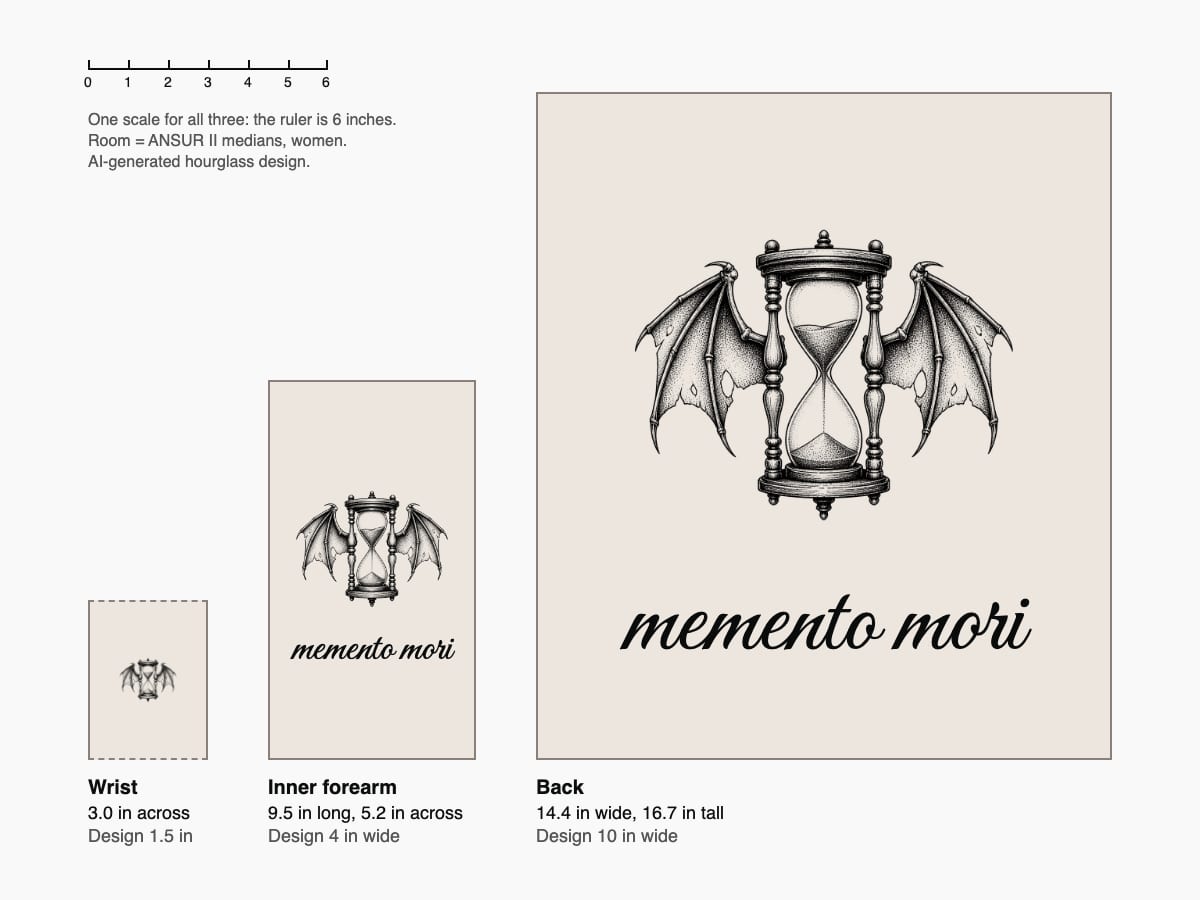
Placement sets the size, and size sets what survives. The room figures come from ANSUR II, a survey of 1,986 women and 4,082 men in the US Army, published in 2012 and public since 2017; it is a military sample, not the general population, so treat the numbers as a guide. Pain tiers are what artists report on our tattoo pain chart (Pimentel et al., 2021), not measurements.
| Placement | Room, women / men | Pain tier (artists) | Suits |
|---|---|---|---|
| Wrist | 3.0 / 3.5 in across one side | Not rated | One small symbol; the phrase only as a thin line |
| Forearm | 9.5 × 5.2 / 10.5 × 6.1 in | Lower | Symbol plus phrase, readable every day |
| Upper arm | 12.2 × 6.0 / 13.2 × 7.0 in | Lower (biceps, triceps) | Vertical compositions, a candle or hourglass with banner |
| Hand | 7.1 × 3.1 / 7.6 × 3.5 in | Middle | A tiny skull or single word; very visible |
| Chest, ribs | No survey figure | Higher | Symmetrical winged skulls, longer text along the ribs |
| Back | 14.4 × 16.7 / 16.3 × 18.8 in | Not rated | A full vanitas still life |
| Sleeve | Full arm about 21.7 / 23.7 in long | Mixed: lower on the arm, middle at the elbow | Several symbols as one composition |
Pain tiers are only half the story. In a survey of 1,092 tattooed people, the body area was not a significant predictor of pain once session length, stress and bleeding were counted, so a bigger piece on an "easy" spot can hurt more than a small one on the ribs. To turn a design into exact inches for your body, try the tattoo size calculator.
Is memento mori a Christian symbol?
It belongs to more than one tradition. The Stoic passages above come from Roman philosophers, not from the Church, and use their own words. The imagery most tattoos draw on, though, grew up in a Christian setting: Tate places the popularity of vanitas and memento mori pictures in a 17th-century "religious age" (Tate); Holbein set a hidden crucifix opposite his skull, which the National Gallery reads as a hint at "the hope of redemption" (National Gallery); and the winged skulls on early New England graves reflect a Puritan focus on "being prepared for death at any moment" (Heritage Museums & Gardens). Whether your tattoo is religious is your call; the phrase works with or without faith.
What should you bring to your artist?
- A reference. A design from the gallery above or one you generated, plus a note on what to change. Artists redraw references; they do not copy them pixel for pixel.
- The exact text. Spelled out in plain type (memento mori, memento vivere), with the font you want.
- A size and a spot. Width and height in inches or cm, measured with the size calculator.
- A clean stencil, if you have one. The stencil maker turns an image into line art you can discuss with the artist.
- A budget. Shop minimums and hourly rates vary; see how much a tattoo costs.
- Time for aftercare. Read the tattoo healing stages before you book; if it is your first, start with the first tattoo guide.
Related tattoo ideas and guides
Amor Fati Tattoo Ideas
Love of fate, a Latin phrase that pairs naturally with memento mori.
Tutto Passa Tattoo Ideas
Everything passes, the same idea of impermanence in Italian.
Veni Vidi Vici Tattoo Ideas
Another short Latin line, built for script and Roman capitals.
Laugh Now Cry Later Tattoo Ideas
The two masks, joy now and sorrow later, for a less solemn take on time.
Tattoo Styles Explained
Compare fine line, blackwork, traditional and realism before you generate.
Tattoo Size Guide
How much room each body part has, in inches and cm.
Sources
- Tate, Art term: Memento mori · checked November 6, 2026
- Tate, Art term: Vanitas · checked November 6, 2026
- Wiktionary, memento mori · checked November 6, 2026
- Wiktionary, memento · checked November 6, 2026
- Wiktionary, carpe diem · checked November 6, 2026
- Wiktionary, tempus fugit · checked November 6, 2026
- The National Gallery, Hans Holbein the Younger, The Ambassadors (1533) · checked November 6, 2026
- The Met Collection API, Pieter Claesz, Still Life with a Skull and a Writing Quill (1628) · checked November 6, 2026
- The Met Collection API, Jacques de Gheyn II, Vanitas Still Life (1603) · checked November 6, 2026
- Seneca, Moral Letters to Lucilius, Letter 26, trans. Richard M. Gummere (Wikisource) · checked November 6, 2026
- Seneca, Epistulae, Book III, Latin text (The Latin Library) · checked November 6, 2026
- Epictetus, Enchiridion, trans. Elizabeth Carter (MIT Internet Classics Archive) · checked November 6, 2026
- Epictetus, Discourses, trans. George Long (Project Gutenberg) · checked November 6, 2026
- Marcus Aurelius, Meditations, trans. Meric Casaubon (Project Gutenberg) · checked November 6, 2026
- Tertullian, Apologeticum, Latin text (The Latin Library) · checked November 6, 2026
- Virgil, Georgics III, Latin text (The Latin Library) · checked November 6, 2026
- Horace, Odes I, Latin text (The Latin Library) · checked November 6, 2026
- Heritage Museums & Gardens, Symbolism of gravestones · checked November 6, 2026
- Wikipedia, Acherontia atropos (secondary source) · checked November 6, 2026
- Butterfly Conservation, Death's-head Hawk-moth · checked November 6, 2026
- ANSUR II, The OPEN Design Lab, Penn State · checked November 6, 2026
- Pimentel et al. (2021), Frontiers in Virtual Reality · checked November 6, 2026
- Witkos & Hartman-Petrycka (2020), IJERPH · checked November 6, 2026
- Google Fonts repository, SIL Open Font License fonts · checked November 6, 2026
Memento Mori tattoo FAQ
Is a memento mori tattoo morbid?+
It can look dark, but the idea behind it is about how to live. Tate defines a memento mori as a reminder of "the shortness and fragility of human life", and Seneca, quoting Epicurus, connected thinking on death with freedom. If the imagery feels too heavy, an hourglass or the words alone carry the same meaning without a skull.
Did Roman generals really hear "memento mori" during a triumph?+
Not in the sources we checked. Epictetus says someone stood behind the triumphing general to remind him he was mortal, and Tertullian gives the words as "Respice post te! Hominem te memento!" (look behind you, remember you are a man). The words "memento mori" do not appear in either passage.
What does memento vivere mean?+
Literally "remember to live". It is used as the positive partner of memento mori, but we found no classical source for it, so treat it as a modern pairing rather than an ancient motto.
How big should a memento mori script tattoo be?+
There is no fixed minimum; it depends on the font and on your artist. Thin script needs more length than Roman capitals to stay readable. As a reference, one side of the wrist is about 3 to 3.5 inches across and a forearm about 5 to 6 inches across, so the two words fit far more comfortably along the forearm.
Can I combine memento mori with amor fati?+
Yes. Memento mori is about remembering death, amor fati about accepting what happens, so they work as a pair, for example one on each forearm. Check both spellings on the stencil before the session.
Tattoo planning tool
Design your own Memento Mori tattoo
Describe your idea, generate it in any style, and preview it on your own skin before the needle.
Generate for freeFree to start
Explore more tattoo ideas
- Amor Fati Tattoo IdeasAn amor fati tattoo means "love of fate", embracing everything that happens to you, good or bad, as necessary.
- Veni Vidi Vici Tattoo IdeasA veni vidi vici tattoo carries Julius Caesar's famous boast, "I came, I saw, I conquered." It's a statement of confidence and victory, perfect for marking a hard-won achievement.
- Cerberus Tattoo IdeasA cerberus tattoo depicts the three-headed dog that guards the gates of the Greek underworld.
- Zeus Tattoo IdeasA zeus tattoo honours the king of the Greek gods, ruler of the sky and wielder of the thunderbolt.