
First Tattoo Guide: Plan Before You Book
Guides · June 24, 2026
Before booking your first tattoo, decide five things: the subject, visual style, physical dimensions, body area and what the artist may change. Then choose an artist whose portfolio matches that direction and send a short brief with references. You do not need to arrive with finished tattoo artwork, but you should be able to explain the job clearly and approve its size and placement before tattooing starts.
TL;DR
- •Choose an artist for the style you want and inspect complete portfolio examples, including healed work when available.
- •Give dimensions in inches or centimeters instead of only saying small, medium or large.
- •Send a concise brief with subject, placement, color direction and a few references that explain different decisions.
- •Ask about price structure, deposit, design revisions, appointment length, studio rules and aftercare before paying.
- •Approve the final stencil from normal viewing distance and multiple angles before the tattoo begins.
Make five decisions before contacting an artist
Write one line for each decision: subject, style, approximate width and height, body area, and flexibility. Flexibility means naming what must stay exact and what the artist may reinterpret. A memorial date may need exact characters, while the surrounding flowers can remain open to composition changes. This separates the meaning you are protecting from the drawing decisions you are hiring the artist to solve.
| Decision | Useful answer | Too vague |
|---|---|---|
| Subject | Single swallow with an olive branch | Something meaningful |
| Style | Blackwork with open negative space | Modern |
| Size | About 4 × 6 in / 10 × 15 cm | Medium |
| Placement | Outer left upper arm | Somewhere on my arm |
| Flexibility | Keep the date exact; composition can change | Make it exactly like this image |
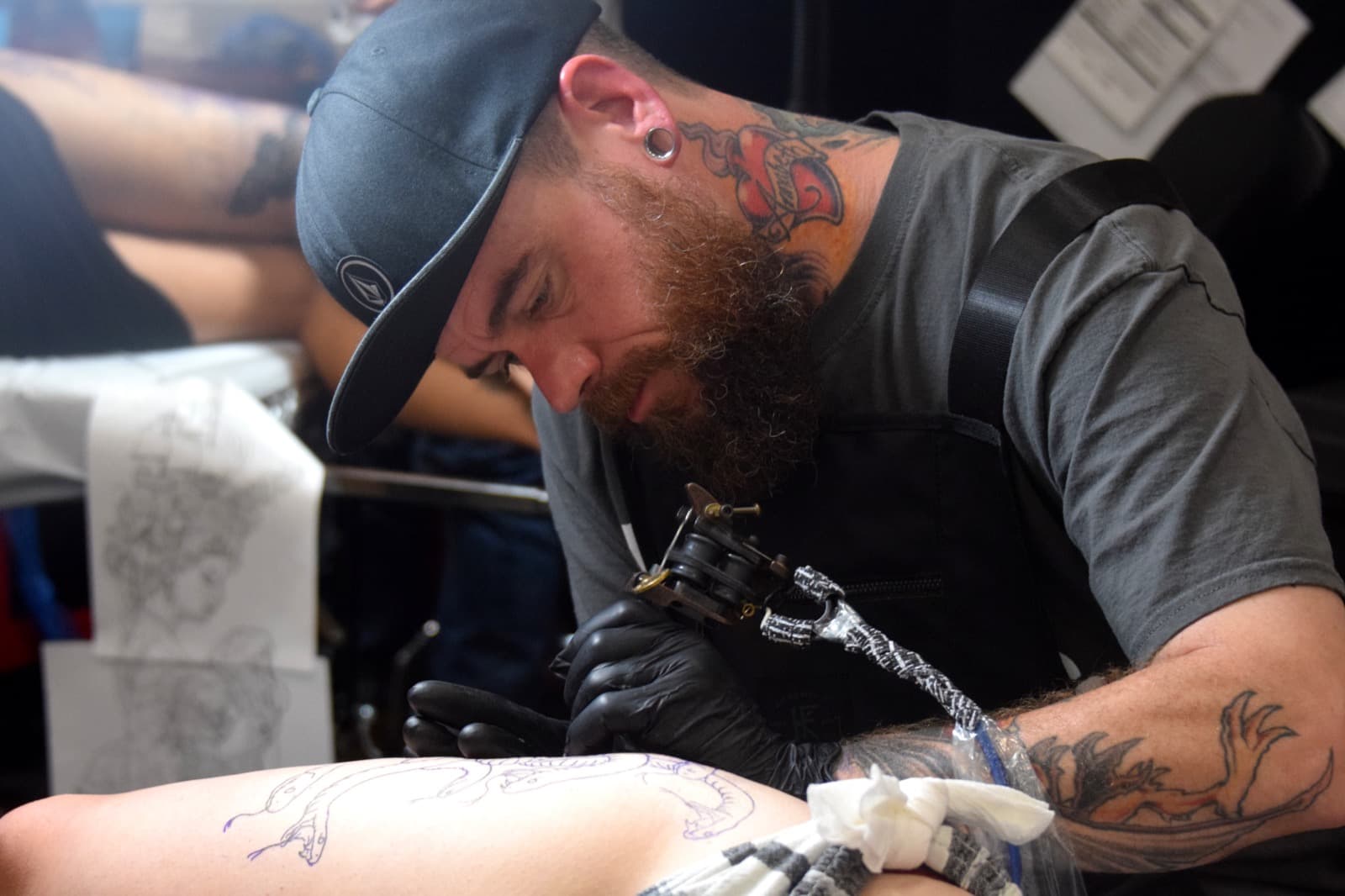
Choose the artist by fit, not follower count
Start with artists who repeatedly make the visual family you want. Compare line character, contrast, composition and how they handle the body area you selected. Look beyond one highlighted post and inspect a broader portfolio; healed examples are useful when available because they show work after the fresh-tattoo presentation has passed. A strong realism portfolio does not automatically make someone the right lettering or fine-line artist.
Also verify the local requirements that apply to the studio. In the United States, state and local authorities oversee tattoo practice while the FDA oversees tattoo inks as cosmetics. Requirements therefore vary by location. Use the relevant state or local health department as the authority rather than assuming a rule from another city applies to your appointment.
Send a booking brief the artist can quote
Follow the artist's stated booking method first. When email or a form allows it, include the design idea, exact body area, approximate dimensions, black or color direction, availability and reference images. Allure's artist-led first-tattoo guide specifically recommends dimensions in inches rather than only small, medium or large. Each reference should have a purpose: one for composition, one for line or shading direction and one for the mood. Do not ask an artist to copy another artist's tattoo.
| Reference | What it communicates |
|---|---|
| Subject reference | Anatomy, object or symbol that must be recognizable |
| Style reference | Line, shading, contrast or color direction |
| Placement photo | Exact body area and available shape |
| Avoid reference | One specific treatment you do not want |
Test physical size before judging detail
A design that looks clear at screen size may become crowded at the requested dimensions. Enter the intended width, placement and detail level in the tattoo size calculator, then print or display a real-scale rectangle for comparison. The calculator gives a planning heuristic, not an artist approval. Use its result to ask a better question: which details must be removed or enlarged for this physical size?
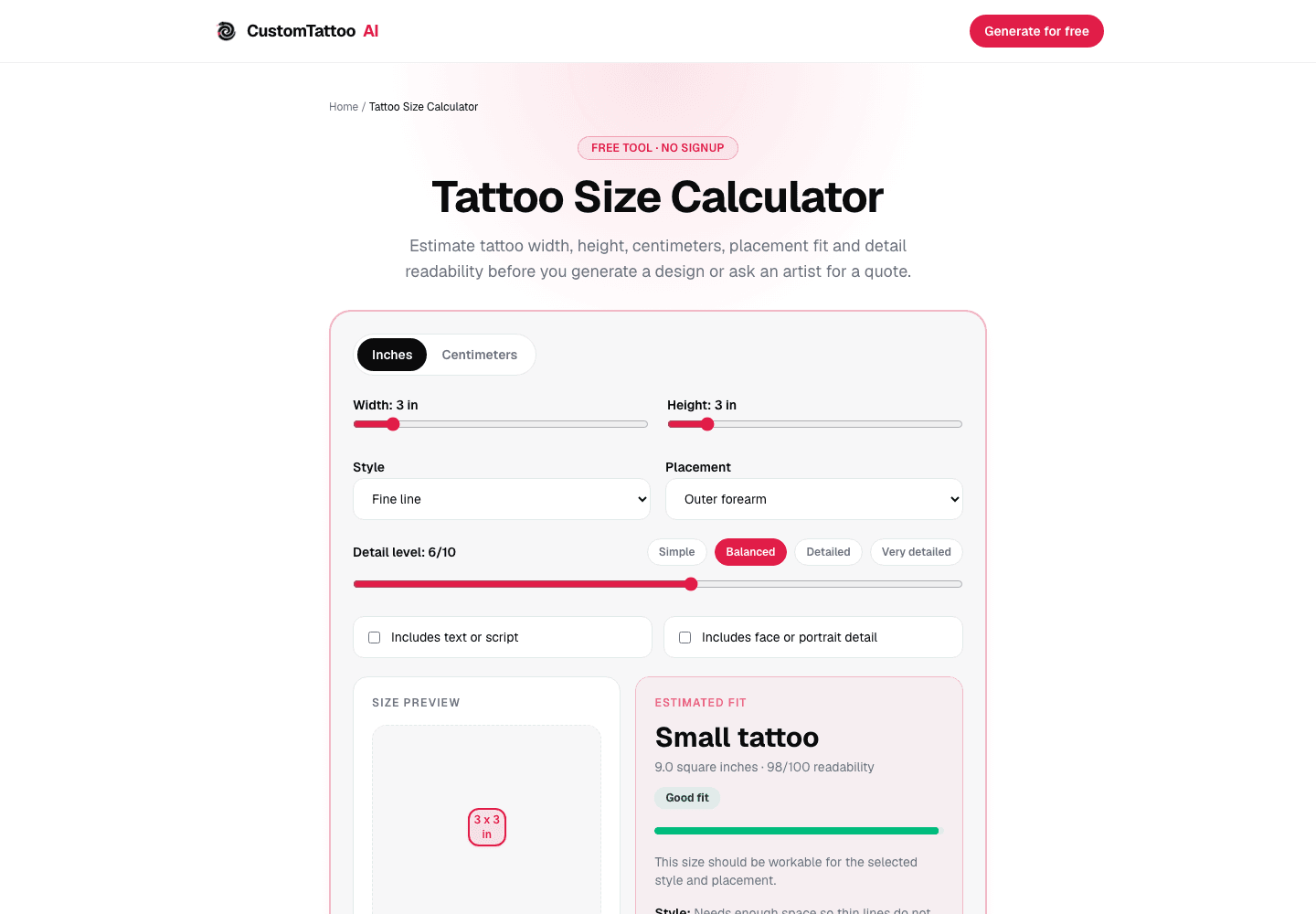
First tattoo planning
Turn the idea into a clear visual brief
Set the subject, style, ink direction and detail, then compare the result at an intentional size and placement.
✨ Build your tattoo referenceFree to configure · Artist redraw still expected
Ask these questions before paying a deposit
| Question | Why it belongs before booking |
|---|---|
| Is this subject, style and placement a fit for your work? | Confirms the artist accepts the job as described |
| How is the price calculated? | Separates a shop minimum, fixed quote and hourly structure |
| What does the deposit cover and is it transferable? | Clarifies cancellation and rescheduling before payment |
| When will I see the design and what revisions are included? | Sets expectations for the approval process |
| How long should I reserve for the appointment? | Helps plan transport, work and other commitments |
| What studio-specific preparation and aftercare instructions apply? | Keeps operational guidance with the professional doing the tattoo |
Approve the stencil, not just the drawing
The stencil is the first time the design, physical size and body position become one decision. Check spelling, numerals, direction and left-right orientation. Look at it close up and from normal viewing distance, with the body relaxed and in motion. Use a mirror or photos to inspect angles you cannot see directly. Ask for a placement or scale adjustment before tattooing begins; approval is not the moment to stay quiet because the artist has already prepared the stencil.
Keep day-of logistics studio-specific
Confirm the arrival time, identification requirement, payment method, guest policy, expected duration and clothing needed to expose the placement without unnecessary discomfort. Follow the studio's preparation instructions and disclose relevant concerns directly to the artist or an appropriate healthcare professional. This guide does not replace medical advice, local regulation or the instructions attached to the procedure you receive.
Know the safety boundary
The FDA notes that infections can result from unhygienic practices or contaminated ink, including sealed ink, and advises contacting a healthcare professional if a tattoo is not healing, develops a rash or is accompanied by fever. Ask the studio how it complies with local health requirements and follow the artist's written care instructions. Do not use a general blog timeline to dismiss symptoms or to diagnose a reaction.
Use AI as a reference step, not final tattoo authority
A generated image can help compare subject, style and composition before the consultation. It does not verify anatomy, text, cultural meaning, skin suitability or technical execution. Build a direction with the AI tattoo generator, test placement with the tattoo visualizer, and give the artist permission to redraw the selected reference for the body and process.
Useful next guides
Tattoo Size Guide
Match physical room to the design decisions you want to keep.
Tattoo Visualizer Guide
Compare scale, rotation and visibility on a body photo.
Tattoo Stencil Guide
Understand what to inspect before approving the transfer.
What information should I send when booking my first tattoo?+
Send the subject, style, exact body area, approximate dimensions, black or color direction, availability and a few references with a stated purpose.
Do I need a finished design before contacting an artist?+
No. A clear brief and references are enough for many custom artists. Follow the artist's booking policy and expect the final drawing to be adapted for the body.
When should I ask for a stencil change?+
Before tattooing begins. Check spelling, orientation, physical size and placement from several angles, then request any necessary adjustment clearly.
Sources
- FDA: Think Before You Ink, tattoo safety and regulatory roles · checked July 16, 2026
- FDA: Tattoos and Permanent Make-up · checked July 16, 2026
- Allure: artist-led first tattoo booking and appointment guide · checked July 16, 2026
- CustomTattoo AI: working tattoo size calculator · checked July 16, 2026
Keep reading
Tattoo Size Guide: Match Detail to Real Scale
Choose a tattoo size by subject, detail, body area and composition, then prepare dimensions your artist can evaluate at real scale.
Tattoo Visualizer Guide: Test Size and Placement
Use a tattoo visualizer to upload a design and body photo, then compare scale, placement, rotation and visibility before speaking with an artist.
Tattoo Stencil Guide: Lines, Mirror and Print Size
Understand what belongs in a tattoo stencil, how line choices differ from shading, when to mirror and how to prepare a real-size artist handoff.