
Samurai Tattoo: Meaning, Masks and Design Ideas
A samurai tattoo shows a warrior of Japan's samurai class, which lasted from the 10th century until it was abolished in 1876, usually in armor with a crested helmet, an iron face mask and a sword. Wearers commonly read it as discipline, loyalty and courage. That reading owes a lot to bushido, an ideal of the warrior that was mostly written down and popularized after the samurai were gone, so below we keep the history and the modern meaning apart, then show how the design is built, how the masks differ, and how big it needs to be.
10+ Samurai tattoo designs
AI-generated samurai tattoo designs across popular styles. Tap any one to generate your own version and preview it on your skin.
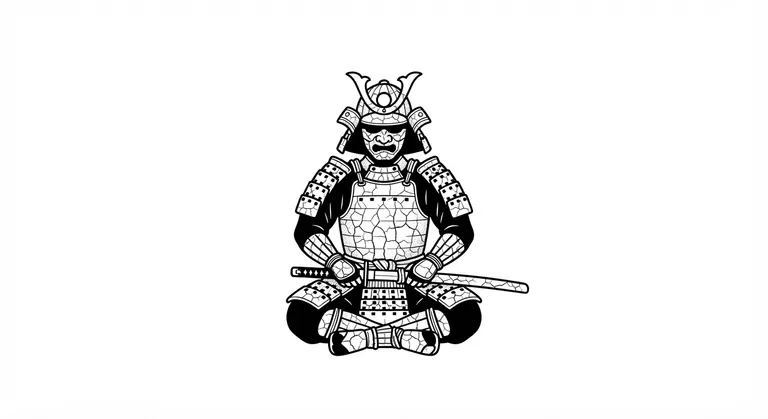
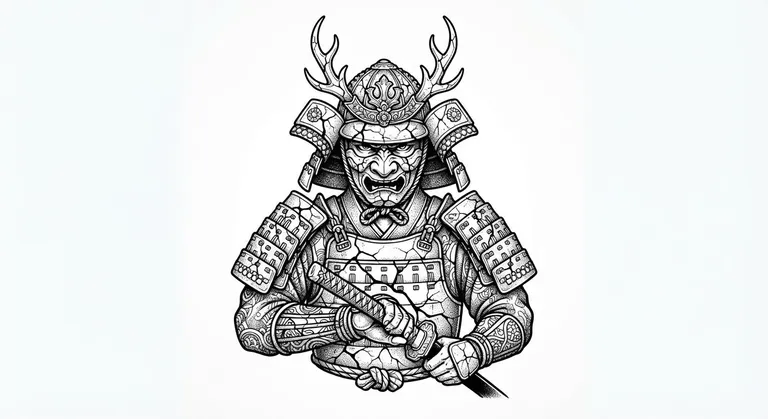
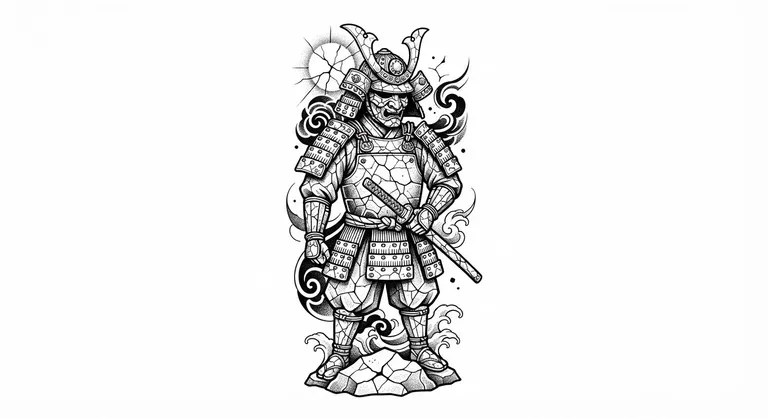
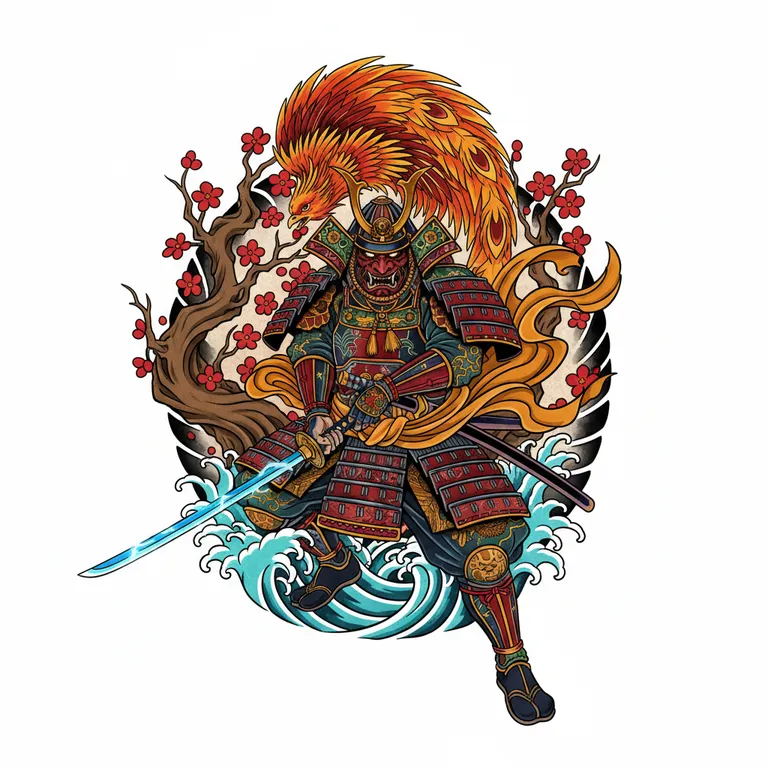
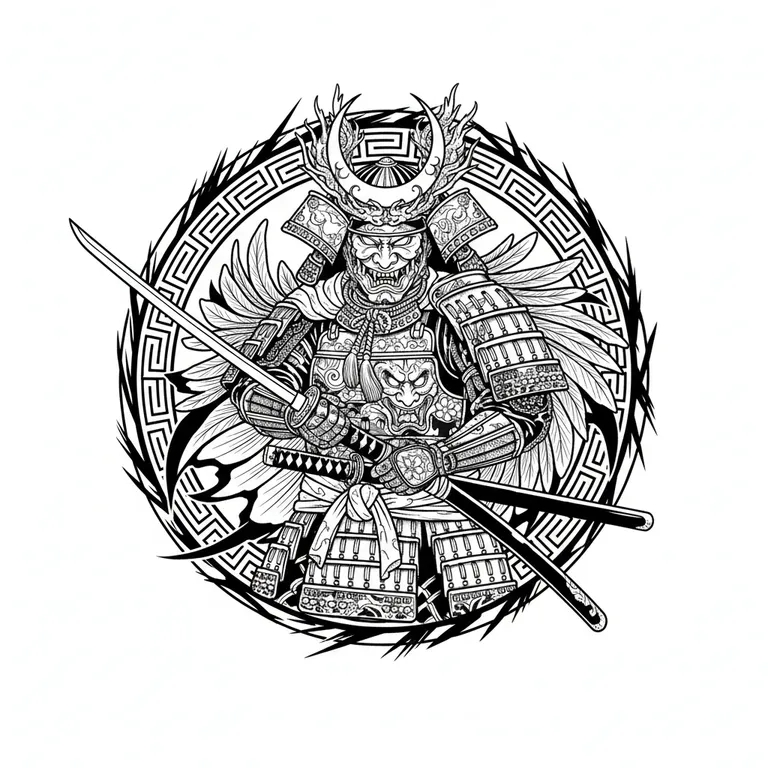
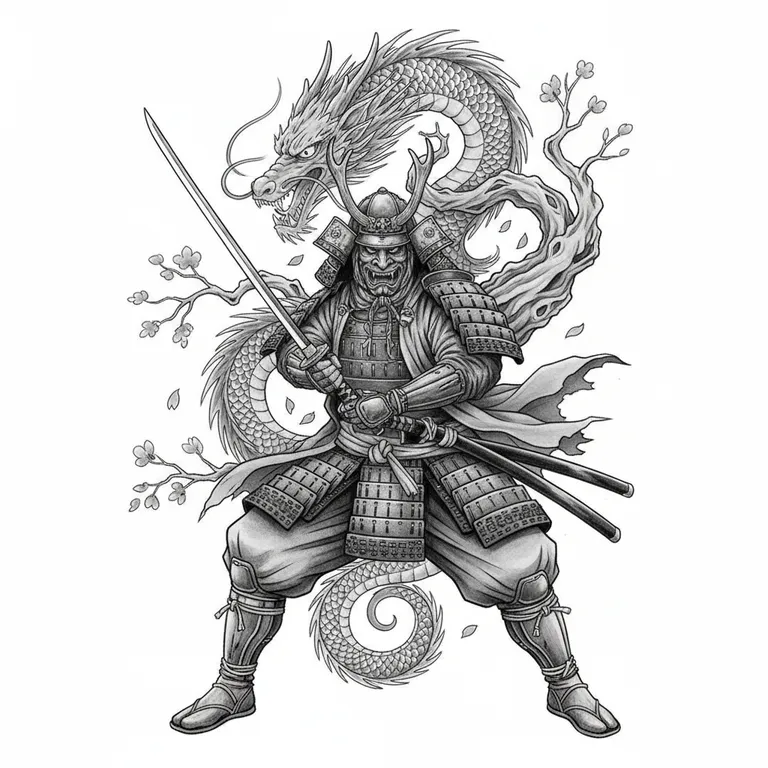
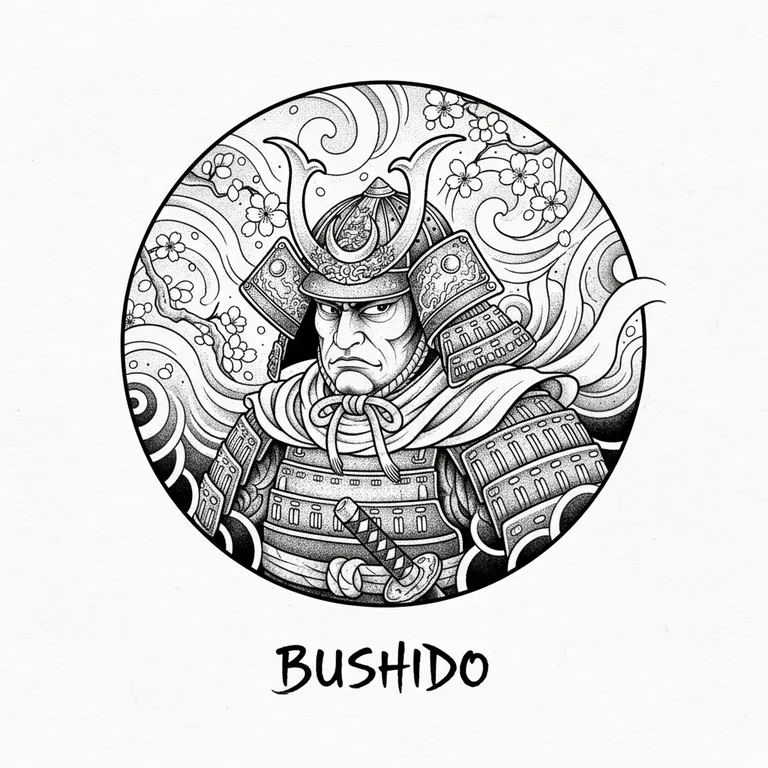
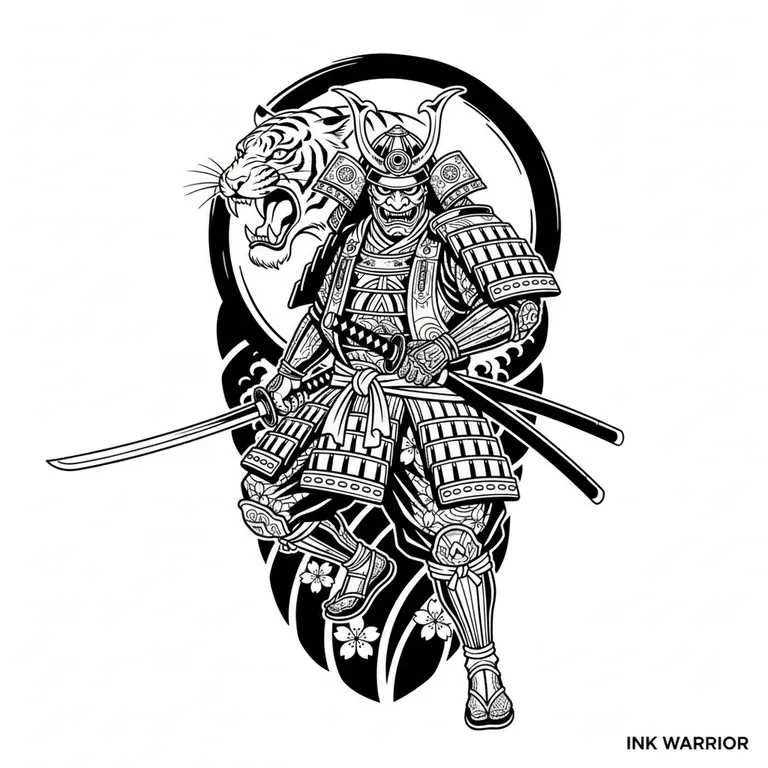
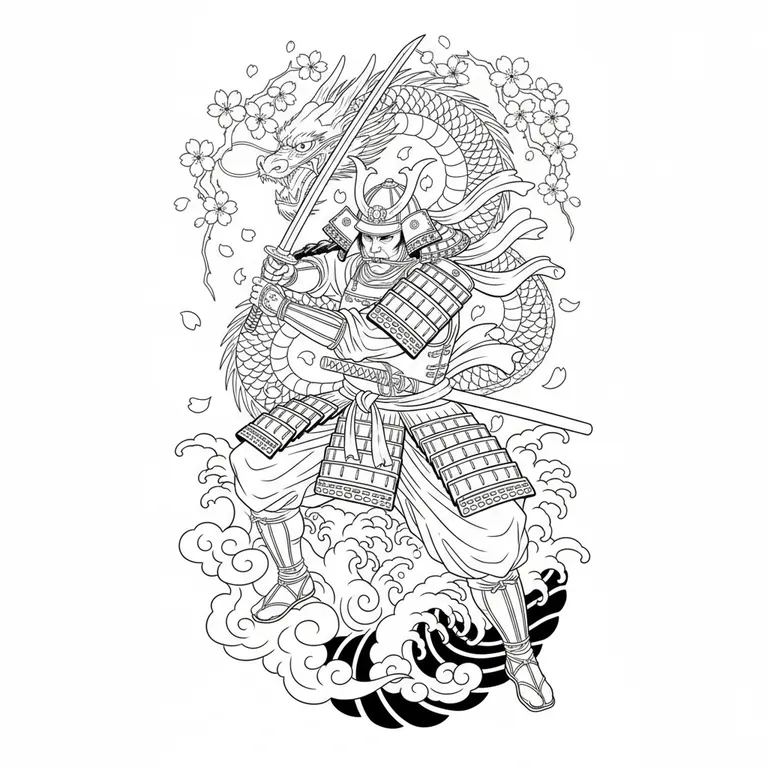
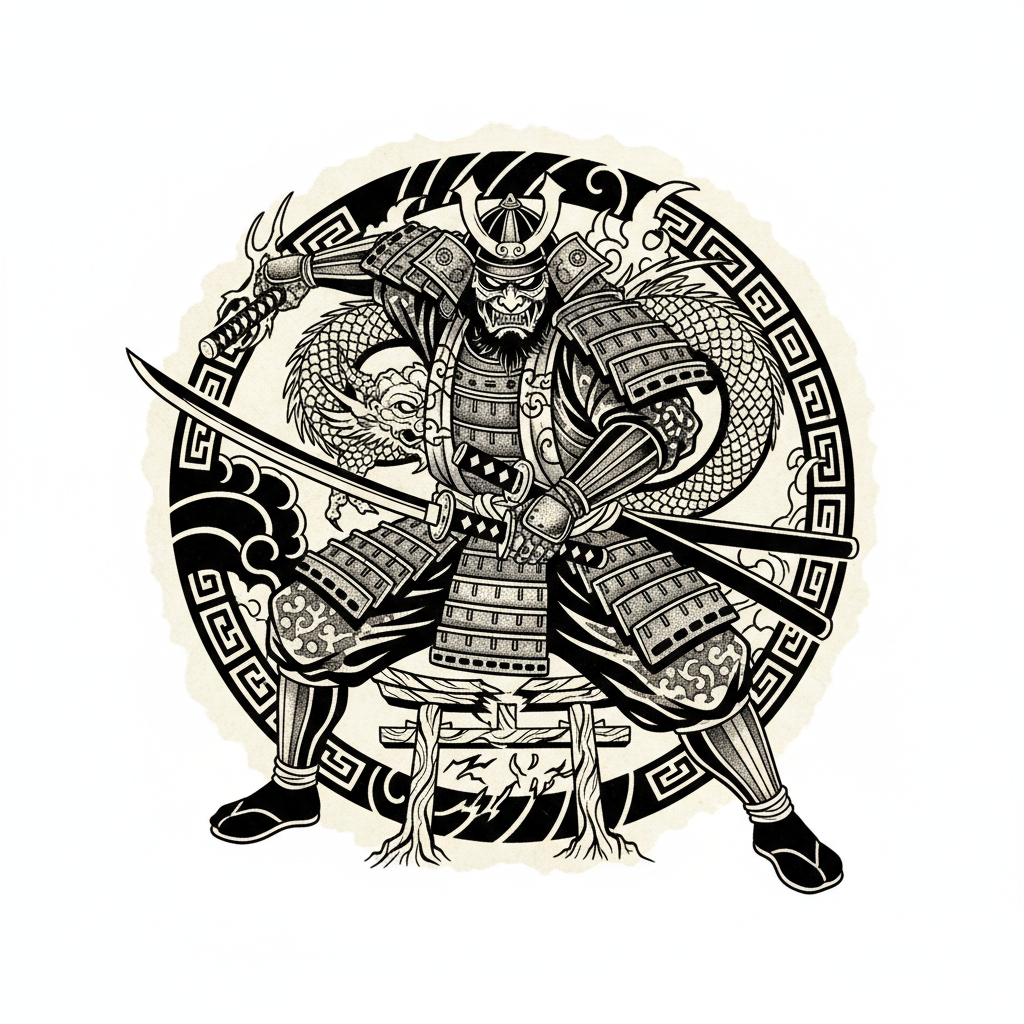
What does a samurai tattoo mean?
Historically, the samurai (also called bushi) were a class of warriors that arose in Japan in the 10th century, according to World History Encyclopedia. They first served as private armies protecting the estates of court nobles, came to dominate government under the shoguns from 1185, and in the peaceful Edo period (1603 to 1868) many became moral teachers and advisors in their communities. Japan reintroduced conscription in 1872, and in 1876 the samurai were formally disestablished.
As a tattoo, the samurai is a modern symbol, and what it means is up to the wearer. The readings people commonly give are:
- Discipline and self-control. The warrior as someone who masters himself before anyone else.
- Loyalty. Duty to a family, a team or a promise, the theme of the 47 rōnin story below.
- Courage and resilience. Facing a fight, an illness or a hard period without backing down.
- Protection. A guardian figure watching over the wearer or someone they love.
- Accepting mortality. Usually signaled by adding cherry blossoms or a skull.
Those are interpretations, not ancient doctrine. The details of the design change the message more than the subject does: a calm figure with a sheathed sword reads as composure, a warrior mid-strike reads as aggression, a lone wanderer in a straw hat reads as independence. Choose the moment first, then the elements.
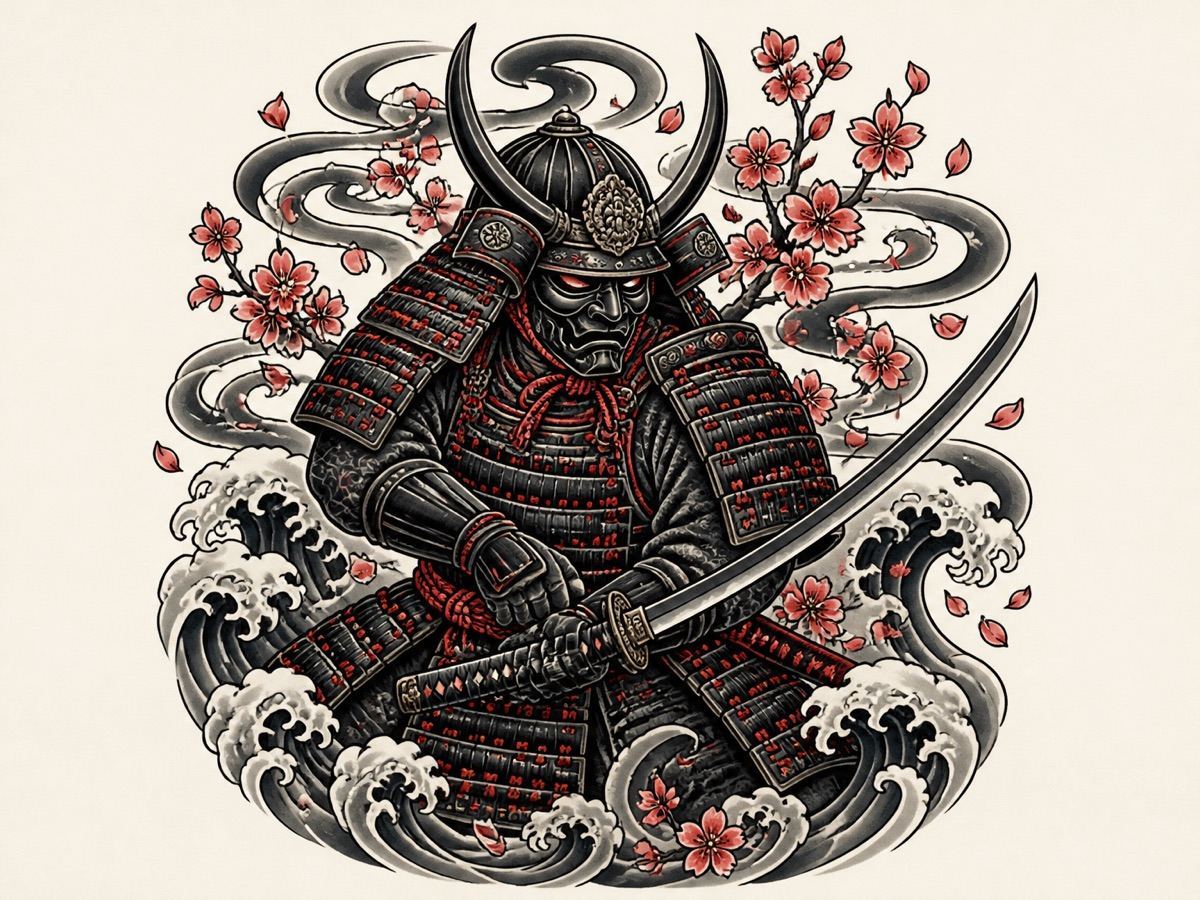
What is a samurai tattoo made of? The armor, part by part
Most samurai tattoos are built from a short list of armor parts. Knowing their names helps you brief an artist and spot designs that mix them up. Here is a real suit from the Metropolitan Museum of Art, with the parts a design usually shows numbered by us.
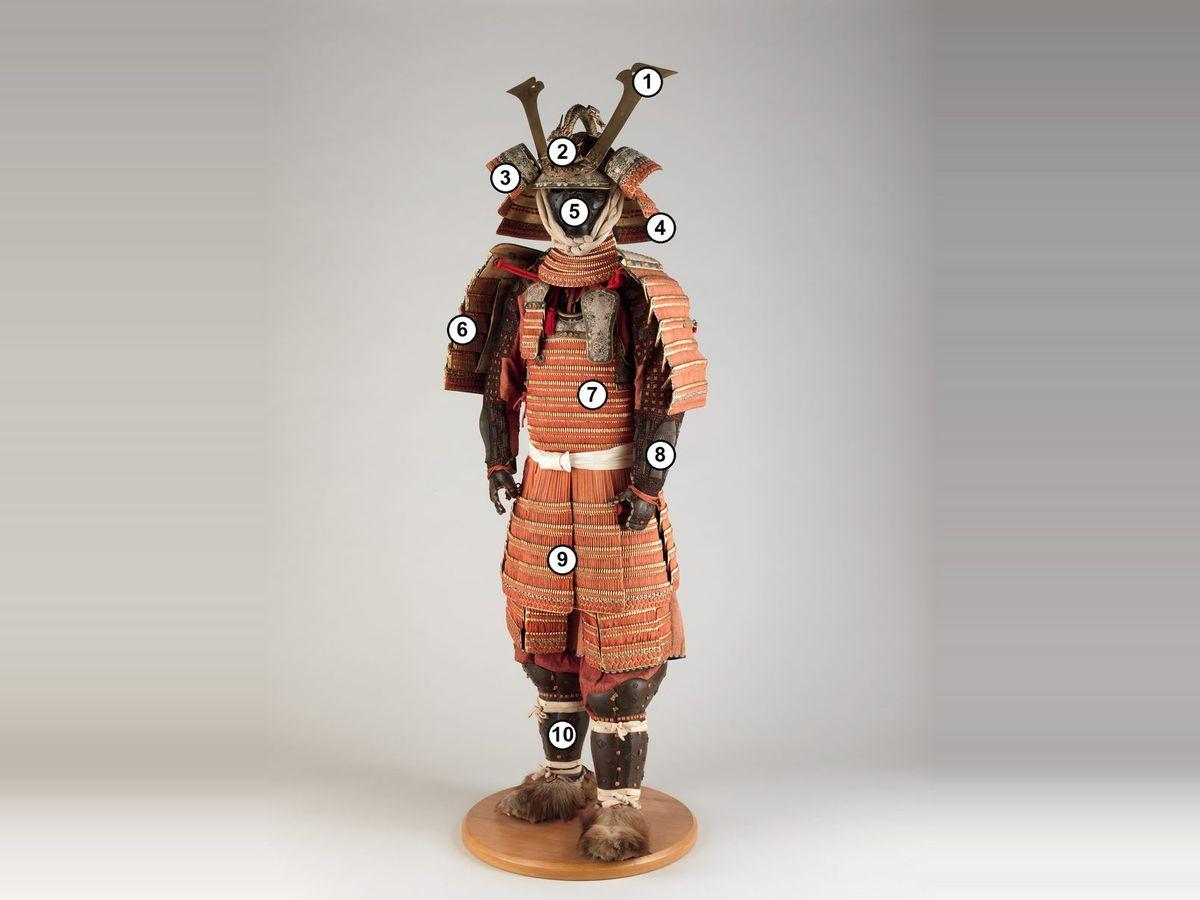
| # | Part | What it is | How it reads in a tattoo |
|---|---|---|---|
| 1 | Maedate (crest) | Upstanding ornament on the front of the helmet; shapes include the hoe-shaped kuwagata, half-moons, dragons, lion heads and antlers (JAANUS). Here a kuwagata with a small dragon. | The silhouette people recognize first; keep it bold |
| 2 | Kabuto (helmet) | Usually iron; the crown is the hachi (JAANUS) | Ridges and rivets give texture in black and grey |
| 3 | Fukikaeshi | Turned-back flaps at each side of the helmet rim (JAANUS) | Frames the face; a place for a family crest |
| 4 | Shikoro (neck guard) | Tiers hanging from the back of the helmet (JAANUS) | Flares out and widens the head |
| 5 | Menpō (face mask) | Iron half mask from chin to about the bridge of the nose, eyes left free (Samurai Museum Berlin) | Turns a portrait into a faceless figure; see below |
| 6 | Sode (shoulder guards) | Large shoulder plates of iron or leather (Wikipedia) | Big flat panels for lacing patterns |
| 7 | Dō (cuirass) | Chest armor of plates (Wikipedia) | The largest surface; color lacing or solid black |
| 8 | Kote (armored sleeves) | Sleeves with plates, running from the shoulder to the hand (Wikipedia) | Lead the eye to the hands and the sword |
| 9 | Kusazuri (skirt) | Protective skirt hanging from the cuirass (JAANUS) | Gives the figure weight at the bottom |
| 10 | Suneate (shin guards) | Iron splints joined by mail (Wikipedia) | Usually cropped out unless it is a full figure |
Two details your artist can get right. The orange comes from the lacing that binds the rows of plates together (the Met lists silk among the materials), so a lacing color is a real design choice, not decoration added later. And armor changed over time: the big boxy ōyoroi was made for mounted archers from the Heian to the late Kamakura period (JAANUS), while the closer-fitting tosei gusoku like this one became common from the 1500s (Wikipedia). Mixing eras is fine in a tattoo; just do it on purpose.
Samurai mask tattoo: what is a menpō?
The "samurai mask" in tattoos is the menpō, an iron half mask worn with the full armor. The Samurai Museum Berlin explains what it did: it covered the face from the chin to about the bridge of the nose, a throat guard hung from its lower edge, and hooks on its sides held the helmet cord, so the helmet did not slip in fast movement. A full-face version, the sōmen, was less common because it restricted vision; smaller ones covered only the chin. The V&A notes that the inside of its plain iron half mask is lacquered red, which kept water out, and that the nose piece comes off.
The expressions are what tattooists borrow. The museum lists fierce, angry faces (ressei-men), calm, noble faces with smooth skin (ryūbu-men), old men's faces (okina-men) that marked an experienced veteran, and faces of the long-nosed tengu from folk religion. So a menpō tattoo can be furious or serene; pick the face for the meaning you want.
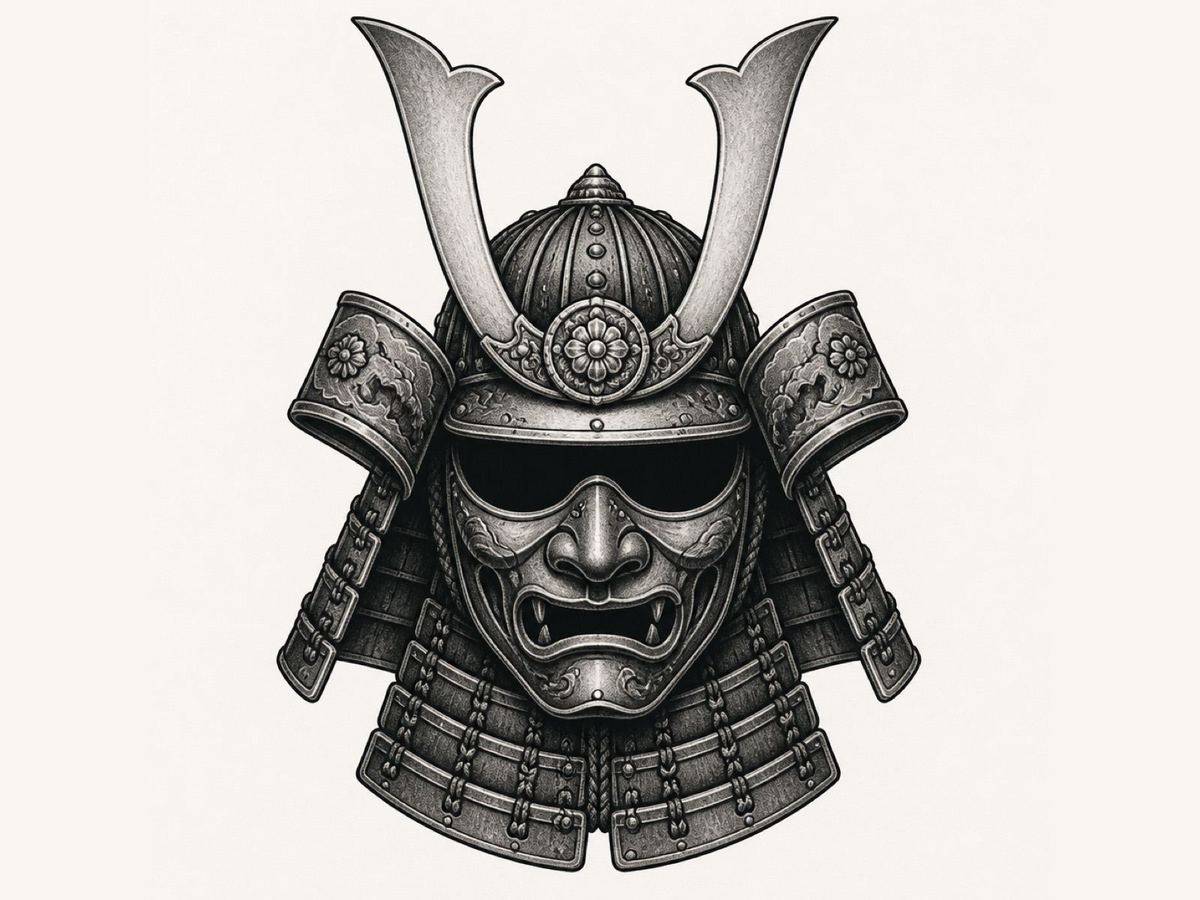
Prompt to try
“samurai kabuto helmet and menpō mask with empty eyes, black and grey realism, front view”
Generate this designOni mask vs samurai mask vs hannya: what is the difference?
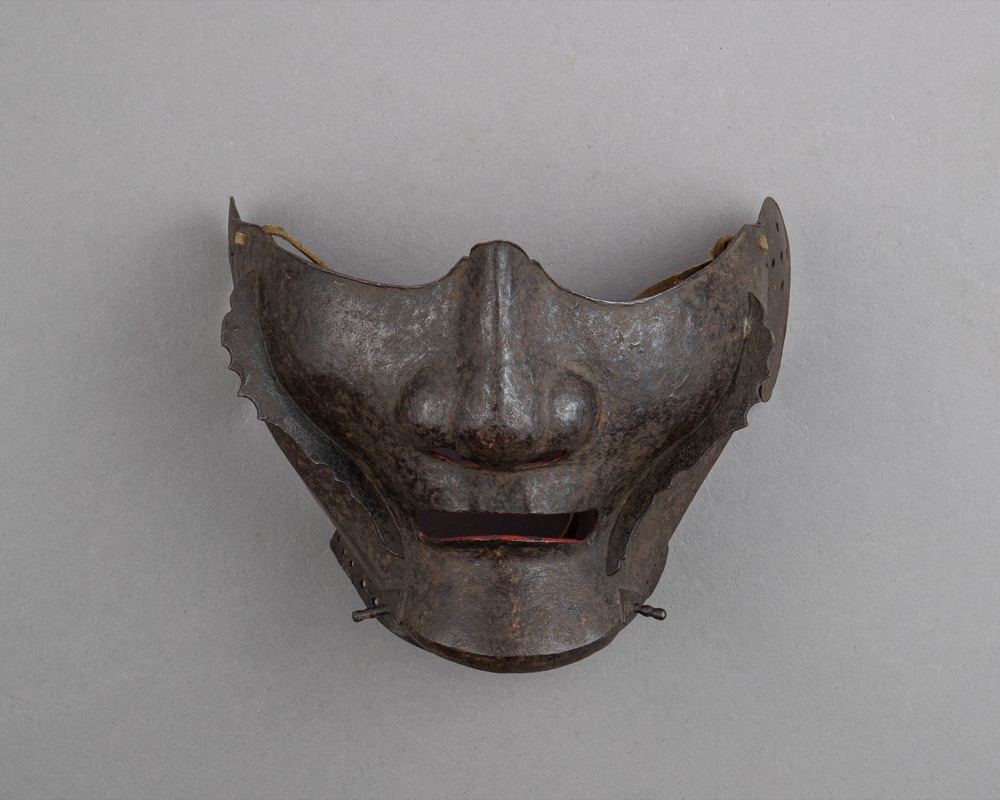
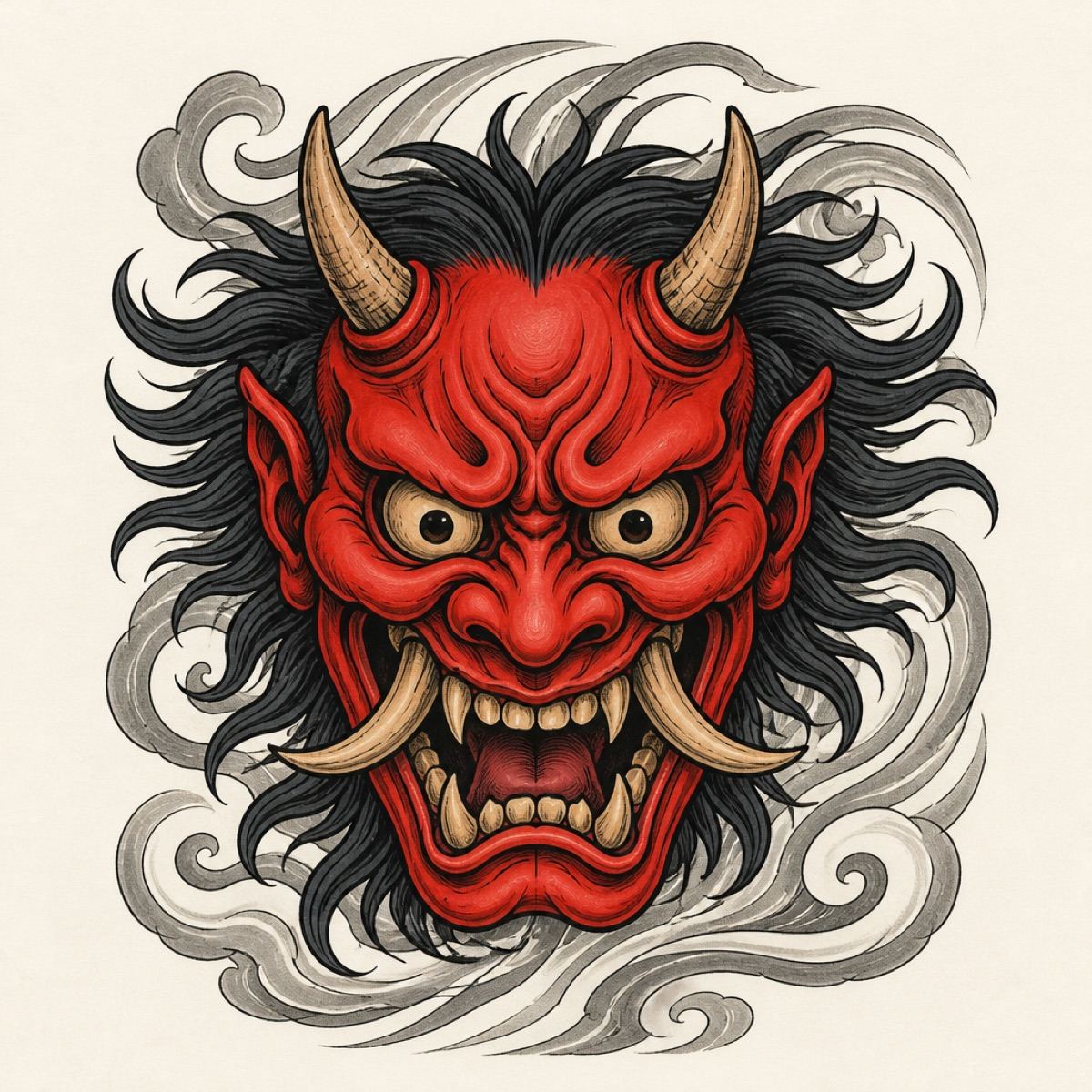
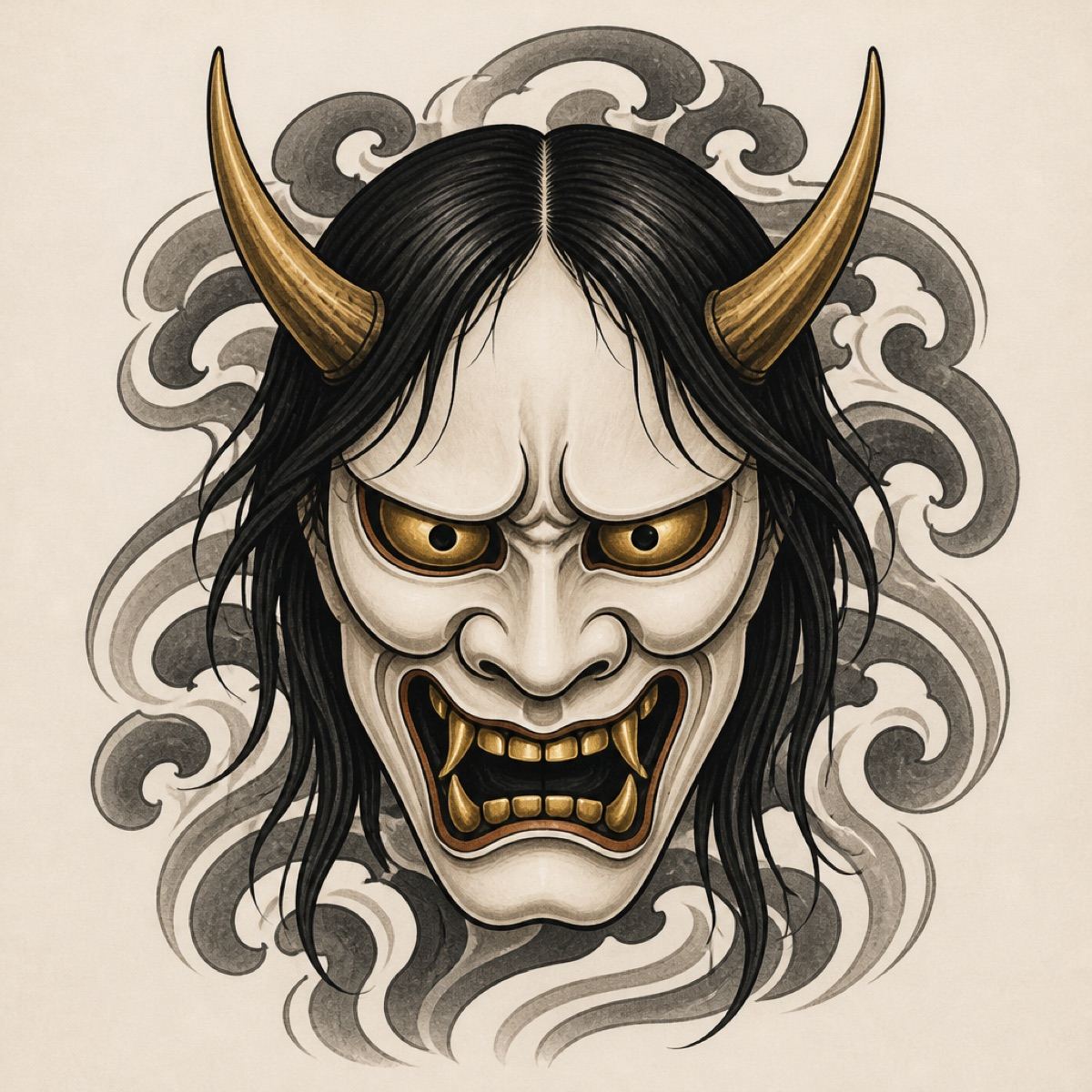
| Menpō | Oni | Hannya | |
|---|---|---|---|
| What it is | Real armor worn under the helmet | A creature of folk legend | A theater mask |
| Covers | Chin to nose; eyes open | A whole face (as drawn) | A whole face |
| Look | Iron or lacquer; fierce, calm or old faces; often a mustache | Horns; usually red, sometimes blue or yellow; club and tiger-skin loincloth (Nippon.com) | Two sharp horns, metallic eyes, fangs and gold teeth (JAANUS) |
| Story | Protection and keeping the helmet in place (Samurai Museum Berlin) | Driven out with beans at setsubun, "oni out, good luck in" (Nippon.com) | A woman turned into a serpent-demon by jealousy and hatred in noh plays (JAANUS) |
So the three are different things. Did samurai wear oni masks? The menpō examples we checked show human, old-man and tengu faces, some with ferocious expressions; none of our sources describes an oni-faced menpō, so treat "oni samurai mask" as a tattoo blend rather than a historical type. A hannya on a samurai is also a modern combination: the hannya comes from noh, not from armor. Combinations are common in tattooing and can look great. The Japanese style guide explains the hannya and the other classic motifs.
Is bushido real? The "seven virtues" behind bushido tattoos
Bushido tattoos usually list virtues such as rectitude, courage, benevolence, politeness, honesty, honor and loyalty. That list matches the chapter titles of one book: Bushido: The Soul of Japan by Nitobe Inazō, written in English, with a preface signed in Malvern, Pennsylvania, in 1899 (Project Gutenberg). Nitobe himself says bushido "is not a written code"; he describes it as maxims passed on by word of mouth. He also names a three-part base of wisdom, benevolence and courage (chi, jin, yū), and a chapter title, "The Sword, the Soul of the Samurai", that many sword tattoos quote.
Historians treat the book as an idealized portrait. World History Encyclopedia says the samurai code was only compiled in the late 17th century by the scholar Yamaga Sokō, and that the samurai may have been "excessively romanticised" since the 18th century. Reviewing Oleg Benesch's Inventing the Way of the Samurai (Oxford University Press, 2014), Graham Squires sums up its argument that bushido as an idea was "made up in the Meiji period, after the samurai class had actually been abolished", spread from 1905 to 1912 and was used in the militarism of the 1930s (World History Encyclopedia). None of that makes the virtues bad words to wear. It means a bushido tattoo is about the ideal, not a quotation from real samurai.
Ronin tattoo meaning
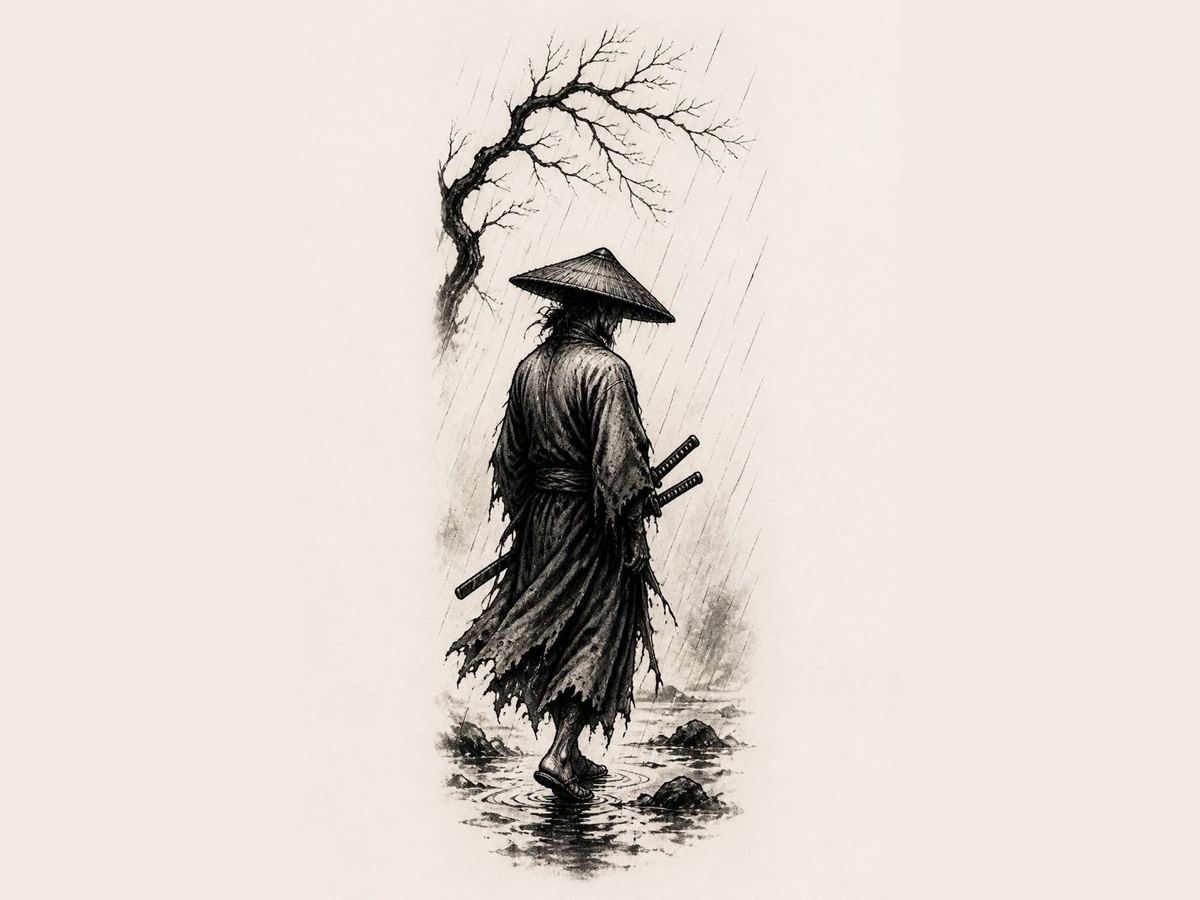
A rōnin was a masterless samurai. Columbia University's Asia for Educators defines them as samurai who had fallen from a high social position "to a place outside the social scale entirely", and World History Encyclopedia notes they were often samurai who could not find regular service. The most famous are the 47 rōnin: on the night of January 30, 1703, forty-six of them raided the Edo mansion of Kira, whom they blamed for their lord's death, and the government then allowed them to take their own lives rather than be executed. A 1748 puppet play shaped every later retelling (Columbia).
As a tattoo, the ronin reads two ways, so decide which you mean. The lone wanderer in a straw hat stands for independence and starting over without a master or a team. The 47 rōnin stand for the opposite: loyalty kept at any cost. Their example was debated early on: the samurai text Hagakure, excerpted on the same Columbia page, criticizes how long they waited.
Prompt to try
“lone ronin in a straw hat walking in the rain, blackwork, vertical forearm tattoo”
Generate this designWhere samurai tattoo designs come from: warrior prints
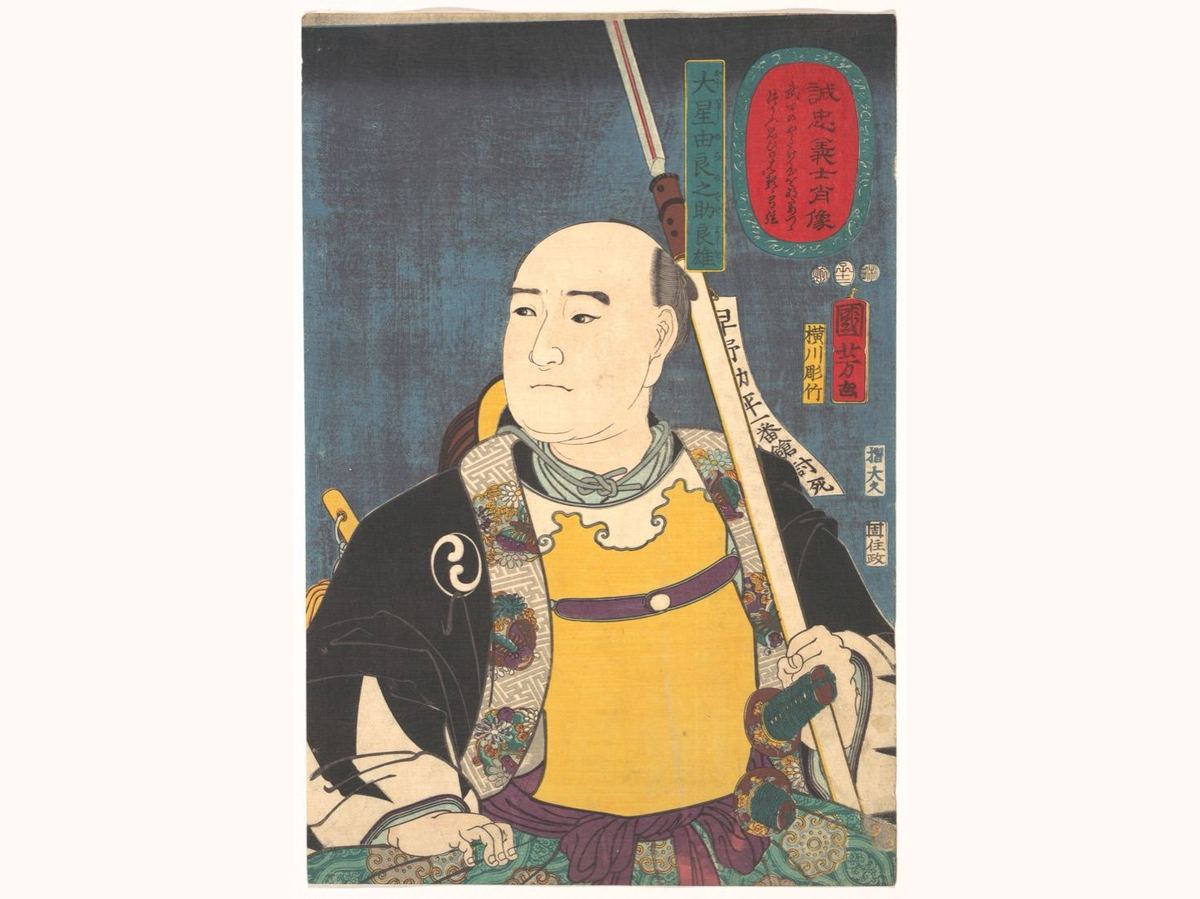
Much of the samurai imagery in Japanese-style tattooing traces back to musha-e, warrior prints: woodblock prints of battle scenes and heroic armored warriors, many drawn from war chronicles such as The Tale of the Heike (JAANUS). Utagawa Kuniyoshi made the genre dramatic; his 1827 set of heroes from the Chinese novel Suikoden was so popular that he was nicknamed "Kuniyoshi of the warrior prints". Those same prints show heavily tattooed heroes, and their success helped boost popular interest in tattoos (Hyperallergic, on Sarah E. Thompson's Tattoos in Japanese Prints). The Kuniyoshi portrait above, which the Met titles "The Leader", shows how little armor a strong design needs: one pose, one weapon, one face.
If you want a traditional look, take a warrior print to your artist as the reference, not a movie still or a video-game character: prints already have the flat colors, bold outlines and clear silhouettes that tattooing uses.
Samurai sword and cherry blossom tattoo
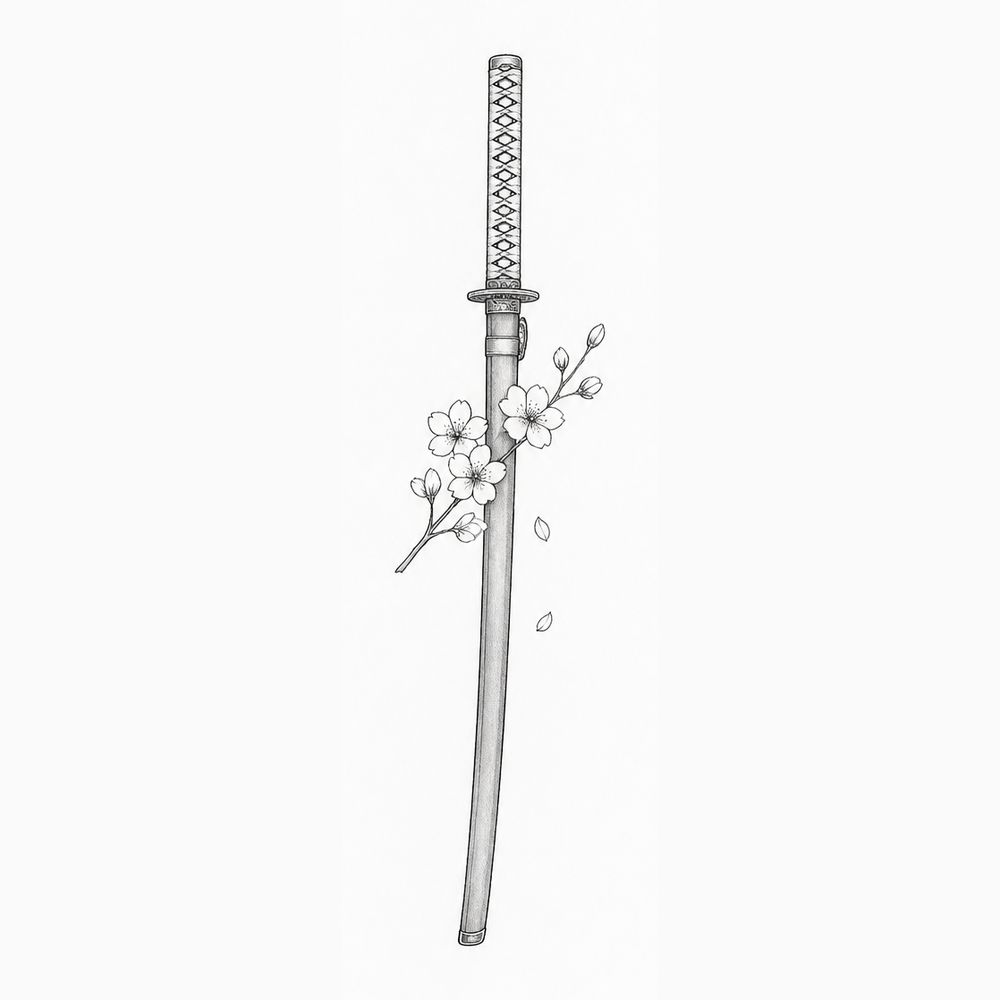


The sword is the smallest way to say "samurai". Early samurai fought mainly with the bow from horseback; the sword took over as the quintessential samurai weapon from the 17th century (World History Encyclopedia). Nitobe describes the long and short swords, katana and wakizashi, that never left a samurai's side (Project Gutenberg). A sheathed blade reads as restraint, a drawn one as readiness; meanings for the direction of the blade circulate on tattoo sites, but we found no historical source for them.
Cherry blossoms are the classic partner. Nitobe opens his book by calling chivalry a flower of Japan, like "its emblem, the cherry blossom", and quotes a popular saying: "As among flowers the cherry is queen, so among men the samurai is lord." Tattoo wearers usually add the blossoms for the shortness of life, the same idea behind memento mori tattoos.
Samurai tattoo for women
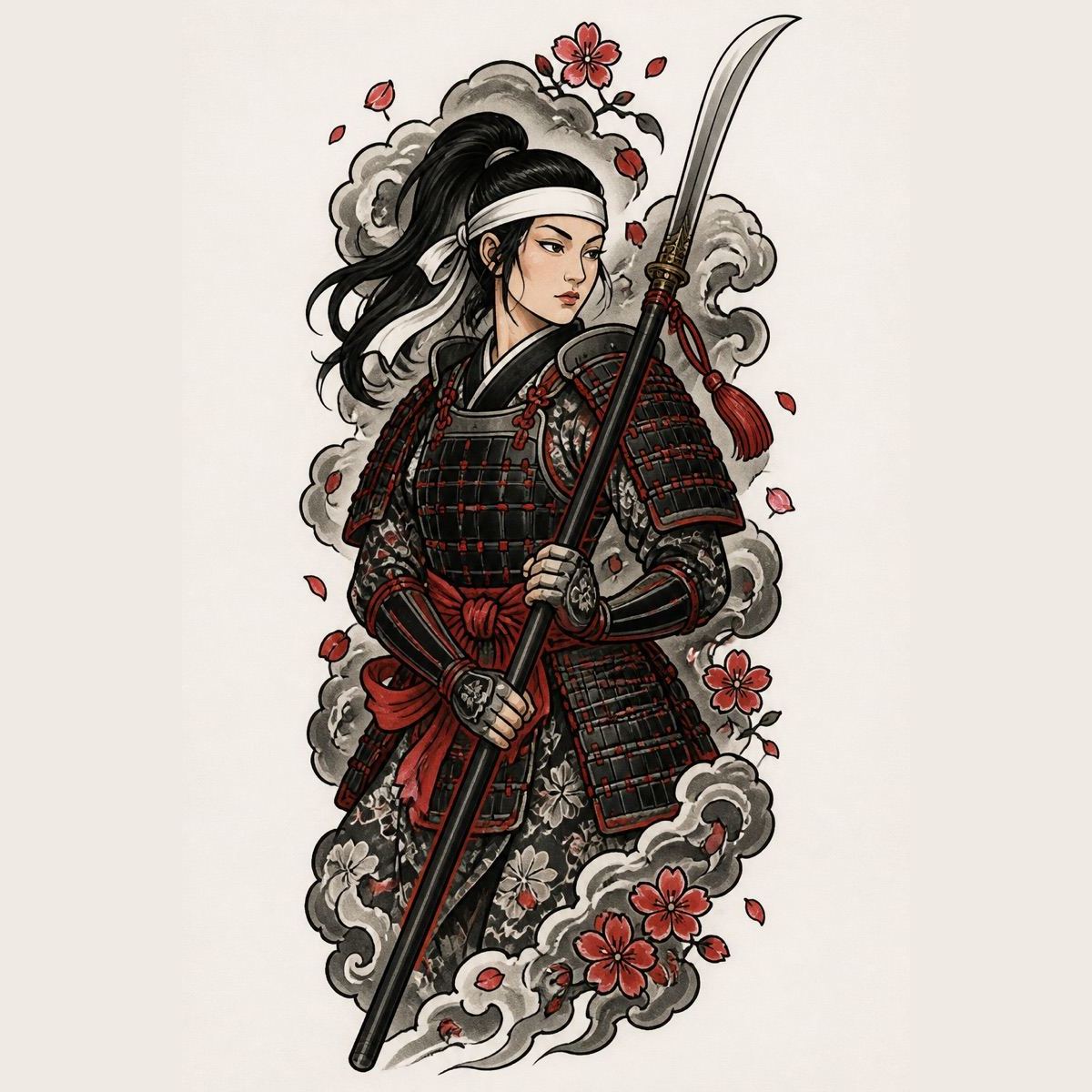
Women warriors are a real part of the imagery. The best known is Tomoe Gozen, a female warrior in The Tale of the Heike; historians doubt she existed because she does not appear in primary accounts of the war (Wikipedia). In tattoos, female warriors are often drawn with a naginata, a curved polearm, which gives a long diagonal line that suits the forearm, ribs or thigh. Everything else on this page, from the mask to the sleeve layout, works the same way.
Prompt to try
“female samurai with naginata and cherry blossoms, Japanese tattoo, thigh piece”
Generate this designWhich style suits a samurai tattoo?
- Japanese (irezumi): bold outlines, wind bars, waves and blossoms; made for sleeves and back pieces.
- Black and grey realism: lacquer, iron and lacing rendered like a photo; needs size to stay readable.
- Blackwork: solid black armor and empty eyes; strong at medium size, good for a mask alone.
- Traditional and neo-traditional: thick lines and a few flat colors, red lacing being the obvious one.
- Fine line: a katana, a helmet outline or a small mask; the full armored figure is too detailed for thin lines at small sizes.
How big should a samurai tattoo be?
Size follows the composition: a sword or a mask fits a forearm, a standing figure needs a long limb, a battle scene needs a back. Room per body part is the ANSUR II median, as in our tattoo size guide; men's medians are larger, so the same design fills less of the limb. Pain tiers come from the tattoo pain chart.
| Placement | Room, women / men | Samurai design that fits | Pain tier |
|---|---|---|---|
| Forearm | 9.5 × 5.2 / 10.5 × 6.1 in | Katana, mask or helmet, standing ronin | Lower |
| Upper arm and shoulder | 12.2 × 6.0 / 13.2 × 7.0 in | Helmet and mask, half-body portrait | Lower |
| Calf | 15.2 × 7.3 / 16.3 × 7.7 in | Full standing figure, ronin | Middle |
| Thigh | 13.1 × 12.1 / 14.1 × 12.3 in | Figure with weapon, female warrior | Lower outer, higher inner |
| Chest | Not in our size guide | Mask or helmet centered, or one side | Higher |
| Back | 14.4 × 16.7 / 16.3 × 18.8 in | Battle scene, rider, warrior and dragon | Not rated |
| Full sleeve | About 21.7 / 23.7 in long | Warrior plus mask, waves and blossoms | Varies along the arm |
Room is length times half the circumference (width × height for the back), our calculation from medians of US Army personnel aged 17 to 58, not the general population, so measure yourself or use the tattoo size calculator. Pain tiers summarize what six artists and two customers reported in Pimentel et al. (2021), not measurements; in a survey of 1,092 tattooed people, session length, stress and bleeding mattered more than the body area. A mask is about as wide as it is tall, so on a forearm a 4-inch mask already uses most of the 5 to 6 inches across one side. See the forearm placement guide.
Samurai sleeve tattoo ideas
A full sleeve runs about 22 to 24 inches from shoulder to wrist on median arms (ANSUR II), and a samurai sleeve is usually planned as one picture, not a collection. A layout that uses the arm's shape:
- Shoulder and upper arm: the helmet, crest and mask, where the arm is widest and the face sits at eye level.
- Elbow: background only (clouds, wind bars or waves), because detail distorts when the arm bends.
- Forearm: the sword, hands or a second element such as an oni, hannya or dragon.
- Wrist: waves, blossoms or a clean edge where the sleeve stops.
A half sleeve can stop after the upper arm or cover only the forearm. Large pieces are done over several sessions, with healing in between (see tattoo healing stages); ask your artist for an estimate and read how much a tattoo costs before you commit. The sleeve placement guide shows sleeve lengths on one arm, and the shoulder guide covers the top of the sleeve.
Prompt to try
“samurai full sleeve tattoo, helmet and menpō on the shoulder, katana on the forearm, waves at the wrist, Japanese style”
Generate this designSamurai back piece
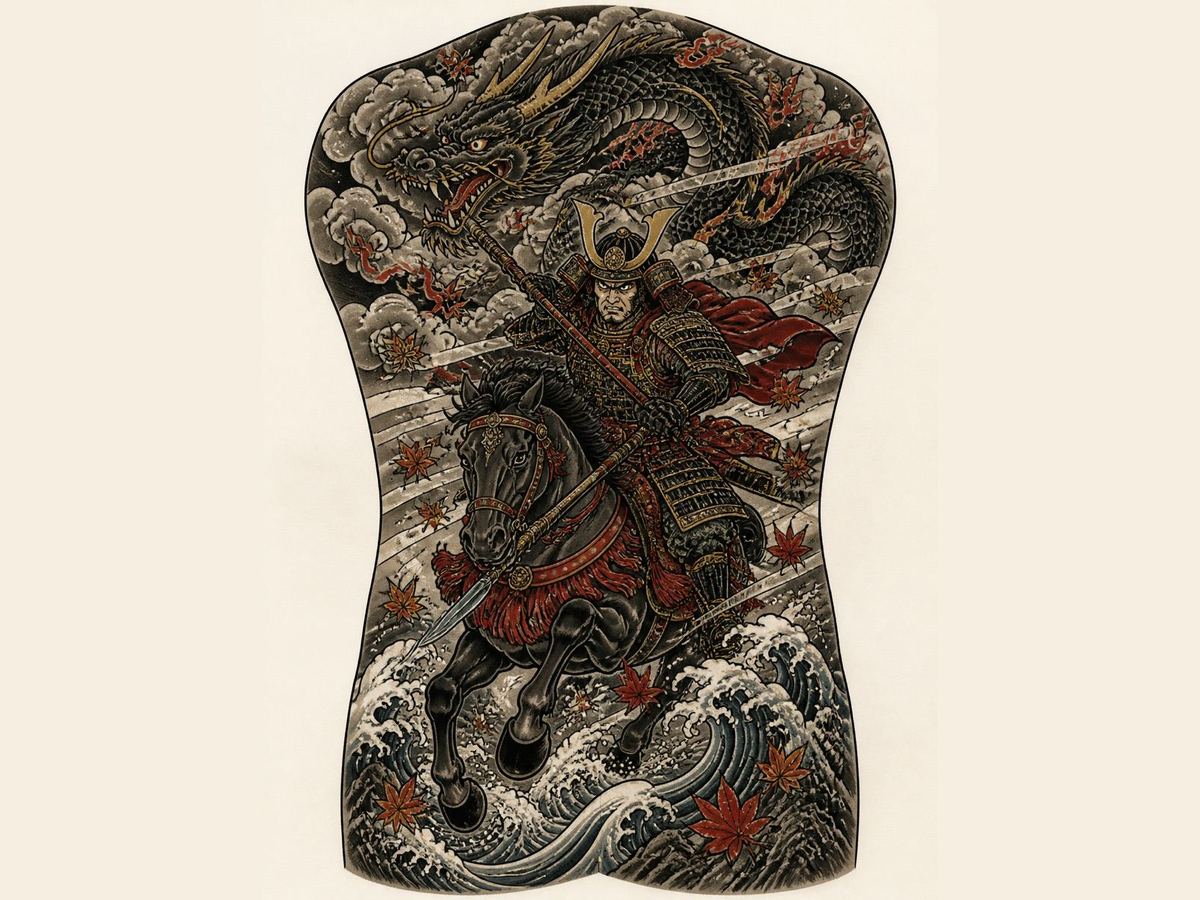
The back is the largest flat surface, about 14 to 16 inches wide at the shoulders and 17 to 19 inches from neck to waist on median bodies, which is why battle scenes, riders and samurai-versus-dragon designs go there. Riders and battles are the subjects of the warrior prints above (JAANUS). Put the face high, between the shoulder blades, where it stays flat; let the horse, waves or clouds fill the lower back, which bends. Because a back piece is seen as one image from a distance, a clear silhouette matters more than fine detail.
Is a samurai tattoo disrespectful?
We found no source saying a samurai tattoo is offensive in itself, and samurai are a common subject in Japanese-style tattoo work today. What people object to is careless use: misspelled kanji, a mix of Japanese, Chinese and invented symbols presented as "ancient", or a design copied from a movie or game character. A few habits avoid that:
- Know which parts are history (armor, the 47 rōnin) and which are modern meaning (the seven virtues), and describe it that way.
- Have any Japanese text checked by a fluent reader.
- Work with an artist who does Japanese-style pieces and ask to see healed examples.
- Use generic warriors rather than copyrighted characters; your design should be yours.
How to get a stencil-ready samurai design
Armor is the part that turns to mud on a stencil: hundreds of small plates and lacing knots. Keep the outline of the crest, helmet and mask, the main edges of the shoulder guards and the sword, and let your artist add the plates by hand. The tattoo stencil maker turns a design into transfer linework, with one free generation before signup; exact-size printing across several sheets is in the Stencil studio after sign-in. Your artist will still redraw it for your skin.
Related tattoo ideas and guides
Japanese Tattoo Style
Koi, dragons, hannya and how sleeves and back pieces are composed.
Sleeve Tattoo Placement
Half and full sleeve lengths drawn on one arm.
Memento Mori Tattoo Ideas
Skulls, hourglasses and blossoms as reminders of mortality.
Blackwork Tattoo Style
Solid black designs, strong for masks and helmets.
Forearm Tattoo Placement
Room, pain and visibility for a katana or a ronin.
First Tattoo Guide
What to plan, ask and expect before your first appointment.
Sources
- The Metropolitan Museum of Art, Armor (Gusoku), Japan, 19th century, 04.4.2 (public domain) · checked November 11, 2026
- The Metropolitan Museum of Art, Half Mask (Menpō), Japan, 17th century, 15.11.2 (public domain) · checked November 11, 2026
- The Metropolitan Museum of Art, Utagawa Kuniyoshi, Portrait of Oboshi Yuranosuke Yoshio (The Leader), 1852, JP1553 (public domain) · checked November 11, 2026
- The Met Open Access (CC0) dataset and terms, GitHub · checked November 11, 2026
- Samurai Museum Berlin, "Menpō: The Face Mask of the Samurai" · checked November 11, 2026
- Victoria and Albert Museum, Half mask, O493099 · checked November 11, 2026
- JAANUS (Japanese Architecture and Art Net Users System): kabuto · checked November 11, 2026
- JAANUS: maedate · checked November 11, 2026
- JAANUS: ooyoroi · checked November 11, 2026
- JAANUS: musha-e · checked November 11, 2026
- JAANUS: hannya · checked November 11, 2026
- Wikipedia, "Japanese armour" (part names) · checked November 11, 2026
- Wikipedia, "Tomoe Gozen" · checked November 11, 2026
- Mark Cartwright, "Samurai", World History Encyclopedia (2019) · checked November 11, 2026
- Graham Squires, review of Oleg Benesch, Inventing the Way of the Samurai (OUP 2014), World History Encyclopedia (2022) · checked November 11, 2026
- Nitobe Inazō, Bushido: The Soul of Japan (preface 1899; 10th ed. 1905), Project Gutenberg · checked November 11, 2026
- Columbia University, Asia for Educators, "The Tale of the 47 Rōnin" · checked November 11, 2026
- Nippon.com, "Oni: Japan's Famously Fierce Monsters a Part of February Tradition" (2026) · checked November 11, 2026
- Edward M. Gómez, "Japan's Tattoo Art, in Classic Woodblock Prints", Hyperallergic (2017) · checked November 11, 2026
- ANSUR II: Anthropometric Survey of US Army Personnel (public data, OPEN Design Lab, Penn State) · checked November 11, 2026
- Pimentel D et al. The Effects of VR Use on Pain Experienced During a Tattoo Procedure: A Pilot Study. Frontiers in Virtual Reality, 2021 · checked November 11, 2026
- Witkoś J, Hartman-Petrycka M. Gender Differences in Subjective Pain Perception during and after Tattooing. IJERPH, 2020 · checked November 11, 2026
Samurai tattoo FAQ
What does a samurai tattoo mean?+
Wearers commonly read it as discipline, loyalty, courage and protection, sometimes with acceptance of mortality when cherry blossoms are added. Those are modern interpretations: the samurai were a real warrior class from the 10th century to 1876, and the bushido ideal most tattoos refer to was largely written down around 1900.
What is the mask on a samurai tattoo called?+
A menpō: an iron half mask that covered the face from the chin to about the bridge of the nose, with hooks that held the helmet cord. Its expression could be fierce, calm, old or a long-nosed tengu. A full-face version is called a sōmen.
What is the difference between an oni mask and a samurai mask?+
A samurai mask (menpō) is real armor. An oni is a horned ogre of Japanese folk legend, usually drawn red with tusks, and a hannya is a noh theater mask of a woman turned demon by jealousy. Putting an oni or hannya face on a samurai is a modern tattoo blend.
What does a ronin tattoo mean?+
A rōnin was a masterless samurai. A lone ronin in a straw hat usually stands for independence and starting over; the 47 rōnin, who avenged their lord in 1703, stand for loyalty. Decide which meaning you want before choosing the design.
Where should I put a samurai tattoo?+
Match the placement to the composition: a katana, mask or ronin fits a forearm (about 9.5 to 10.5 inches long), a full figure suits the calf or thigh, a battle scene needs the back, and a full sleeve runs about 22 to 24 inches from shoulder to wrist (ANSUR II medians).
Is a samurai tattoo disrespectful?+
We found no source saying it is offensive in itself. Problems come from careless details: misspelled kanji, invented 'ancient' symbols or copied characters. Have any Japanese text checked and work with an artist who does Japanese-style tattoos.
Tattoo planning tool
Design your own Samurai tattoo
Describe your idea, generate it in any style, and preview it on your own skin before the needle.
Generate for freeFree to start
Explore more tattoo ideas
- Wolf Tattoo IdeasA wolf tattoo is a symbol of loyalty, family and untamed instinct.
- Dragonfly Tattoo IdeasA dragonfly tattoo symbolises change, adaptability and living lightly.
- Guardian Angel Tattoo IdeasA guardian angel tattoo represents protection, faith and watching over loved ones.
- Fear God Tattoo IdeasA fear god tattoo expresses reverence and devotion, "fear" here meaning awe and respect rather than terror.