
Joker Tattoo: Meaning, Card, Smile and Jester Ideas
A joker tattoo can mean three different things, and the design tells people which one you picked. The joker card was invented by American euchre players in the 1860s as an extra trump, and today it stands for the wild card: chance, risk, the card that can become anything (World of Playing Cards). The jester drawn on it is older, the court fool who could laugh at kings, while the Joker of the Batman comics, around since 1940, brings chaos and the permanent grin (DC). Below: where each meaning comes from, the smile, card and jester designs, and how big they can go on the body.
What does a joker tattoo mean?
There is no single official meaning, so the safest way to read a joker tattoo is by the figure it shows. These are the readings people usually give each version. They are common interpretations, built from the history below, not rules.
| Design | Where it comes from | Usual tattoo reading |
|---|---|---|
| Joker playing card | The extra trump added to euchre in the 1860s; later the wild card in poker (WOPC, Wikipedia) | Luck, risk, gambling, being the wild card that can turn a game |
| Jester or fool | Court entertainers whose cap and bells mirrored the king's crown (Wikipedia) | Humor, saying what others will not, not taking life too seriously |
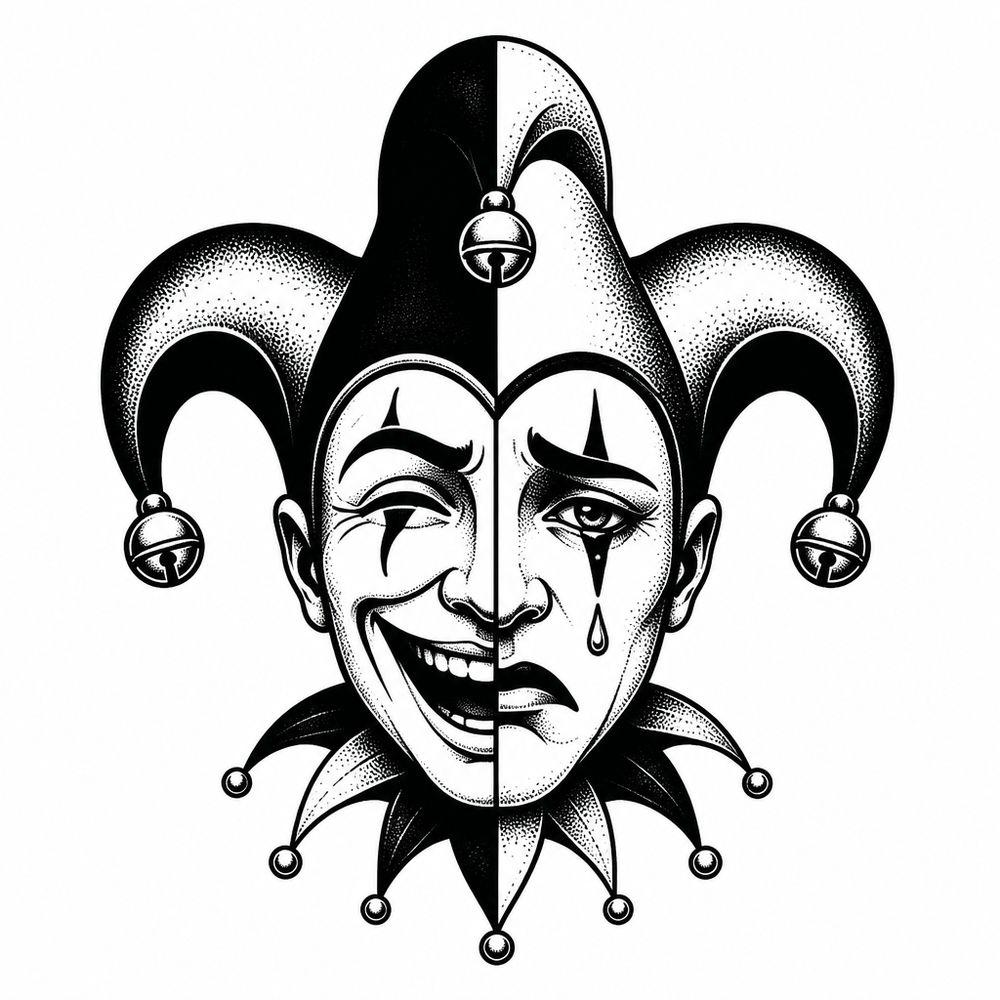
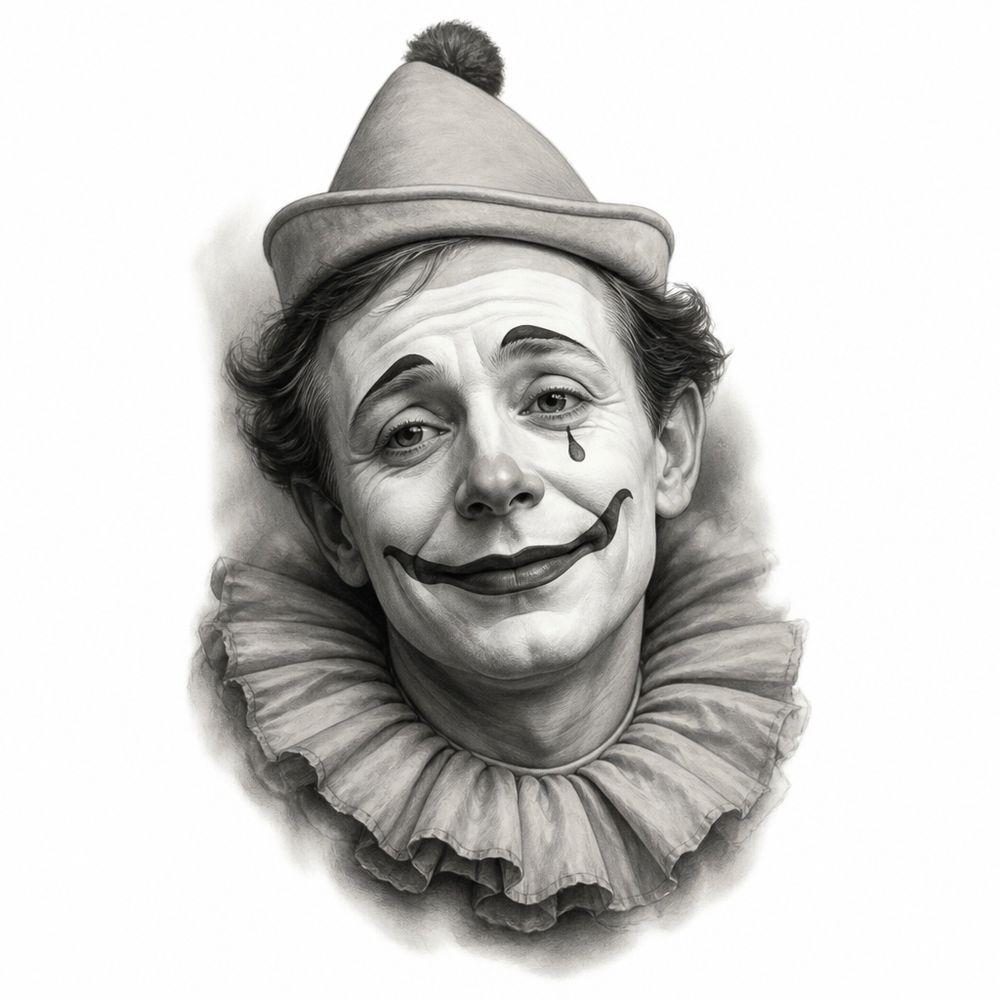
| Laughing and crying face | The jester or clown split in two, close to the comedy and tragedy masks | Duality: smiling through pain, good and bad times |
| Smile on the hand | A grin tattooed on the hand, held over the mouth for a photo | A joke, a mask, a smile you can put on at will |
| The DC villain | Batman's enemy since Batman #1, 1940 (DC) | Fandom first; also chaos, rebellion and the anti-hero |
| Clown in Brazilian prisons | A 2015 police study in Bahia (Correio) | Linked to robbery and killing police in that study; see the section below |
Searches for "joker tattoo meaning for guys" and "for female" usually get the same answer: the figure carries the meaning, not the gender of the person wearing it. The context does change how it reads. A joker card next to dice and an ace reads as gambling; the same card with a date reads as a lucky break; a laughing and crying jester reads as the ups and downs of life, the same idea as the laugh now, cry later masks.
Where does the joker card come from?
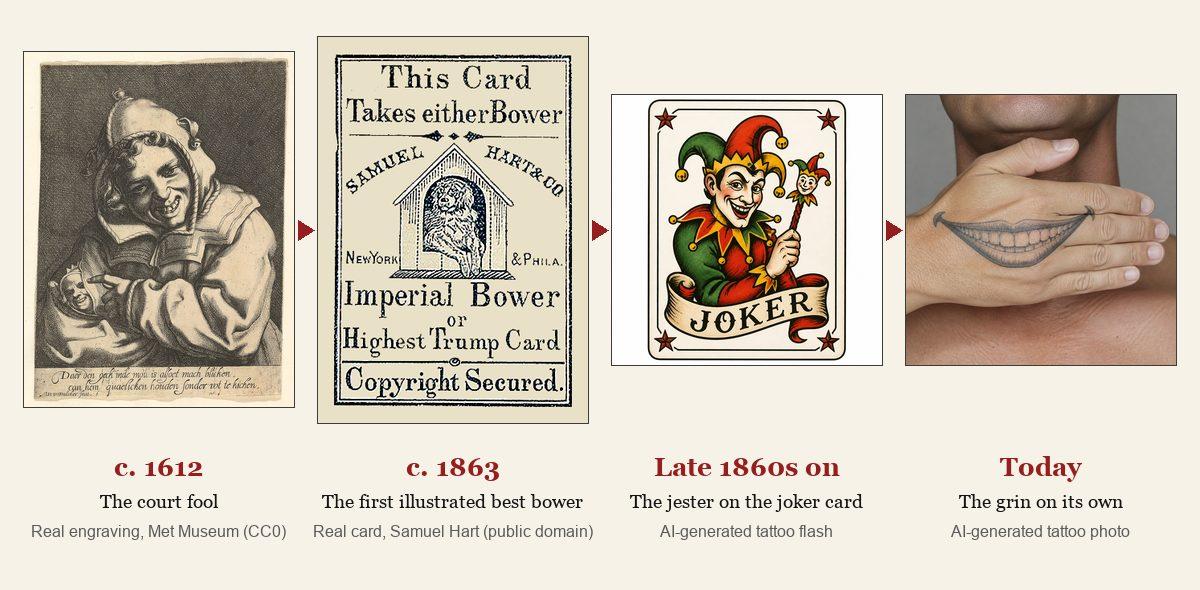
The joker is an American invention, and it was not a jester at first. In the 1860s, euchre players changed their rules and wanted one more trump card above the two "bowers", the jacks that ranked highest in the game. The new card was first called the Best Bower, then the Little Joker or the Jolly Joker (World of Playing Cards). Card historian David Parlett places the extra card in euchre packs in the 1850s, and it is first mentioned in a printed rule book in 1868 (Wikipedia, citing Parlett and The Modern Pocket Hoyle).
Look at the second image in the strip above: the card that Samuel Hart & Co. of New York and Philadelphia printed around 1863, credited as the first illustrated best bower, shows a dog in its kennel and the words "Imperial Bower or Highest Trump Card" (Wikimedia Commons, Wikipedia). Cards labelled "Joker" came at the end of the 1860s, and some of them showed clowns and jesters. WOPC notes that many early American jokers look like clowns or jesters, and that some look sinister rather than jolly, which is a useful fact if you want a darker card. The name itself probably comes from Jucker, the German spelling of the game that became euchre (Wikipedia).
The joker card, step by step
1850s
An extra trump for euchre
- Parlett dates a blank extra card in euchre packs to the 1850s
c. 1863
The first illustrated best bower
- Samuel Hart's Imperial Bower: a dog in a kennel, not a jester
- Jokers appear in American packs around this time (WOPC)
1868
First in a rule book
- The Modern Pocket Hoyle mentions the card
- Cards labelled "Joker" appear at the end of the decade, some with clowns and jesters
c. 1875
The wild card
- In poker the joker becomes a wild card, first called the "mistigris"
- "Joker's wild" comes from that use
1870s to 1880
To Britain
- Goodall makes jokers for the American market in the 1870s; they reach English packs around 1880 (WOPC)
You will read that the joker descends from the Fool of the tarot. Some historians think so; others, as WOPC reports, argue that the jester, clown and card-magician pictures fit the joker's role in trick games better. Treat the tarot link as debated, not settled. Today, US and British decks usually include two jokers, and German decks often three (Wikipedia).
What does a joker card tattoo mean?
The card's history explains its tattoo meaning. In euchre it was the highest trump, the card that beat everything. In poker and rummy it became the wild card, which can stand for any card you need. So a joker card tattoo is usually read as luck, taking risks, adaptability, or being the unpredictable one in the group. Card players and gamblers wear it literally; others wear it for a moment where chance changed their life.
Common joker card designs pair it with an ace of spades, a fanned hand of cards, dice, poker chips or a pair of jokers for a couple. A card with roses or a clock moves it closer to the memento mori family: time and luck both run out. With a phrase, the card is often paired with mottos about risk or not trusting anyone; trust no one is a frequent partner.
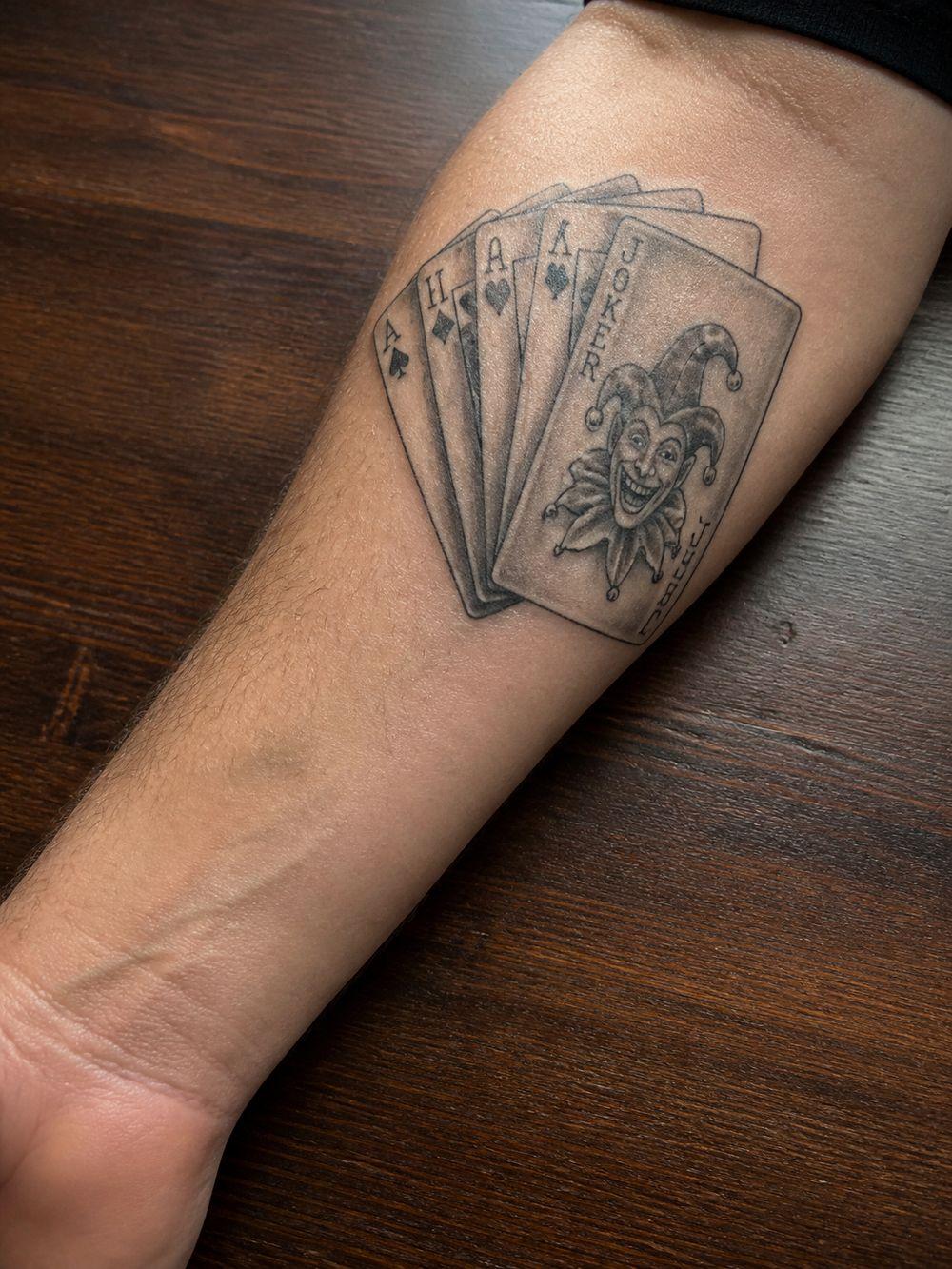
A real poker-size card is 2.5 by 3.5 inches (Wikipedia). That is a handy reference: a life-size joker card fits the back of most hands and sits comfortably on a forearm, while a fanned hand of five cards needs about twice the width and fits the forearm or the upper arm better. The traditional style suits a single card with bold outlines and a few flat colors, like the hero image at the top of this page.
Prompt to try
“Joker playing card tattoo with an ace of spades and two dice, black and grey, for the forearm”
Generate this designJoker, jester, harlequin or clown: what is the difference?
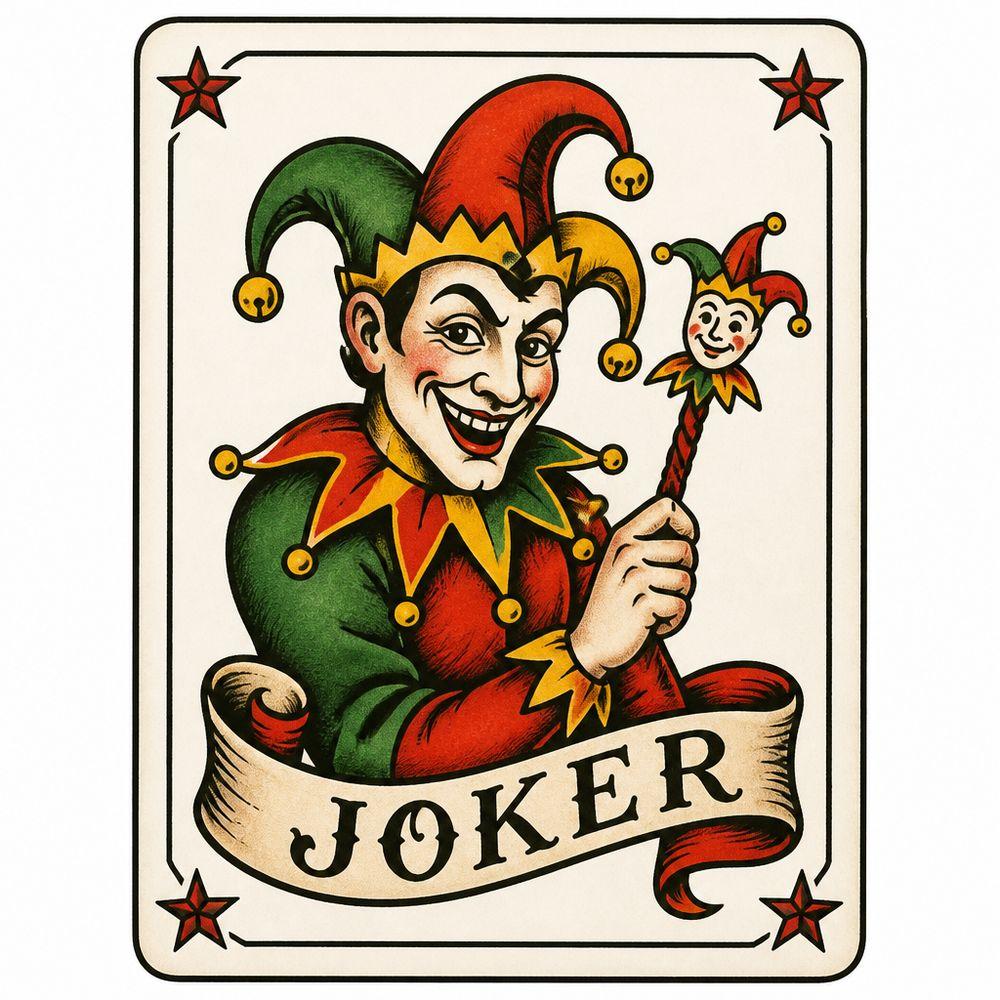 1860sJoker card: the wild card
 Mid-1500s wordJester: the court fool
 c. 1584Harlequin: the stage servant
 CircusClown: the painted smile
People search for joker, jester and clown tattoos as if they were the same thing. They overlap, but each has its own look and history.
- The jester was a member of a court household who entertained the king and his guests, or a traveling performer at fairs and markets. The word appeared in Tudor England in the mid-16th century. The cap and bells and the marotte, a stick topped with a small fool's head, mirrored the royal crown and scepter (Wikipedia). That mirror is the root of the "fool who mocks the king" reading. Will Sommers served Henry VIII; by the 18th century court jesters had mostly disappeared outside Russia, Spain and Germany.
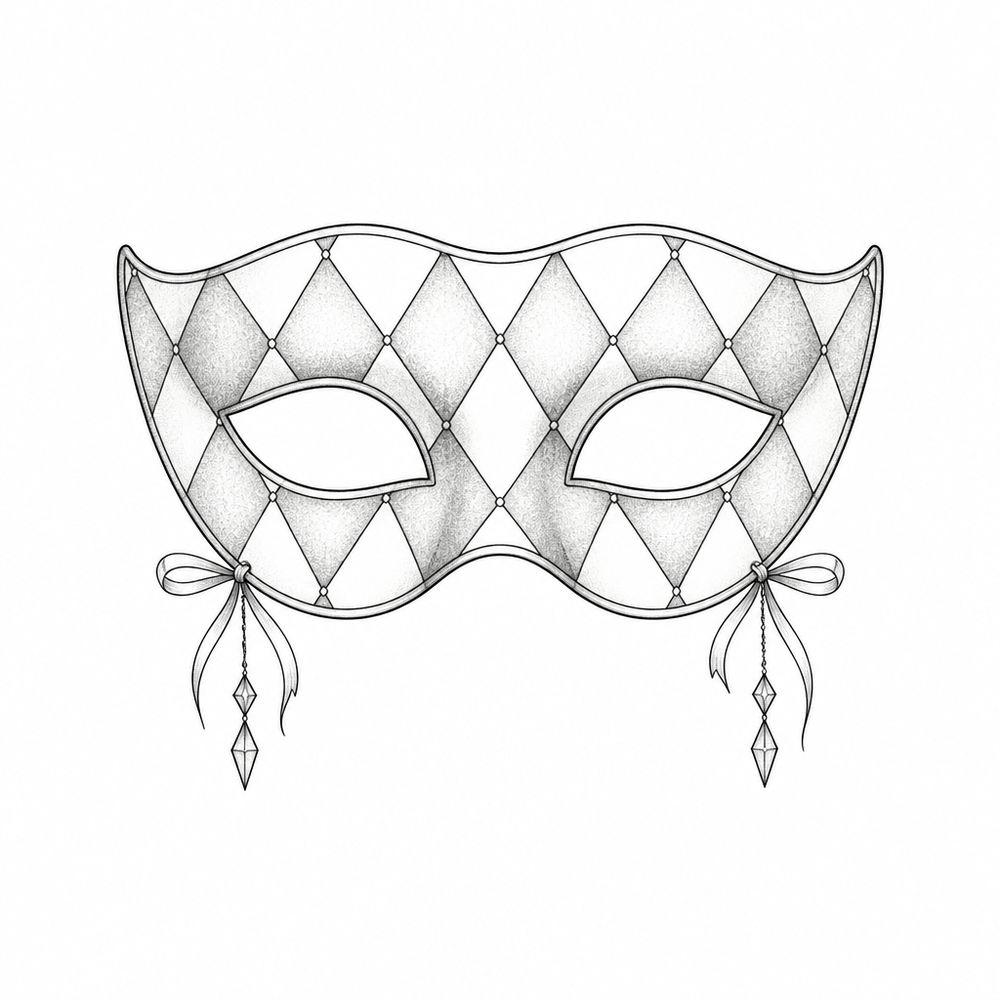
- The harlequin comes from the Italian commedia dell'arte: an agile, clever servant who often outwits his master. Tristano Martinelli is the first actor known to use the name, in Paris around 1584, and the patched costume became the diamond pattern people now tattoo. The name probably comes from a devil, hellequin, in medieval French plays (Wikipedia).
- The clown took over the mischief in the English harlequinade from the 18th century on (Wikipedia), then in the circus. The painted smile and the single tear give the "sad clown" its meaning: a happy face on top of a sad person.
- The joker on the playing card borrows the jester's cap and bells, and the DC villain borrows the card: the character was modeled on a joker playing card with a mirthless grin (Wikipedia).
Jester tattoos are often drawn as the "wise fool": Shakespeare's fools are clever commoners who outwit people of higher rank, and Feste in Twelfth Night is "wise enough to play the fool" (Wikipedia). If that is your reading, a jester carries it more clearly than the DC character does.
What does the joker smile tattoo on the hand mean?
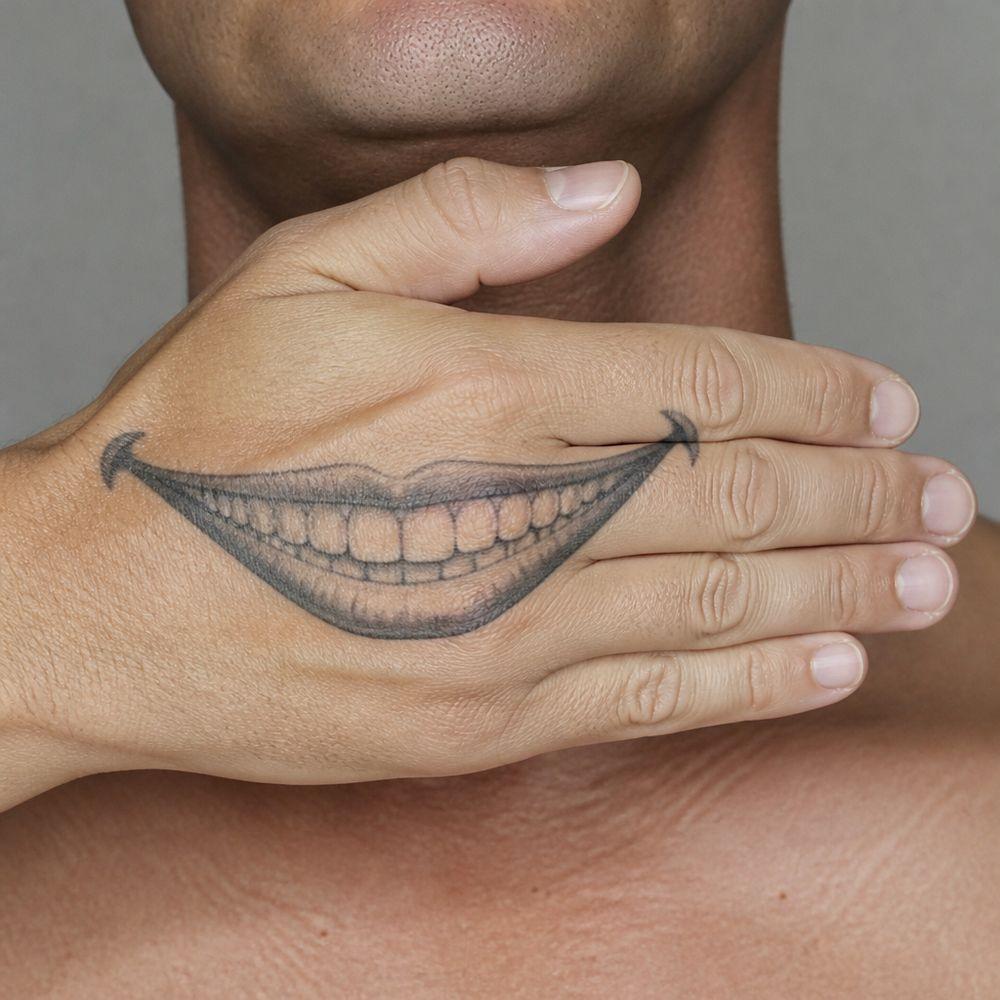
The joker smile tattoo is a wide grin, usually with teeth and lips, tattooed on the back or the outer edge of the hand or along the index finger. The point is the pose: you hold the hand over your mouth and the tattoo becomes your smile. People read it as a mask, a joke at their own expense, or a smile they can put on whatever they feel. It is also the most-searched simple version, because a grin is one shape with no face to draw.
The size is set by the hand. The median back of the hand is about 3.1 inches wide for women and 3.5 inches for men (ANSUR II, see our tattoo size guide), so a grin that spans it is about 3 inches wide and has to stay simple: lips, a line between the teeth, not every tooth shaded. The teeth need space between their lines, or they merge into one grey band as the tattoo settles. Artists report the hand as a middle-tier spot for pain (Pimentel et al., 2021), and the hand is one of the most visible places on the body; the hand placement guide covers size, visibility and how hand tattoos age.
The grin also appears in the films. In Suicide Squad (2016), Jared Leto's Joker has "Damaged" on his forehead, a skeleton in a jester hat, a large grin along his arm and several "hahaha" tattoos, which director David Ayer said "tell a very specific story" (Inverse, 2016). In 2023 Ayer wrote on Twitter that "Damaged" was the one aesthetic choice he wished he had not made (JoBlo). We found no reliable source for who started the hand-over-mouth photo pose, so we will not credit anyone.
Prompt to try
“Simple joker smile tattoo on the side of the hand, black linework grin with lips and teeth, no shading”
Generate this designIs a joker tattoo a gang or prison tattoo?
That is one regional study, reported in one newspaper, about one country. We found no reliable source saying a joker card or a jester is a gang tattoo in the United States, so we do not claim one. If you live in or travel to Brazil, it is worth knowing how a clown face may be read there; a joker card, a jester or lettering does not carry that study's association. Clown masks with "smile now, cry later" have their own history, covered on the laugh now, cry later page.
Joker tattoos inspired by the DC character
Many people searching "joker tattoo" want the villain. The facts behind him: the Joker first appeared in Batman #1 in 1940 (DC), created by Bill Finger, Bob Kane and Jerry Robinson, with credit long disputed. Finger brought a photo of Conrad Veidt with a fixed grin in the 1928 film The Man Who Laughs, and Robinson's sketch of a joker playing card supplied the card motif (Wikipedia). Harley Quinn, the partner in many couple tattoos, was created for Batman: The Animated Series in 1992. DC describes him as the "Clown Prince of Crime" (DC).
- First appearance
- 1940
- First appearance
- Batman #1 (DC)
- Heath Ledger's Oscar
- 2009
- Heath Ledger's Oscar
- Supporting actor, The Dark Knight
- Joaquin Phoenix's Oscar
- 2020
- Joaquin Phoenix's Oscar
- Lead actor, Joker
- Joker (2019) worldwide
- $1.08B
- Joker (2019) worldwide
- Box Office Mojo
Those two Oscars explain the "Heath Ledger joker tattoo" and "why so serious" searches: portraits of a specific actor in a specific film are among the most requested. Two practical points. First, a portrait of an actor in a role is a realism job: it needs a large area and an artist with a portfolio of healed portraits, because a face that is slightly off reads as a different person. Second, the character, the film stills and the logos belong to their owners; a tattoo artist will draw it for you, but you will not find, and we do not show, AI images of the character here. If you want the idea without the license, the generic route works: a joker card, a grin, a jester or "HA HA HA" lettering.
Joker tattoo ideas
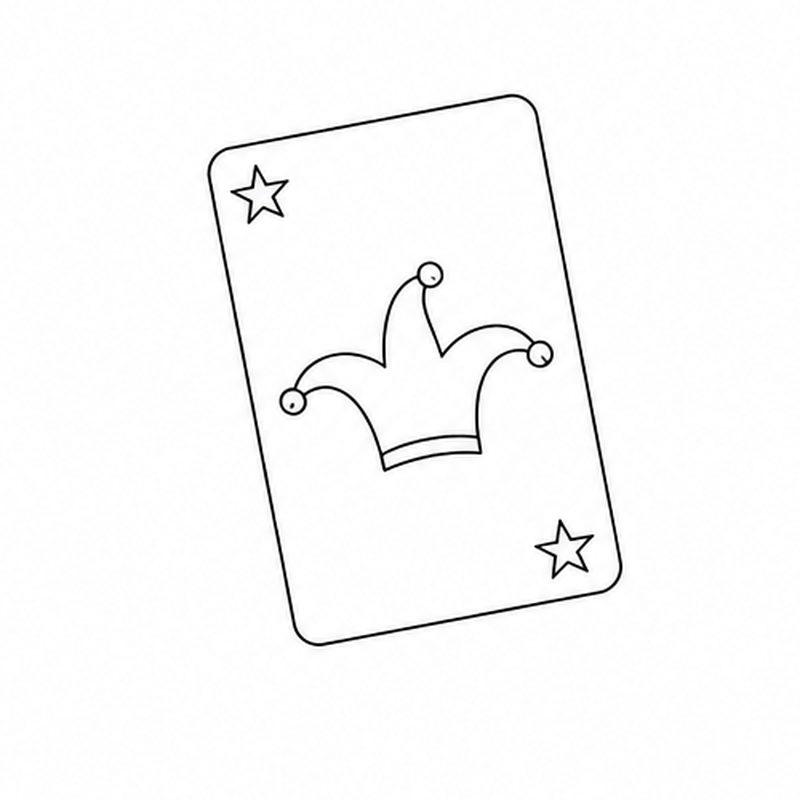
- Small joker tattoo: a tilted card outline with a jester hat, a tiny cap and bells, or a single joker star. These work at 1 to 2 inches on the wrist, ankle or behind the ear. Keep it to a few lines; a face does not survive at that size.
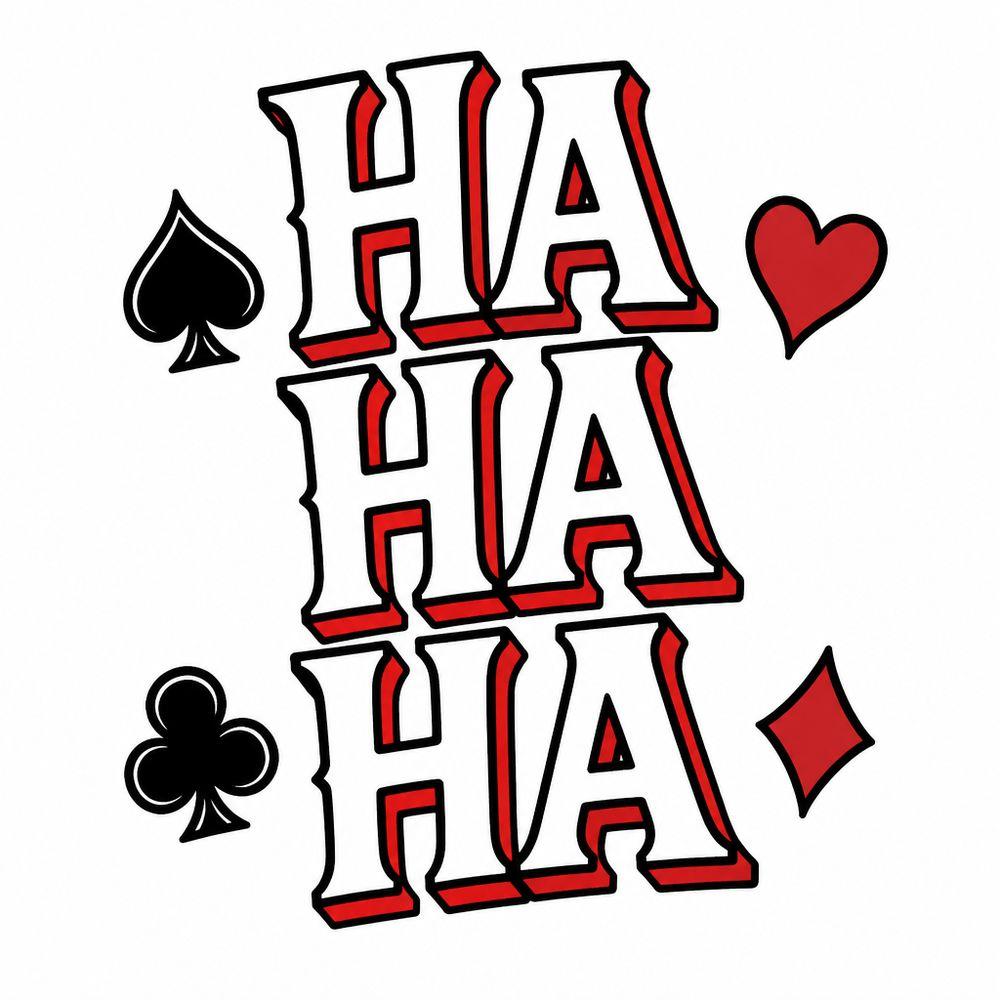
- "HA HA HA" lettering: stacked on the forearm, running down the ribs or across the knuckles. It is the laugh without the face. Our version above is in traditional lettering with card suits; script gives a looser, handwritten laugh.
- Joker card sleeve: a full hand of cards, dice, chips and a jester on the upper arm, with smoke or roses to fill the gaps down the forearm.
- Jester skull: a skull wearing the cap and bells, which people commonly read as laughing at death; it pairs naturally with memento mori pieces.
- Couple tattoos: two joker cards, or a joker and a queen of hearts, split between two people.
- Laughing and crying masks: the jester or clown split in two, as in the design above.
Prompt to try
“HA HA HA lettering tattoo stacked vertically, bold black outline with red shadow, small card suits around it”
Generate this designWhere to put a joker tattoo, and how big?
Joker designs range from a 1-inch card outline to a full sleeve, so the body part decides the version more than the other way round. The table gives the room each area offers, from the ANSUR II medians in our tattoo size guide, and the pain tier artists reported in Pimentel et al. (2021), as summarized in our tattoo pain chart.
| Placement | Room (women / men) | Joker version that fits | Reported pain |
|---|---|---|---|
| Hand | 7.1 × 3.1 / 7.6 × 3.5 in | The grin (about 3 in wide), one life-size card, knuckle lettering | Middle |
| Forearm | 9.5 × 5.2 / 10.5 × 6.1 in, one side | One card, a fanned hand, a jester head, stacked HA HA HA | Lower |
| Shoulder, upper arm | 12.2 × 6.0 / 13.2 × 7.0 in | A portrait or a card scene with dice and chips | Lower |
| Full sleeve | About 22 / 24 in of length | Cards, jester, smoke and lettering in one composition | Varies along the arm |
| Thigh | 13.1 × 12.1 / 14.1 × 12.3 in | A large portrait or a full-figure jester | Outer: lower. Inner: higher |
| Calf, lower leg | 15.2 × 7.3 / 16.3 × 7.7 in | A tall standing jester or a vertical card stack | Middle |
| Back | 14.4 × 16.7 / 16.3 × 18.8 in, whole back | A large scene or a portrait with a background | Not rated |
| Chest | No matching figure | A single card or a grin across the chest | Higher |
| Neck, face | No matching figure | Small lettering or a small card; a face tattoo is very hard to hide | Higher |
ANSUR II measured US Army personnel aged 17 to 58 in 2012, not the general population, so measure yourself too. "Joker version that fits" is our reading of those dimensions and the 2.5 × 3.5 in card size. Pain tiers are what six artists and two customers at one shop reported, not measurements, and in a survey of 1,092 tattooed people the body area did not predict pain once session length, stress and bleeding were counted.
Which style suits a joker tattoo?
Each figure has a style that suits it. Traditional fits the joker card and the jester: bold outlines, red, yellow and green, and a design that reads from across a room. Realism in black and grey is the usual choice for faces, clowns and portraits, and needs size: by artist consensus, a realistic face loses its expression when it is shrunk. Blackwork suits the split laughing and crying jester and the HA HA HA lettering, with solid black and bare skin. Fine line suits small cards and the harlequin mask, but its thin lines need more space between them than people expect. For the same design shown in eight styles, see tattoo styles explained.
Once you have a design, the tattoo stencil maker turns it into clean transfer lines. That is the moment to check the details an AI or a quick sketch gets wrong: the card indices, the number of bells on the cap, and whether each tooth in a grin is still a separate line.
How much does a joker tattoo cost?
There is no set price for a joker tattoo. A 2-inch card outline and a realistic portrait sleeve are different jobs: size, placement, color and detail set the time in the chair, and the artist's rate does the rest. Our guide to how much a tattoo costs explains how artists price, and the tattoo price calculator gives an estimate for your size and body area. To check a size at real scale on your screen first, use the tattoo size calculator.
Related tattoo ideas and guides
Laugh Now Cry Later Tattoo Ideas
The smiling and crying masks, the closest cousin of the split jester.
Memento Mori Tattoo Ideas
Skulls, hourglasses and cards that remind you time runs out.
Trust No One Tattoo Ideas
Lettering often paired with a joker card or a jester.
999 Tattoo Ideas
Another small symbol with a hidden meaning, with sizes and fonts.
Realism Tattoo Style
What a black and grey portrait needs in size and artist skill.
Traditional Tattoo Style
Bold lines and flat color, the classic look for cards and jesters.
Sources
- World of Playing Cards, "The Joker Card" (Simon Wintle, updated December 29, 2025) · checked November 11, 2026
- Wikipedia, "Joker (playing card)" (citing Parlett, Dawson and The Modern Pocket Hoyle, 1868) · checked November 11, 2026
- Wikipedia, "Standard 52-card deck" (poker-size card dimensions) · checked November 11, 2026
- Samuel Hart & Co., Imperial Bower, c. 1863, Wikimedia Commons, public domain · checked November 11, 2026
- Werner van den Valckert, Laughing Fool, c. 1612, Metropolitan Museum of Art 2011.511, Wikimedia Commons, CC0 · checked November 11, 2026
- Wikipedia, "Jester" · checked November 11, 2026
- Wikipedia, "Harlequin" · checked November 11, 2026
- DC, "The Joker" character page · checked November 11, 2026
- Wikipedia, "Joker (character)" · checked November 11, 2026
- Academy Awards, 81st ceremony (2009) · checked November 11, 2026
- Academy Awards, 92nd ceremony (2020) · checked November 11, 2026
- Box Office Mojo, Joker (2019) · checked November 11, 2026
- Inverse, "Joker and Harley's Suicide Squad tattoos tell a hidden story" (Sean Hutchinson, June 17, 2016) · checked November 11, 2026
- JoBlo, David Ayer on the Joker's "Damaged" tattoo (Steve Seigh, updated April 4, 2023) · checked November 11, 2026
- Correio, "PM identifica tatuagens eleitas pelas facções criminosas da Bahia" (Bruno Wendel, September 13, 2015) · checked November 11, 2026
- Pimentel et al., tattoo pain and VR, Frontiers in Virtual Reality (2021), Table 1 · checked November 11, 2026
- Witkoś and Hartman-Petrycka, survey of 1,092 tattooed people, IJERPH (2020) · checked November 11, 2026
- ANSUR II anthropometric survey, OPEN Design Lab, Penn State · checked November 11, 2026
Joker tattoo FAQ
What does a joker tattoo mean?+
It depends on the figure. A joker card stands for luck, risk and being the wild card; a jester for humor and saying what others will not; a laughing and crying face for duality; the DC villain for fandom, chaos and rebellion. None of these is an official meaning; they come from the card's and the jester's history.
What does a joker card tattoo mean?+
The joker was added to euchre in the 1860s as the highest trump and later became the wild card in poker, the card that can stand for any other. As a tattoo it usually means luck, taking chances or adaptability.
What does the joker smile tattoo on the hand mean?+
It is a grin tattooed on the back or side of the hand, held over the mouth so the tattoo replaces your smile in a photo. People wear it as a mask, a joke or a smile they can put on at will. On a median hand it is about 3 inches wide, so keep it simple.
Is a joker or clown tattoo a gang tattoo?+
A 2015 police study in Bahia, Brazil, reported by the newspaper Correio, linked clown tattoos in prisons to robbery and killing police, while the police themselves said a tattoo alone is not grounds for arrest. We found no reliable source making a joker card or jester a gang tattoo in the United States.
What is the difference between a jester and a joker tattoo?+
The jester is the court fool, with cap, bells and a marotte that mirrored the king's crown and scepter. The joker is the playing card invented in the 1860s, which later borrowed the jester's image. The DC villain was in turn modeled on the joker card.
Does the Joker have tattoos?+
In Suicide Squad (2016), Jared Leto's Joker has "Damaged" on his forehead, a skeleton in a jester hat, a grin along his arm and several "hahaha" tattoos. Director David Ayer later said "Damaged" was the one aesthetic choice he wished he had not made.
Tattoo planning tool
Design your own Joker tattoo
Describe your idea, generate it in any style, and preview it on your own skin before the needle.
Generate for freeFree to start
Explore more tattoo ideas
- One Piece Tattoo IdeasA one piece tattoo celebrates the legendary anime's themes of freedom, dreams and unbreakable friendship.
- Jesus Tattoo IdeasA jesus tattoo is a powerful expression of faith, sacrifice and hope.
- Naruto Tattoo IdeasA naruto tattoo honours the anime's message of perseverance, friendship and never giving up.
- Palm Tree Tattoo IdeasA palm tree tattoo captures freedom, paradise and a laid-back state of mind.