
Evil Eye Tattoo: Meaning, Designs and Sizes to Scale
An evil eye tattoo almost always shows the nazar, the blue-and-white eye amulet, rather than the evil eye itself. The evil eye is the old and still widespread belief that an envious or admiring look can cause harm; the nazar is the charm meant to turn that look away. As a tattoo it is worn as protection and good luck, which is a modern, personal reading of a living tradition, not a guarantee of anything.
12+ Evil Eye tattoo designs
AI-generated evil eye tattoo designs across popular styles. Tap any one to generate your own version and preview it on your skin.
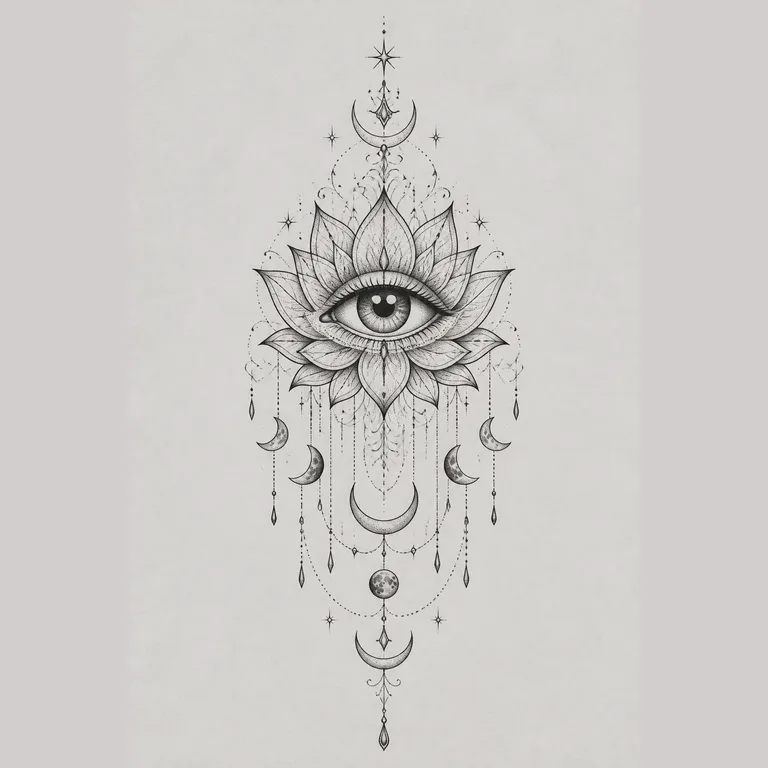
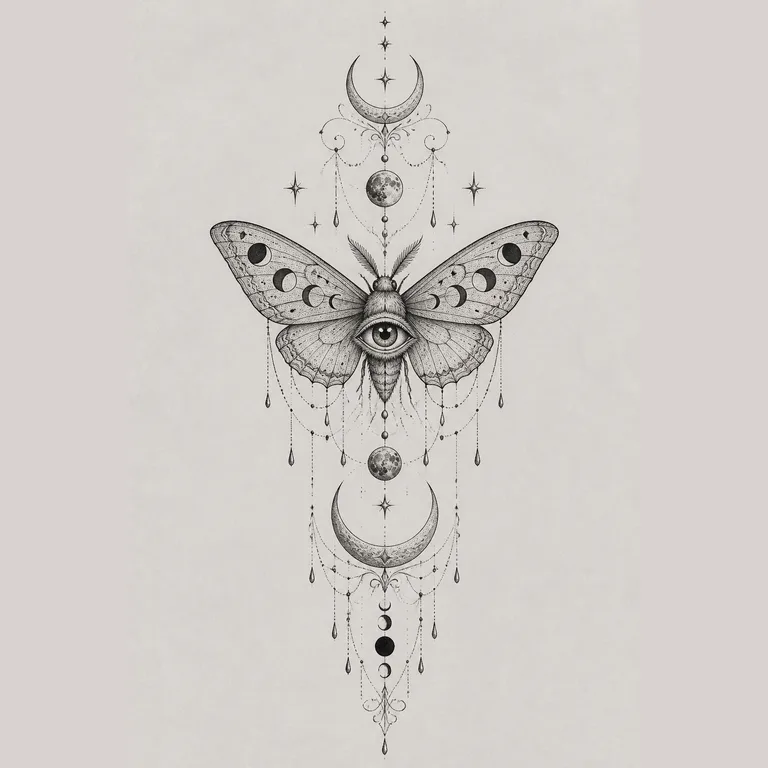
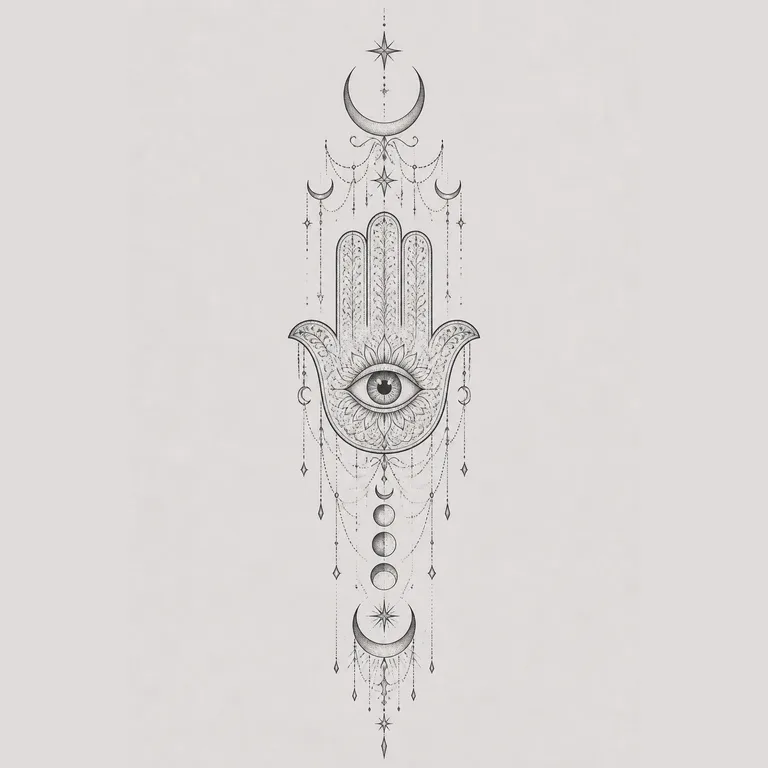
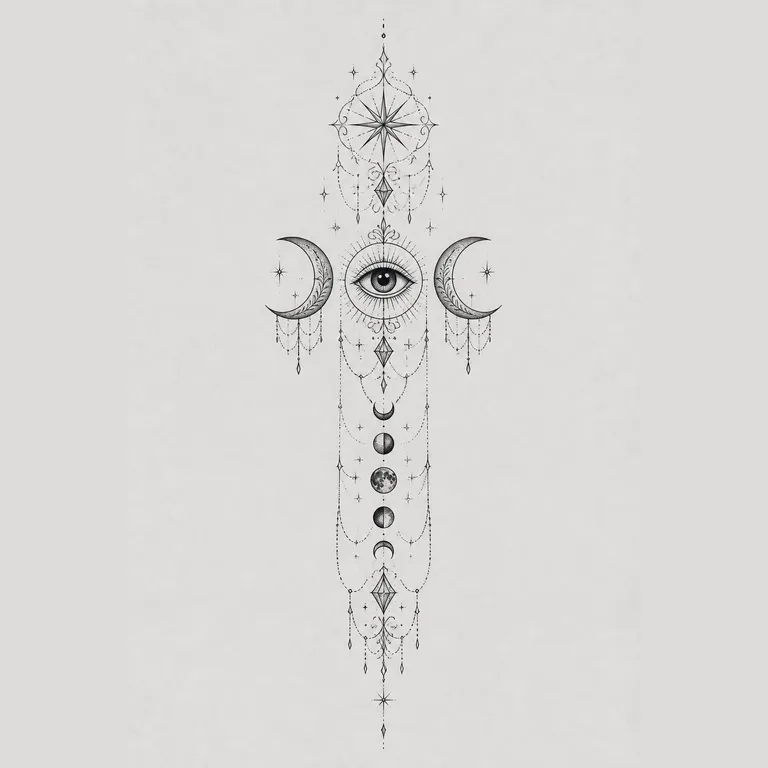
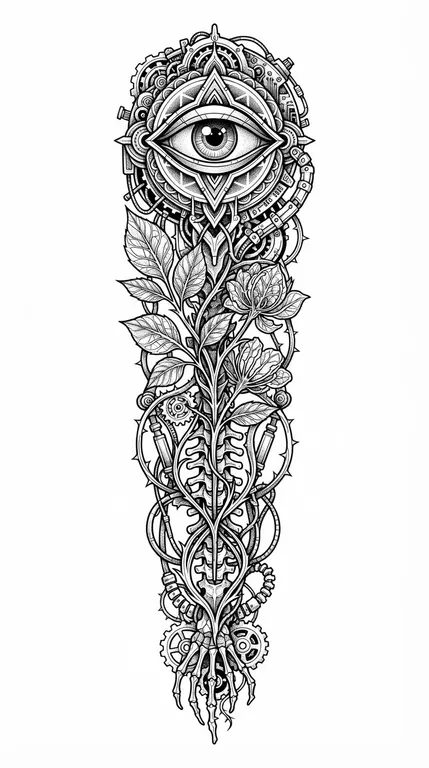
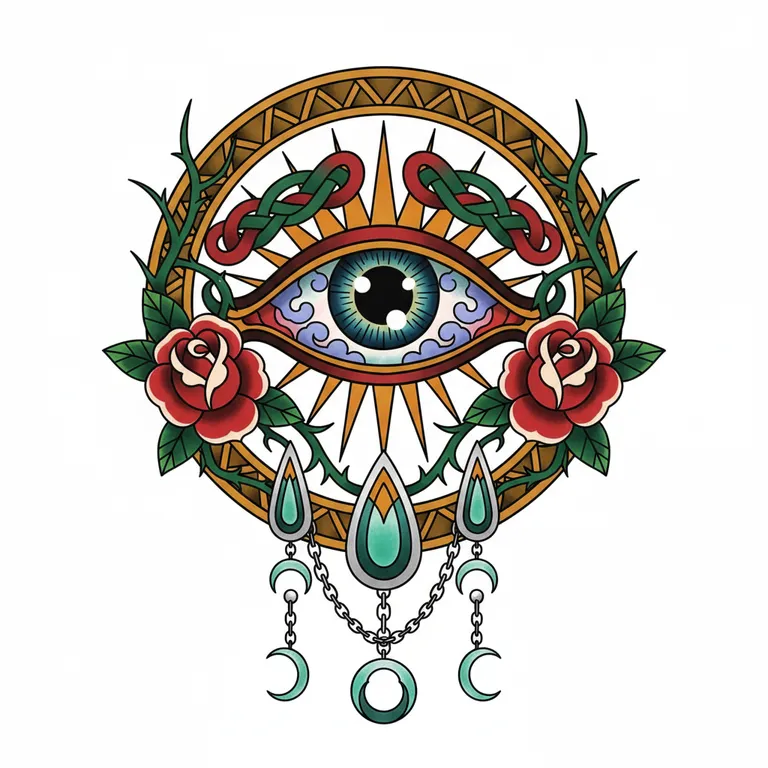
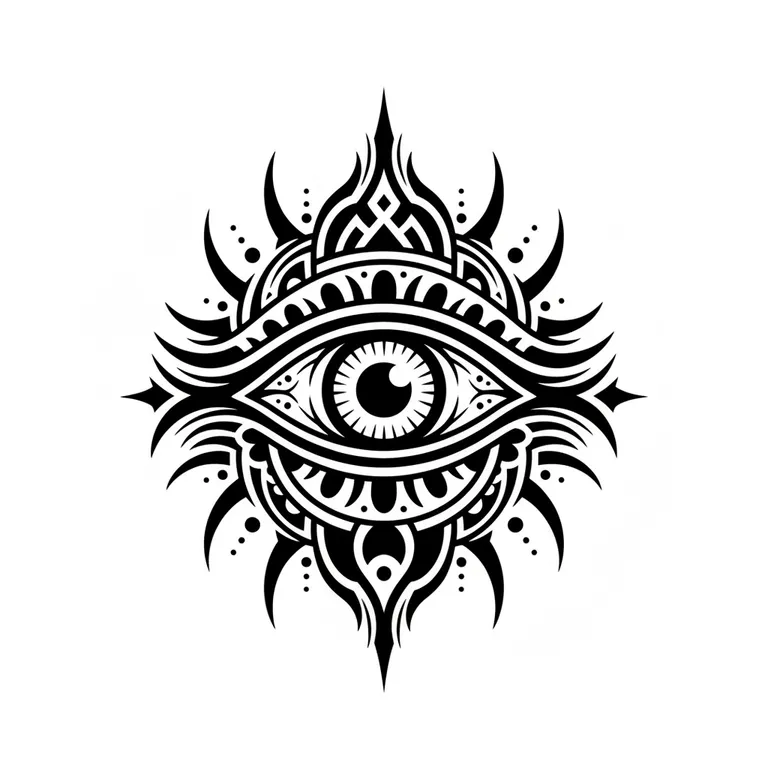
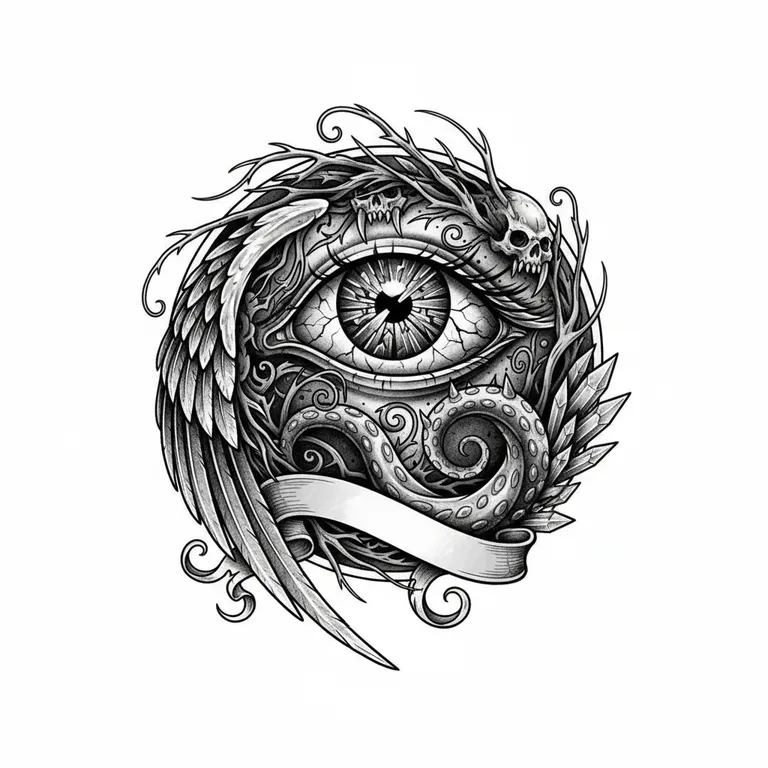
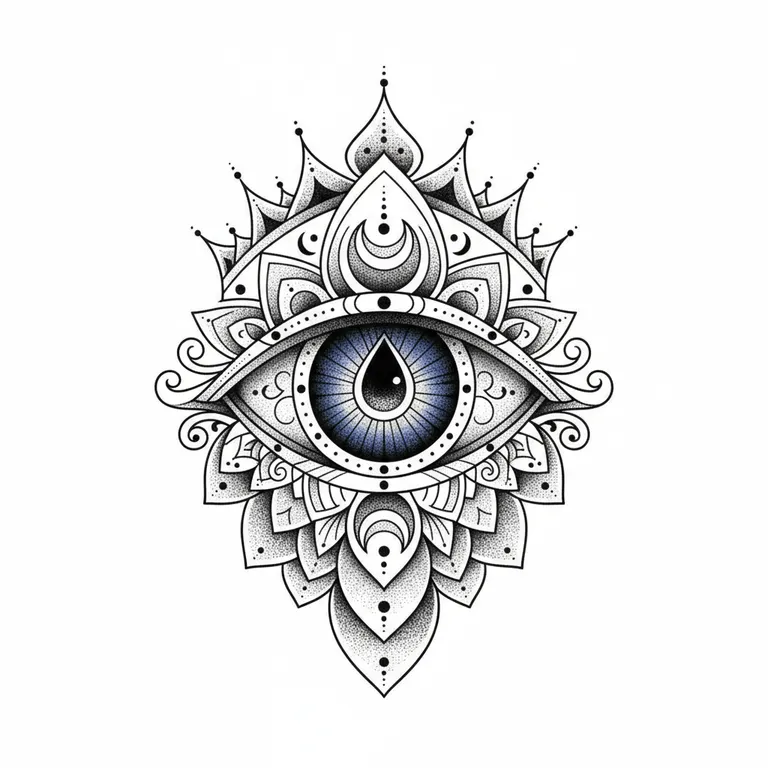
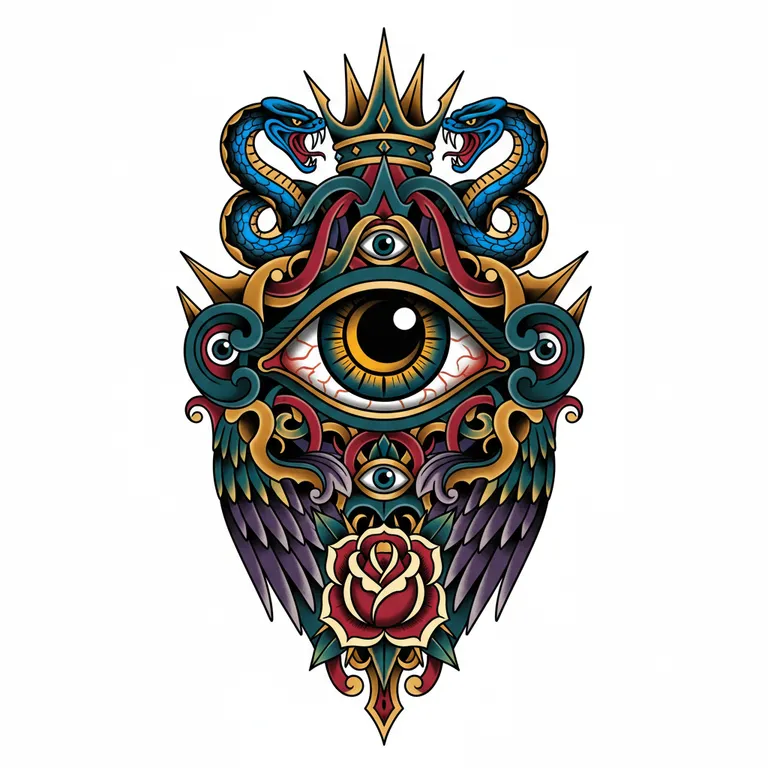
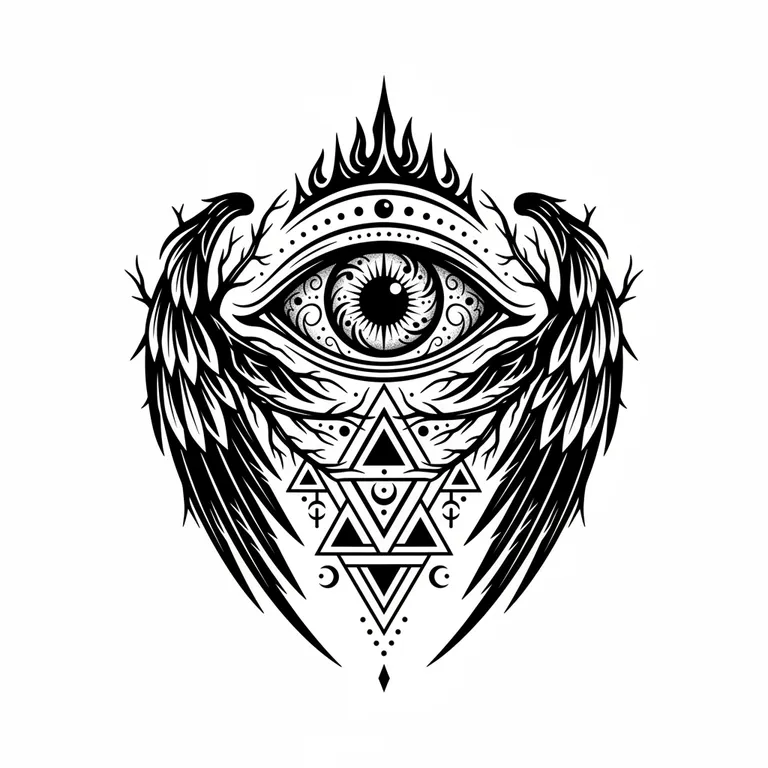
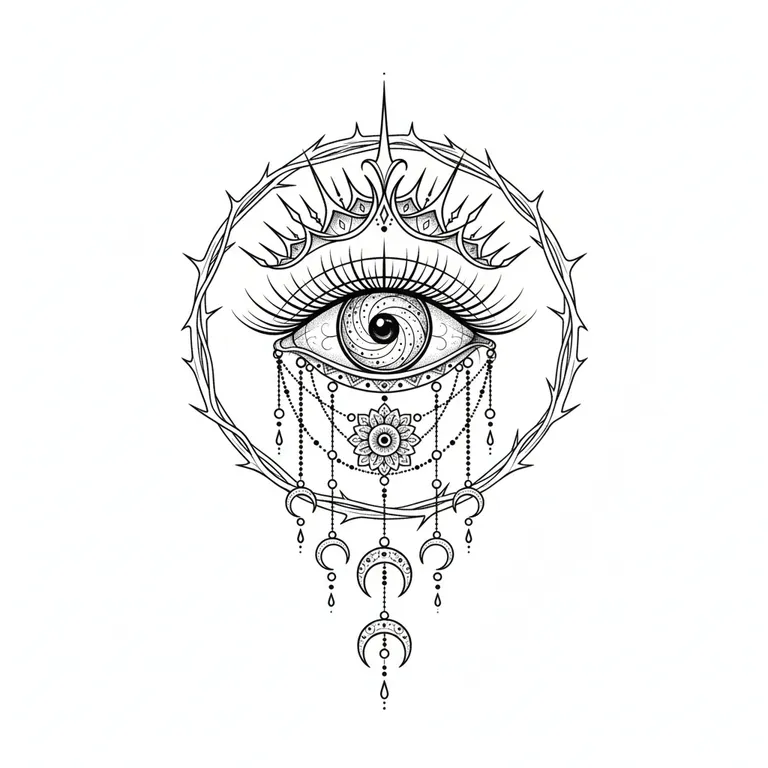


What does an evil eye tattoo mean?
The belief comes first. Encyclopedic summaries of the evil eye describe it as a curse carried by a look, usually inspired by envy, and note that in many traditions the person who casts it does not mean to: praise or admiration alone can be enough. People who hold the belief protect themselves, their children, homes and animals with amulets, gestures, phrases and rituals. The best known amulet is the nazar, an eye-shaped glass bead; its name comes from the Arabic naẓar, "sight" or "attention", and in Turkey it is called nazar boncuğu, "nazar bead" (Nazar (amulet)).
So an evil eye tattoo reads, in plain terms, as a permanent version of that charm. Wearers commonly describe it as:
- Protection against envy, gossip or other people's bad intentions, the traditional job of the amulet.
- A family or heritage link, for people who grew up with nazars pinned to baby clothes or hung by the door.
- A good-luck sign for a new start: a move, a new baby, a new business.
- A reminder to keep good things private, or not to let other people's opinions in.
Those are interpretations, and they are yours to choose. What the tattoo does not have is any proven effect: the evil eye is a belief, and so is the protection the nazar is said to give. You can respect a belief, and wear its symbol, without claiming it works.
Anatomy of a nazar tattoo
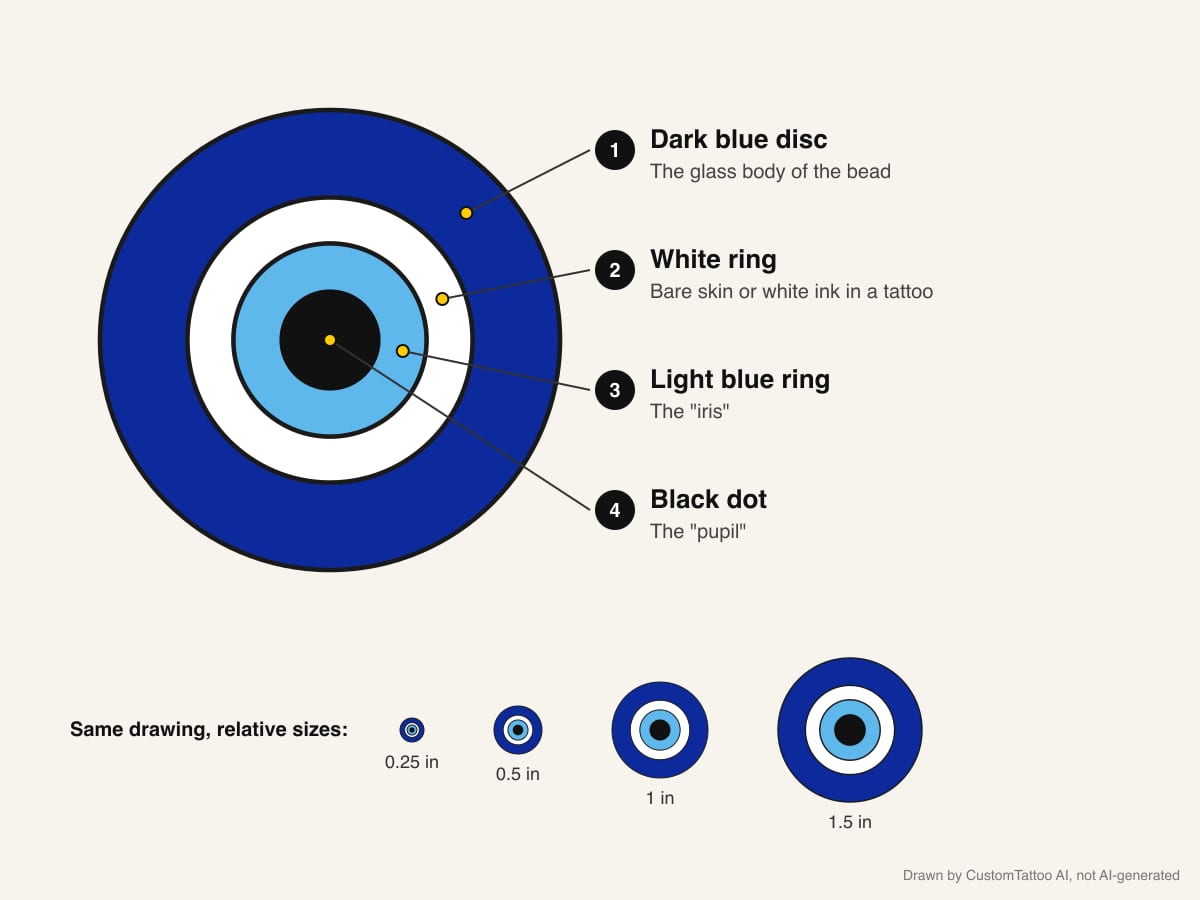
A typical nazar is handmade glass built from concentric circles or a teardrop in dark blue, white, light blue and black, sometimes with a yellow or gold edge (Nazar (amulet), citing Lonely Planet). A tattoo copies those layers in ink. That is why size matters more for this design than for most small tattoos: four rings have to fit inside one small circle. The table gives the width of each ring in our drawing at common sizes. It is simple geometry, so you can check any design the same way.
| Nazar diameter | Dark blue band | White ring | Light blue ring | Black dot |
|---|---|---|---|---|
| 0.25 in (6 mm) | 1.2 mm | 0.6 mm | 0.6 mm | 1.4 mm across |
| 0.5 in (13 mm) | 2.4 mm | 1.3 mm | 1.3 mm | 2.8 mm across |
| 0.75 in (19 mm) | 3.6 mm | 1.9 mm | 1.9 mm | 4.2 mm across |
| 1 in (25 mm) | 4.8 mm | 2.5 mm | 2.5 mm | 5.6 mm across |
| 1.5 in (38 mm) | 7.2 mm | 3.8 mm | 3.8 mm | 8.4 mm across |
| 2 in (51 mm) | 9.7 mm | 5.1 mm | 5.1 mm | 11.2 mm across |
Read the white column. Below half an inch, the white ring is about a millimeter wide or less, a thin strip of skin or white ink squeezed between two blues. The American Academy of Dermatology notes that UV light can fade some tattoo inks, and artists commonly warn that colors placed very close together can soften into each other as a tattoo ages; we found no study that measures how fast. That is artist consensus, not a measured rule, so the practical step is to ask your artist the smallest size they would tattoo all four rings at, and what they would drop below it. Common answers are a black-only outline version, or three rings instead of four.
Evil eye vs nazar: the belief and the bead
Search results and jewelry shops use "evil eye" for the charm, which blurs two different things. The distinction matters if you want to explain your tattoo to someone who grew up with the belief.
| The evil eye | The nazar | |
|---|---|---|
| What it is | A belief: a look, often envious or admiring, that is said to cause harm | An object: an eye-shaped amulet, usually blue-and-white glass |
| Role | The danger | The protection against it |
| Typical color | No fixed color; in the Aegean and parts of Greece and Turkey, light blue or green eyes were thought to carry it | Dark blue, white, light blue and black |
| Where you see it | Not visible; it is described, feared or warded off | On doors, babies, jewelry, even an airliner, and now skin |
| Source | Evil eye (encyclopedic summary) | Nazar (amulet) |
One detail explains the blue. The nazar article cites authors who say blue eyes were rare around the Eastern Mediterranean and the Middle East, so light-eyed people were believed able to curse with a look, and an "eye" of the same color was used to stare the curse back. Read that as the folk explanation recorded by those authors, not as a settled history.
Where does the evil eye come from?
It is very old and very widespread, and no single culture owns it. The evil eye article lists alabaster "eye idols" from Tell Brak in Mesopotamia, texts from Ugarit in Syria, and Greek and Roman authors such as Hesiod, Plato, Plutarch and Pliny the Elder, and it traces the belief across the Mediterranean, the Balkans, West, Central and South Asia, parts of Africa and, through Spanish colonists, Latin America. The Curationist essay on protection from the evil eye, built on museum objects, dates written mentions to as early as the third millennium BCE in Mesopotamia. Names change with the language:
| Language or region | Name for the evil eye |
|---|---|
| Turkish | nazar (the bead: nazar boncuğu) |
| Greek | kako mati; the amulet is often just máti, "eye" |
| Spanish | mal de ojo |
| Italian | malocchio |
| Hebrew | ayin hara |
| Arabic | al-ʿayn |
| India and Pakistan | nazar or drishti; "nazar lag gai" means someone has been affected |
| Brazilian Portuguese | mau-olhado or olho gordo |
Sources: Evil eye and Nazar (amulet). The glass bead is younger than the belief. The nazar article says the bead likely began in the Mediterranean with the spread of glassmaking, with written records and surviving beads from as early as the 16th century BCE (citing Marchese, 2005). Ancient Greeks also painted big eyes on drinking cups; eye-cups were made mostly between about 540 and 500 BCE, and their eyes are thought to have had an evil-averting role, though that is a scholarly reading, not a written instruction from the potters.
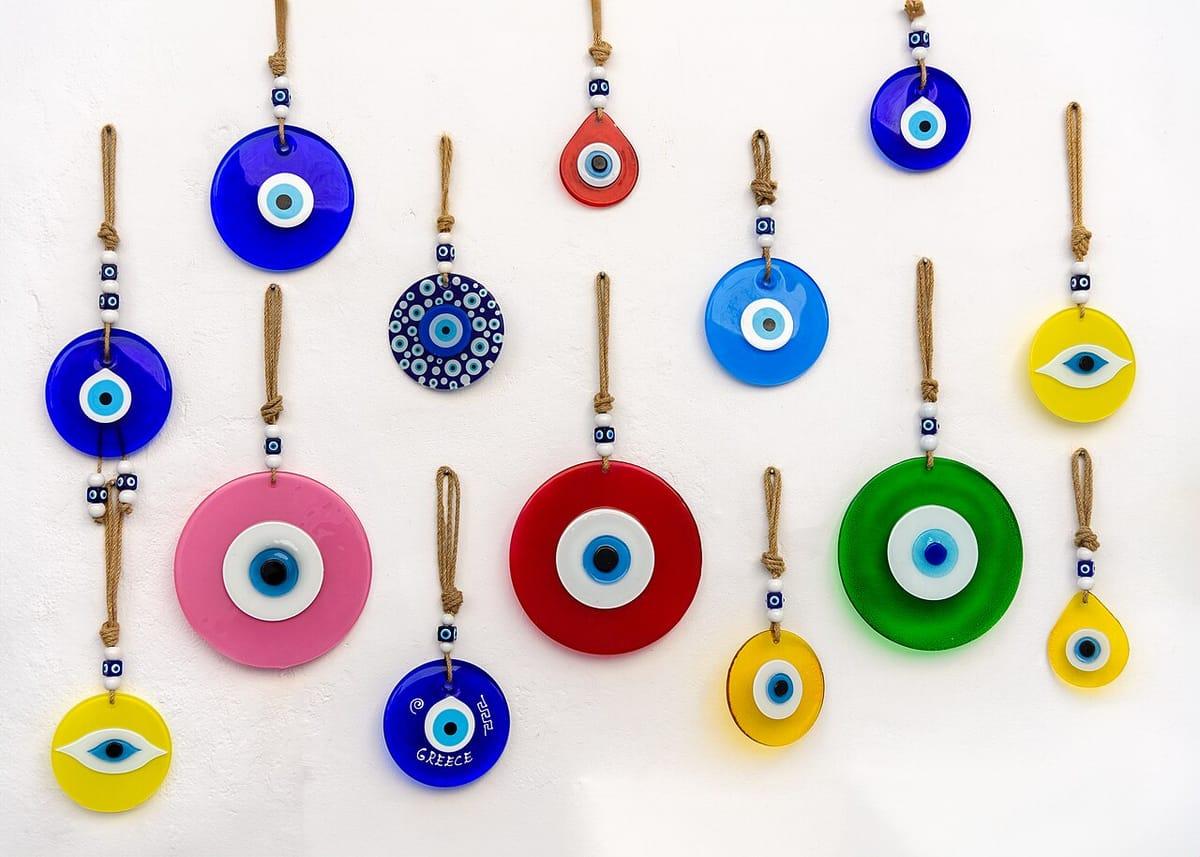
The tradition is not only historical. The Science Museum Group holds a glass nazar said to have been carried by a soldier stationed in Palestine during the First World War, and the Museum of Witchcraft and Magic has an elaborate Turkish nazar charm, with six eye beads and a hanging eye disc, probably meant to protect a house. A 2025 study of 34 pregnant women and 17 health workers in Şanlıurfa, southeastern Türkiye (Sevinç Akın et al., BMC Pregnancy and Childbirth), recorded evil eye beads worn by mothers and placed on babies "to ward off the evil eye". That is why it helps to treat the symbol as someone's living practice, not as a vintage graphic.
What do the colors of an evil eye tattoo mean?
The traditional nazar is dark blue with white, light blue and black (Nazar (amulet)). That palette is the one with a documented history. The photo above shows red, pink, green and yellow nazars too: they are sold widely today, and online charts assign each one a meaning (red for courage, green for success and so on). We could only trace those charts to jewelry sellers, not to museum, academic or folklore sources, so treat them as modern marketing, not tradition. Pick a color because you like it; if you want the "real" one, it is blue.
A black-and-grey version keeps the shape and drops the color. It is the usual choice for fine line designs and for people who want the eye to read as a quiet symbol rather than a bright charm. The trade-off is recognition: without blue, a small circle-in-circle can read as a target or a generic eye, so artists often add the teardrop shape or a few dots underneath to signal "nazar".
Prompt to try
“fine line black evil eye tattoo, teardrop nazar shape with three dots underneath”
Generate this designHamsa evil eye tattoo: what does it mean?
The hamsa is a separate protective symbol: an open hand, often symmetrical with a thumb on each side, frequently with an eye in the palm. My Jewish Learning explains that it is called the Hand of Fatima (after Muhammad's daughter) and the Hand of Miriam (after Moses's sister), that the name seems to come from the Arabic khamsa, "five", and that scholars disagree on its origins, with Islamic, Christian, pagan and earlier Mediterranean hand images all proposed. The same article says Jews may have used the hamsa against the evil eye "with the eye embedded in the palm", and that some Sephardic brides wear it at henna ceremonies.
So a hamsa evil eye tattoo combines two protective signs: the hand and the eye. It is a common search on its own ("hamsa evil eye tattoo meaning", "small hamsa evil eye tattoo", "for men"). Because the hand adds height, it needs more room than a nazar alone: a hamsa about 2 to 3 inches tall sits well on the inner forearm, and the palm still has room for a readable 0.5 to 0.75 inch eye. Some hamsas include fish; My Jewish Learning links that to a Talmud passage saying the evil eye has no power over fish hidden under water.
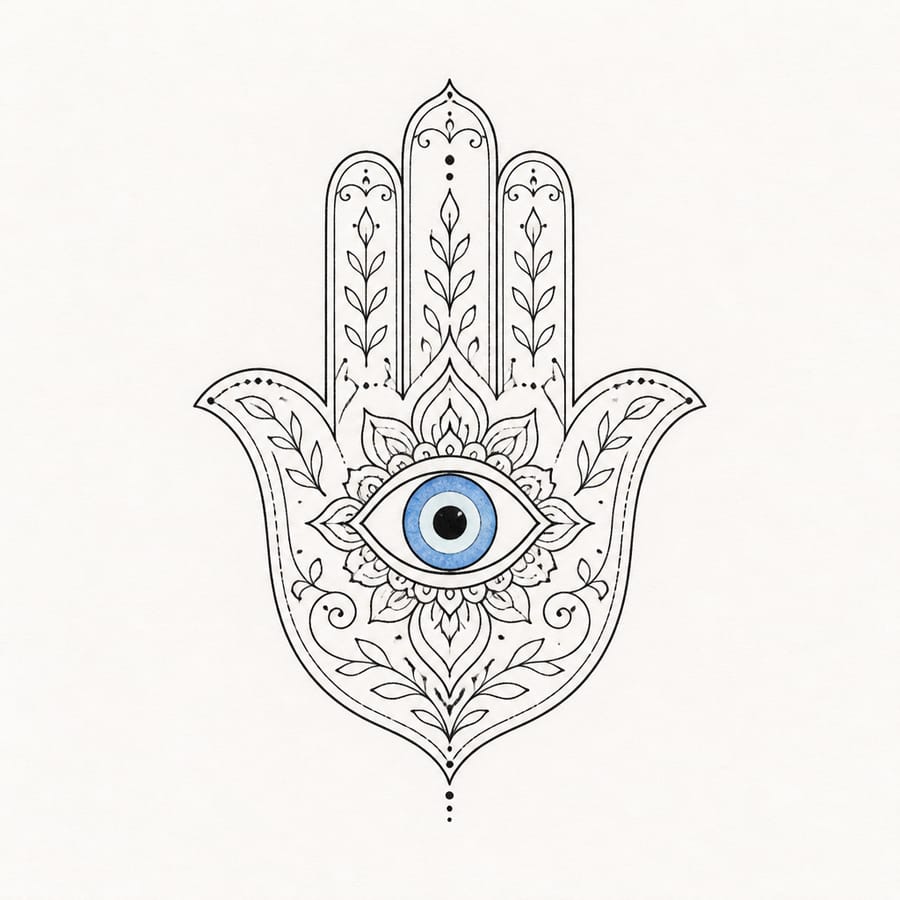 Hamsa with a nazar in the palm
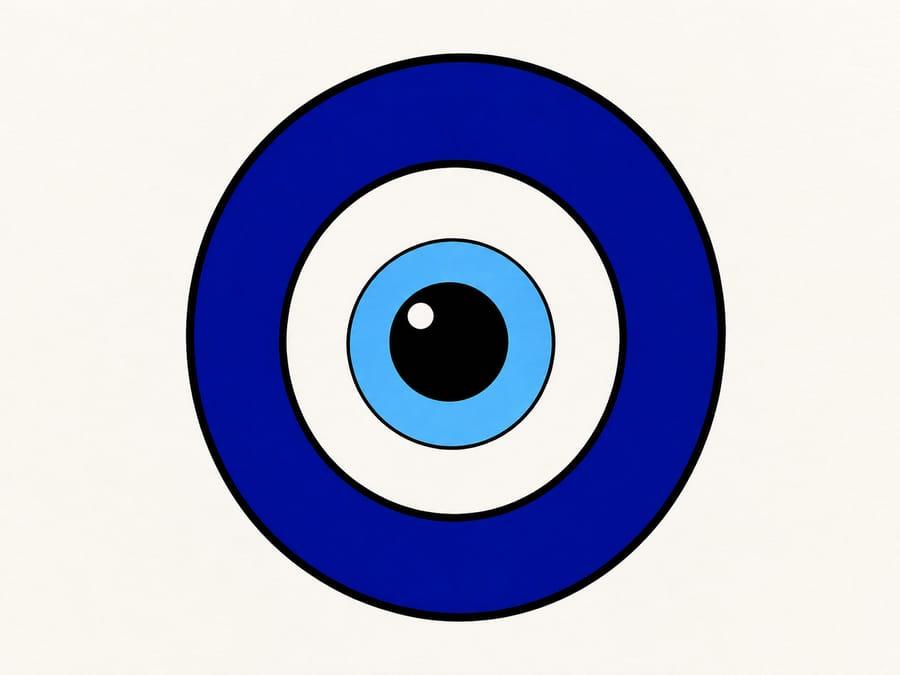 Classic cobalt nazar
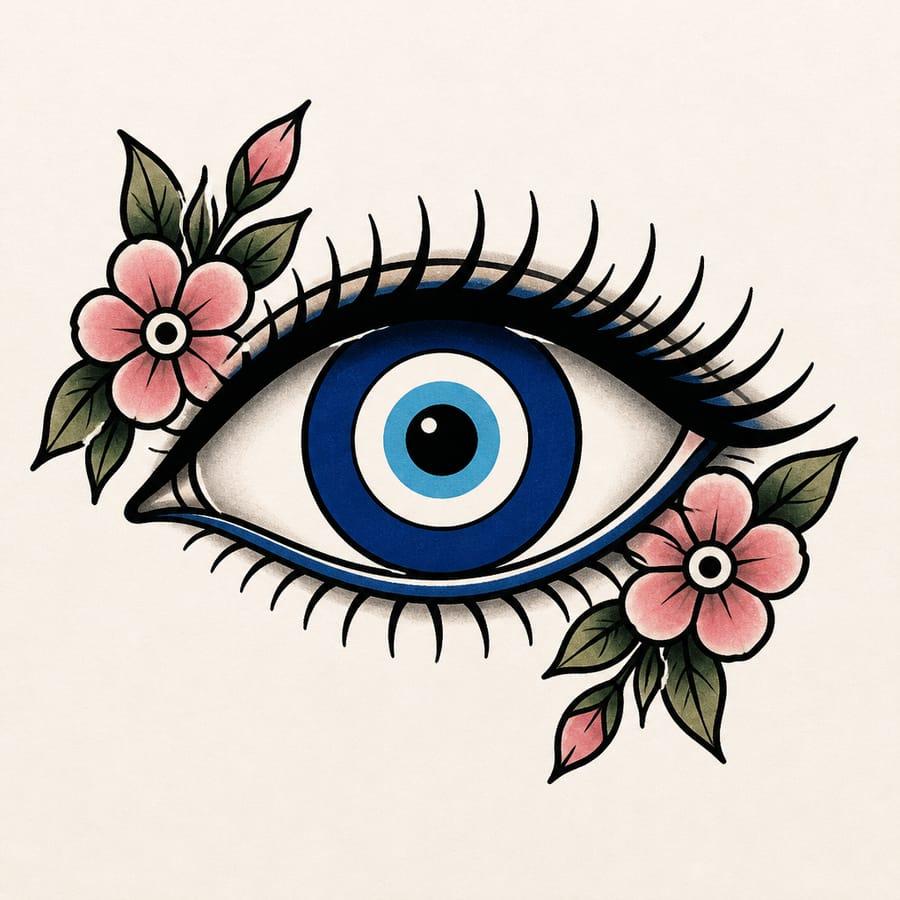 Eye with lashes and flowers
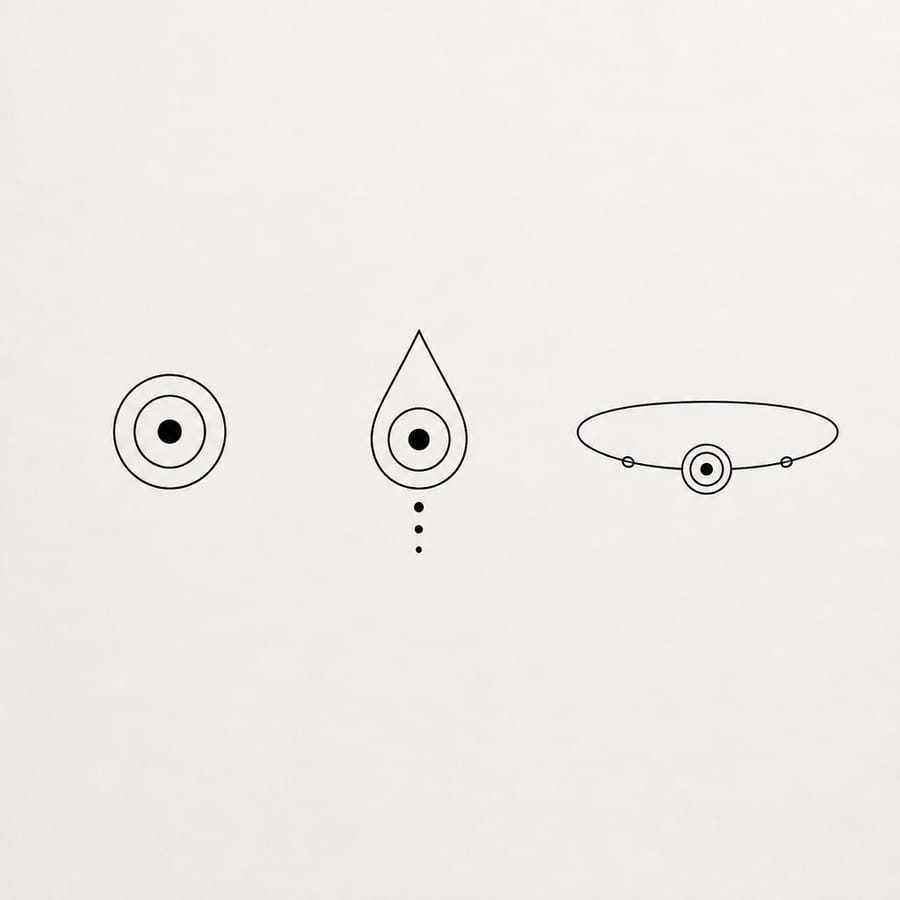 Fine line: circle, teardrop, bracelet
Evil eye tattoo designs and ideas
The searches split into a handful of clear layouts. Each changes the size the design needs, which is the main thing to settle before you book:
| Design | What it adds | Room it needs (our guide) | Style it suits |
|---|---|---|---|
| Single nazar, round | The classic charm, instantly recognizable in blue | 0.5 to 1 in across | Color or bold outline |
| Teardrop nazar | The pendant shape; reads as a charm even in black | 0.75 to 1.25 in tall | Fine line, black only |
| Bracelet with one or more nazars | Worn like jewelry; wraps the wrist or ankle | A band around the limb | Fine line |
| Hamsa with eye | A second protective symbol | 2 to 3 in tall | Fine line, dotwork, color |
| Eye with lashes | A human eye with a nazar iris; more decorative | 1.5 to 3 in wide | Neo-traditional, color |
| Nazar with flowers, moon or butterfly | A personal motif around the charm | 2 in and up | Fine line, illustrative |
| Nazar with a name or date | A dedication, often for a child | Lettering sets the width | Script, fine line |
The sizes are our working guide, based on the ring widths above: a layout with more parts needs more room for each part to stay legible. They are not studio minimums. For the eye-with-lashes look, traditional and neo-traditional artists use bold outlines that hold small color shapes well; for a black-only nazar, see the fine line style guide. A name inside or under the eye is lettering first, so check spelling and minimum letter height before you settle the size.
Prompt to try
“small evil eye tattoo with a crescent moon and tiny stars, fine line with blue accents”
Generate this designEvil eye vs Eye of Horus: are they the same?
No. Both are eyes worn for protection, which is why people mix them up. The Eye of Horus, or wedjat, is Egyptian: the V&A explains that it represents the eye of the god Horus, injured by Seth and healed, and that it stood for protection and wholeness. It is drawn as a single stylized eye with a brow and lines beneath it, not as concentric rings. The nazar is a glass bead tradition that runs from the Mediterranean to South Asia. If you want an Egyptian design, see our Anubis tattoo guide, which explains the wedjat in context; if you want the blue-and-white charm, it is the nazar.
How small can an evil eye tattoo be?
Small is the point of most evil eye tattoos, and the searches say so: "small evil eye tattoo", "on wrist", "finger", "behind ear". To show what small means on a body, we placed our nazar drawing at exact sizes on three AI-generated body photos, each scaled to a median measurement from ANSUR II, the US Army anthropometric survey we use across the site (see the tattoo size guide). The rulers are drawn at the same scale.
| Placement | Room, women / men (median) | Nazar that fits | Pain tier |
|---|---|---|---|
| Wrist, one side | 3.0 / 3.5 in across | 0.5 to 1 in | Not tiered (called tender) |
| Back of the hand | 3.1 / 3.5 in across the knuckles | 1 to 1.5 in | Middle |
| Finger | Not in ANSUR II; measure yours | About 0.25 to 0.5 in, usually simplified | Middle (hands) |
| Behind the ear | Ear 2.4 / 2.5 in long | 0.5 to 0.75 in | Higher (head and neck) |
| Back of the neck | 6.5 / 7.8 in, half the neck circumference | 0.75 to 1.5 in | Higher (neck) |
| Ankle | 8.5 / 9.0 in around | 0.5 to 1 in, or a bracelet | Middle (feet) |
| Inner forearm | 9.5 × 5.2 / 10.5 × 6.1 in | Any size, or a hamsa | Lower |
Room is our calculation from ANSUR II medians (wrist circumference halved, hand breadth, ear length, neck circumference halved, ankle circumference, forearm length by half its flexed circumference) for US Army personnel aged 17 to 58, not the general population, so measure yourself or use the tattoo size calculator. The "nazar that fits" column is our guide, not a studio rule. Pain tiers come from our tattoo pain chart, built on what artists and customers reported in Pimentel et al. (2021); in a survey of 1,092 tattooed people, body area stopped predicting pain once session length, stress and bleeding were counted. A small nazar is usually a short session.
Small evil eye tattoo on the wrist
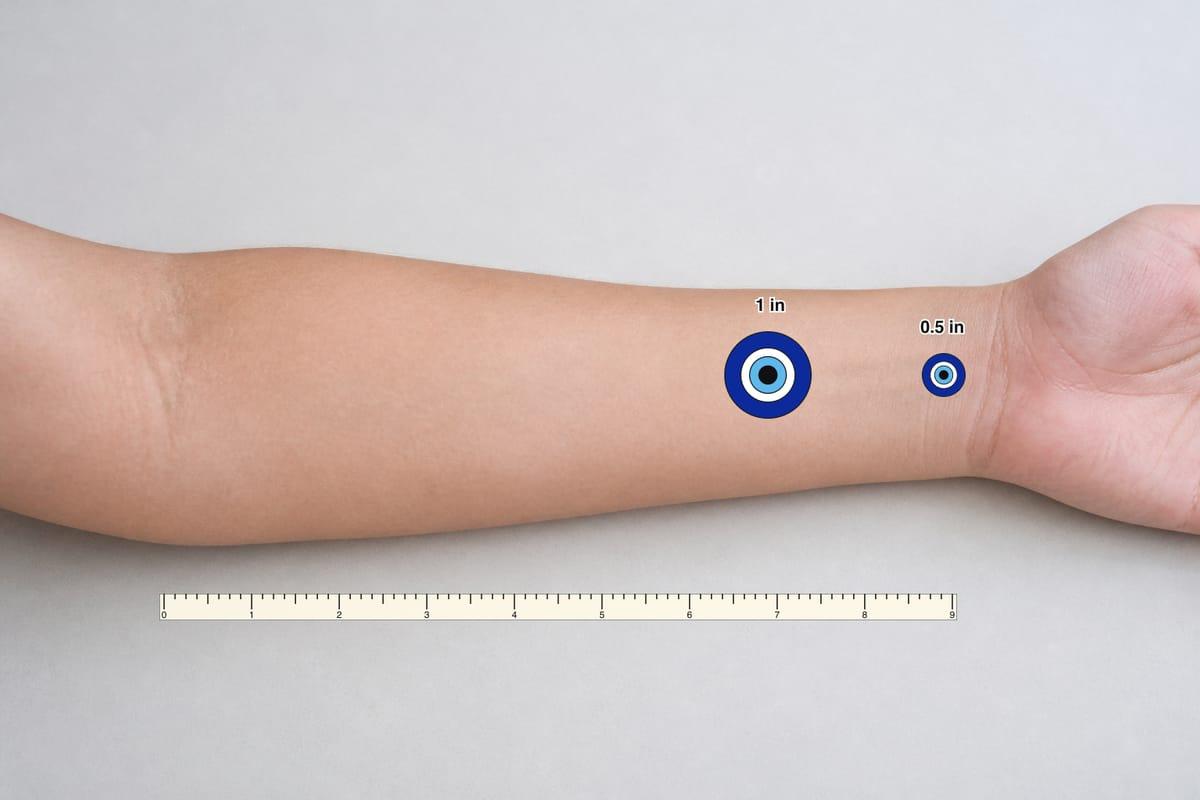
One side of a median wrist is about 3 inches across, so even a 1-inch nazar leaves a wide margin. The 0.5-inch version just above the wrist crease is the classic "small evil eye tattoo on wrist"; at that size the white ring is about 1.3 mm, so ask whether your artist would keep all four rings. A fine line bracelet with one nazar charm is the other popular wrist layout. The wrist placement guide covers visibility, fading and how the skin moves there.
Evil eye tattoo on the hand or finger
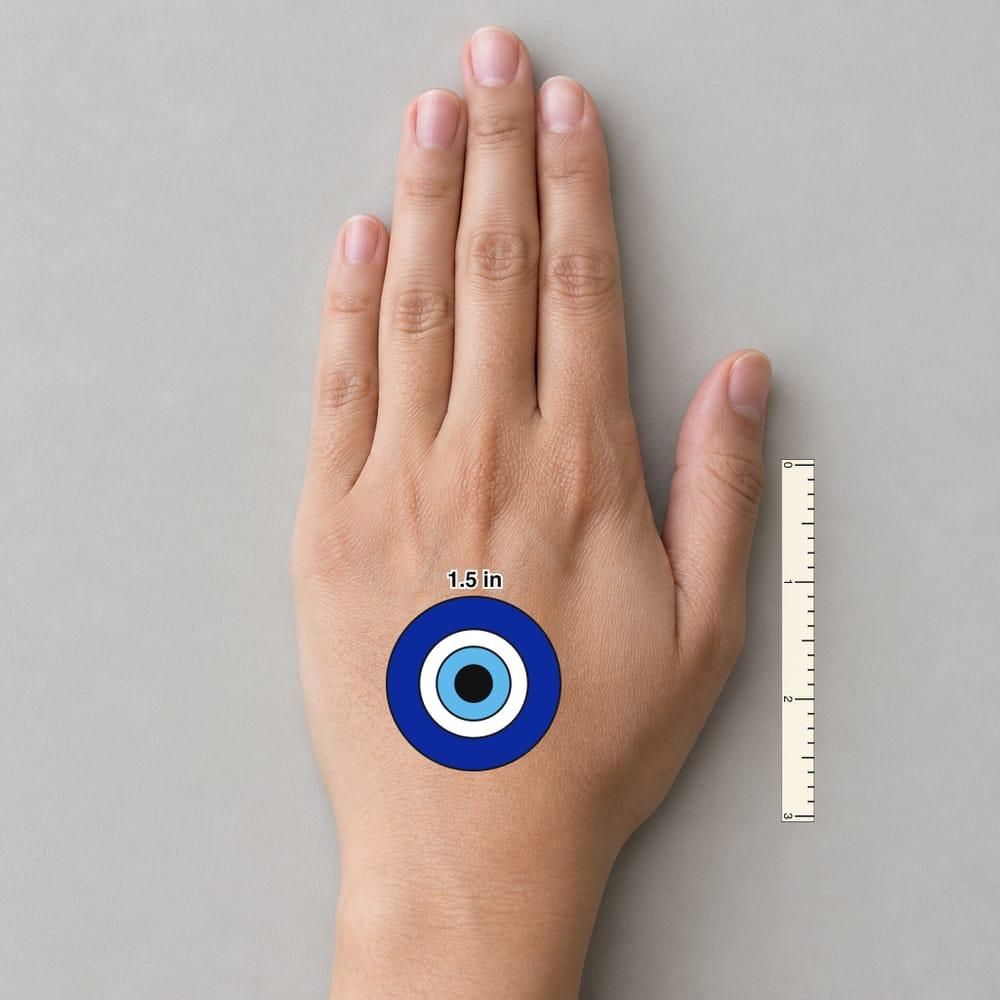
The back of the hand is about 3.1 inches across the knuckles for a median woman and 3.5 for a median man, so a 1 to 1.5-inch nazar sits in the middle with room around it. Fingers are much narrower and ANSUR II does not measure them, so measure the top of your finger between the knuckles; a full four-ring nazar there is usually reduced to a simple outline with a dot. Studios widely report that hand and finger tattoos fade sooner and some do not guarantee them; our hand placement guide sets out what is measured and what is only studio experience.
Prompt to try
“tiny evil eye tattoo on the side of the finger, simple outline with a dot pupil”
Generate this designEvil eye tattoo behind the ear
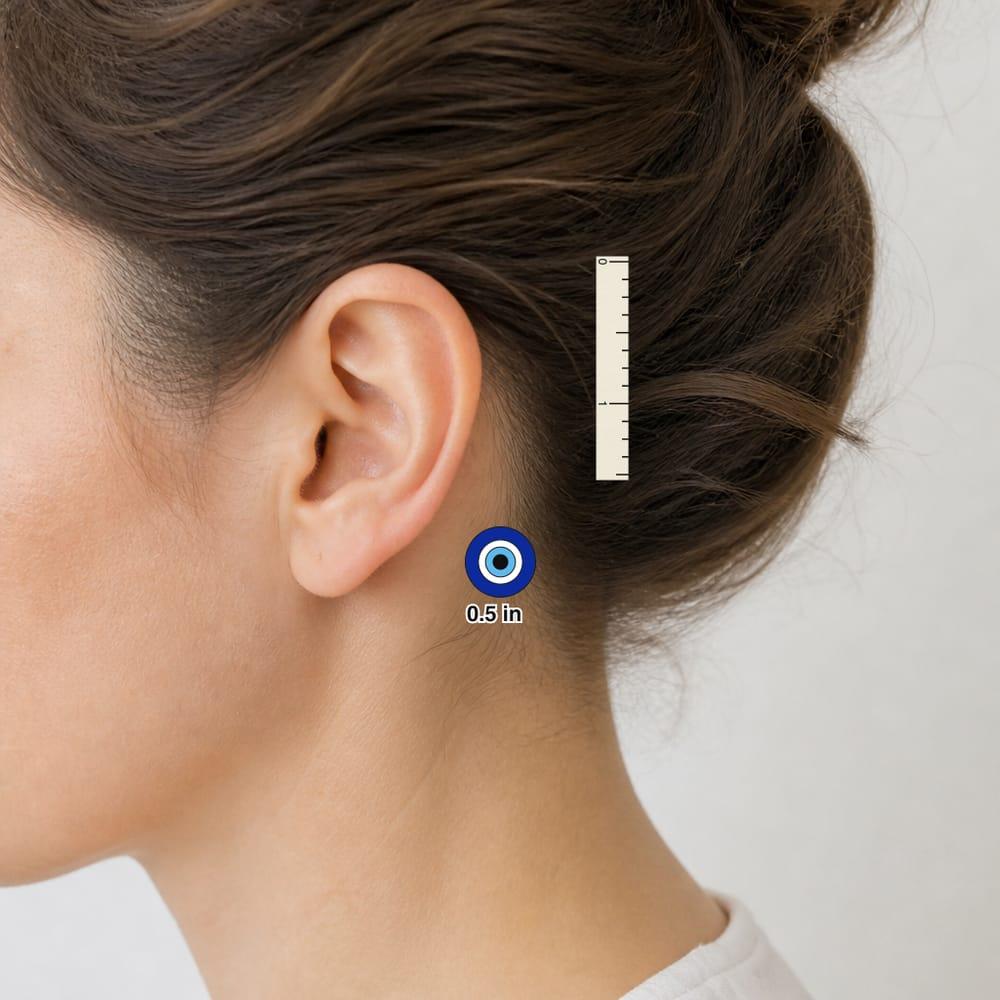
The median ear is about 2.4 inches long (60 mm for women, 64 mm for men in ANSUR II), so a nazar behind it is usually half an inch to three quarters of an inch: big enough to read as a blue eye, small enough to hide under hair. That fits the search "nazar tattoo behind ear" and a reason some tattoo guides give: a charm "watching your back" where you cannot see. The skin is thin over bone there, and our pain chart puts the head and neck in the higher tier; a half-inch nazar is a short session, though.
Back of the neck and ankle
The back of the neck is a searched spot too ("evil eye tattoo on back of neck"). Half a median neck circumference is about 6.5 inches for women and 7.8 for men, so a nazar of up to about 1.5 inches sits centered below the hairline; anything wider starts to wrap toward the sides. Collars and hair cover it or show it, which is why people choose it. At the ankle, a 0.5 to 1-inch nazar fits on the outer side, and a bracelet of small eyes can circle the ankle (a median of 8.5 to 9 inches around). Shoes and socks rub there while it heals; our tattoo aftercare guide covers what to do.
Is it bad luck to tattoo an evil eye?
We found no historical or folklore source saying that tattooing a nazar brings bad luck. Within the belief itself, the nazar is the protective side: it is the object meant to deflect the harmful look, not the look. The worry seems to come from two places. One is the name, "evil eye", which sounds like the thing you would not want on your skin; that is the confusion between the belief and the bead described above. The other is a Turkish belief recorded in the nazar article: if a bead breaks, a strong nazar has struck and the bead absorbed it to protect its owner. A tattoo cannot break, so some people ask whether it can still "work". That is a question inside a belief system, and it has no factual answer. If the tattoo means protection to you, the tradition itself gives no reason to fear it.
Is an evil eye tattoo disrespectful?
The nazar is a protective charm used openly from Greece and Turkey to South Asia and sold in tourist markets like the one in the photo above, so wearing it is not usually treated like a sacred or restricted symbol. That is our reading of how it is used, not a ruling, and people inside those cultures do not all agree. What tends to read as respectful is simple: know what the symbol is (the protection, not the curse), do not invent meanings and present them as tradition, and do not turn it into a costume of a culture you know nothing about. If you are not from a culture that uses the nazar, learning where it comes from is part of wearing it well.
How to brief your artist for an evil eye tattoo
- Pick the layout: round nazar, teardrop, bracelet, hamsa, eye with lashes. Each needs a different amount of room.
- Set the size from your spot, not the other way round. Measure the area, then check the ring widths in the table above at that size.
- Decide color or black. Blue is the traditional nazar; black-only works when the shape carries the meaning.
- Ask about the white ring: bare skin or white ink, and what the artist recommends at your size.
- Bring one clean reference, not ten. A design with bold, clear shapes is easier to turn into a stencil.
Once you have a design, the tattoo stencil maker turns it into clean transfer linework, and the tattoo visualizer shows it on a photo of your own skin. Your artist will still adapt it to your body. For everything else to plan before a first appointment, see the first tattoo guide.
Prompt to try
“hamsa evil eye tattoo for the inner forearm, fine line with a small blue nazar in the palm”
Generate this designRelated tattoo ideas and guides
Small Tattoo Ideas
Minimal symbols, names, dates and fine line designs that still age clearly.
Anubis Tattoo Ideas
The Egyptian jackal god, with the Eye of Horus explained.
Vegvisir Tattoo Ideas
An Icelandic protective stave and its real 19th-century history.
Guardian Angel Tattoo Ideas
Another way to wear protection, as a figure rather than a charm.
Wrist Tattoo Placement
Size, pain and fading for the most common evil eye spot.
Fine Line Tattoos
How thin-line designs are made and how they age.
Sources
- Wikipedia, "Nazar (amulet)" (citing Marchese 2005, Lonely Planet 2009, Williams 2016) · checked November 11, 2026
- Wikipedia, "Evil eye" · checked November 11, 2026
- Wikipedia, "Eye cup" · checked November 11, 2026
- Science Museum Group, Glass amulet (nazar), 1914-1918, object A79971 · checked November 11, 2026
- Museum of Witchcraft and Magic, object 1889, "Nazar Boncugu Eye Charm" · checked November 11, 2026
- Reina Gattuso, "Protection from the Evil Eye", Curationist (2025) · checked November 11, 2026
- Menachem Wecker, "What Is a Hamsa?", My Jewish Learning · checked November 11, 2026
- Rabbi Alan Lucas, "Tattooing in Jewish Law", My Jewish Learning · checked November 11, 2026
- Victoria and Albert Museum, Wedjat eye amulet, CIRC.28Y-1935 · checked November 11, 2026
- Sevinç Akın HY, Güneş B, Yalçın SS. Traditional practices during the first 1000 days of life in southeast Türkiye. BMC Pregnancy and Childbirth, 2025 · checked November 11, 2026
- American Academy of Dermatology, "Caring for tattooed skin" · checked November 11, 2026
- Wikimedia Commons, "Evil Eye Protection (53808866629)", photo Mustang Joe, CC0 · checked November 11, 2026
- ANSUR II: Anthropometric Survey of US Army Personnel (public data, OPEN Design Lab, Penn State) · checked November 11, 2026
- Pimentel D et al. The Effects of VR Use on Pain Experienced During a Tattoo Procedure: A Pilot Study. Frontiers in Virtual Reality, 2021 · checked November 11, 2026
- Witkoś J, Hartman-Petrycka M. Gender Differences in Subjective Pain Perception during and after Tattooing. IJERPH, 2020 · checked November 11, 2026
Evil Eye tattoo FAQ
What does an evil eye tattoo mean?+
It usually shows the nazar, the blue-and-white eye amulet meant to turn away the evil eye, a widespread belief that an envious or admiring look can cause harm. Wearers read the tattoo as protection, good luck or a link to family heritage. Those are beliefs and personal meanings, not proven effects.
Is it bad luck to get an evil eye tattoo?+
We found no historical or folklore source saying so. In the belief, the nazar is the protective charm, not the curse. The worry usually comes from the name "evil eye" or from the Turkish belief that a bead which breaks has absorbed a strong evil eye; a tattoo cannot break.
What is the difference between the evil eye and the nazar?+
The evil eye is the belief in a harmful look. The nazar is the eye-shaped amulet, usually dark blue, white, light blue and black glass, used against it. An "evil eye tattoo" is a tattoo of the nazar.
What does a hamsa evil eye tattoo mean?+
It combines two protective symbols: the hamsa, an open hand also called the Hand of Fatima or Hand of Miriam, and the eye in its palm. My Jewish Learning notes the hamsa has been used against the evil eye, and that its origins are debated.
How small can an evil eye tattoo be?+
In our drawing, a 0.5 inch nazar has a white ring about 1.3 mm wide, and a 0.25 inch one about 0.6 mm. Ask your artist the smallest size they would keep all four rings at; below it, a simplified outline is common. One side of a median wrist is about 3 inches across (ANSUR II).
Where is the best place for an evil eye tattoo?+
Common spots are the wrist, the back of the hand or a finger, behind the ear, the back of the neck and the ankle. The wrist and forearm give the most room for a small design; behind the ear and the neck hide easily but sit in the higher pain tier in our pain chart.
Tattoo planning tool
Design your own Evil Eye tattoo
Describe your idea, generate it in any style, and preview it on your own skin before the needle.
Generate for freeFree to start
Explore more tattoo ideas
- Joker Tattoo IdeasA joker tattoo channels chaos, duality and a defiant sense of humour.
- One Piece Tattoo IdeasA one piece tattoo celebrates the legendary anime's themes of freedom, dreams and unbreakable friendship.
- Jesus Tattoo IdeasA jesus tattoo is a powerful expression of faith, sacrifice and hope.
- Naruto Tattoo IdeasA naruto tattoo honours the anime's message of perseverance, friendship and never giving up.